











Key Factors & Coclusion
What is hyperopia? It implies that things that are far away look clear, but things that are close up, like text or displays, look blurry because light focuses behind the retina because the eyeball is too short or the cornea is too flat.
Common symptoms include eye strain, headaches, and hazy vision up close. These can be readily fixed with convex ("plus") lenses that appropriately refocus light on the retina.
Hyperopia can happen to anyone, although it usually gets worse as you get older or as you have presbyopia. Regular eye exams make sure that prescriptions are correct and help keep your eyes from being strained or having vision problems in the long run.
Your eyes burn again, huh? You rub them, blink hard, maybe even hold your phone a little farther away. The words blur. The screen hurts. But you can still see the TV fine, so that’s weird. That’s how farsightedness feels sometimes. One second you’re okay; the next you’re squinting at a text.
This post is here to walk you through everything you need to know about farsightedness, what hyperopia even means, and why there’s a tiny “+” on your glasses. And how the right lenses can make stuff, like, way easier.

What is farsightedness (hyperopia)?
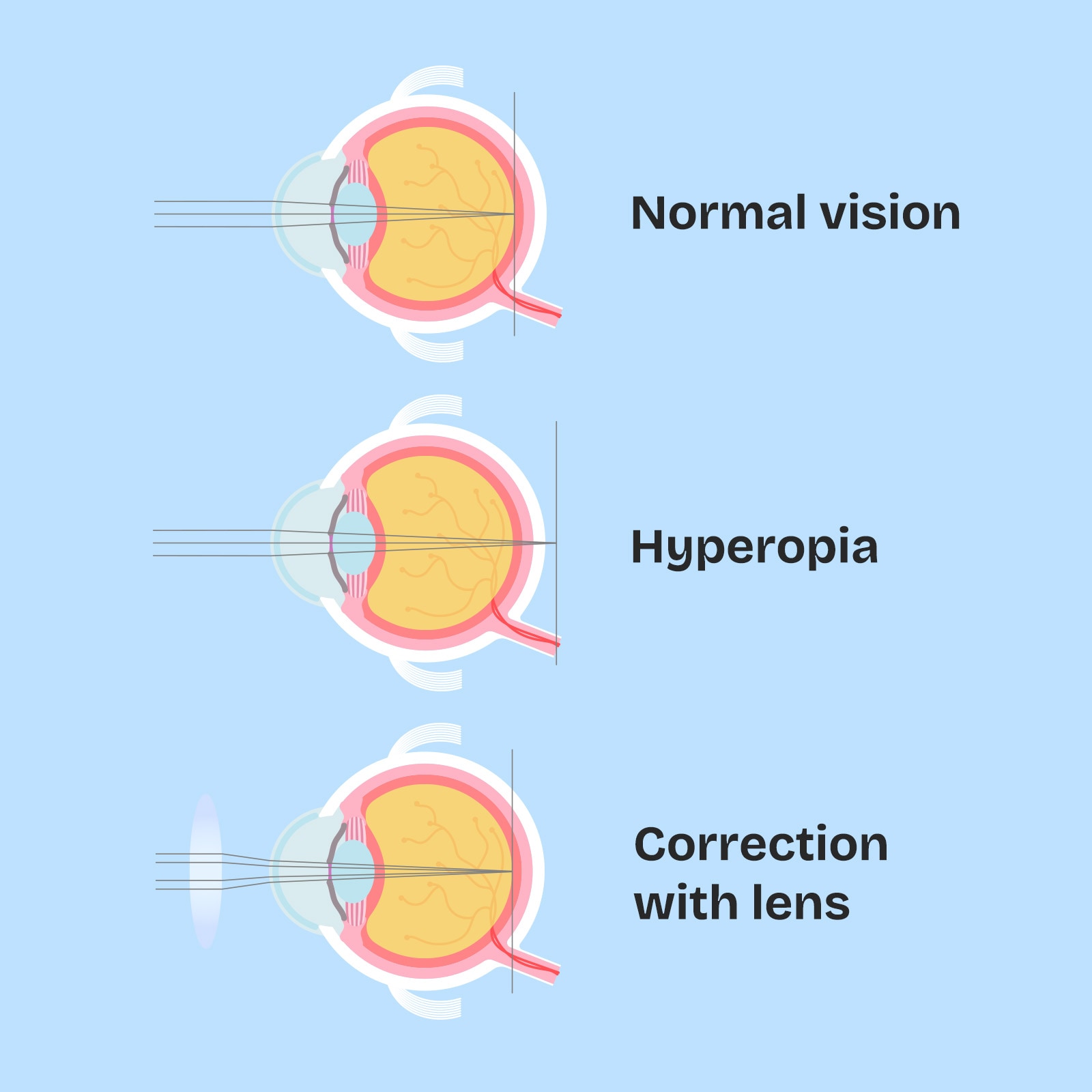
Farsightedness means you see distant objects clearly, but close objects look blurry. Your phone, a menu, small print—it all starts looking off. The light enters your eyes, but it doesn't focus where it should. It shoots past and ends up behind the retina. So the focus is off.
Why does that happen? Usually, ‘cause your eyes’ shape is shorter than normal, or your cornea is too flat. The light bends weakly, like it’s not trying hard enough. So your brain and eyes work extra to make stuff look clear. Feels tiring, right?
Understanding the Physical Causes
The farsighted symptoms mostly come from two things:
Your eyeball is a bit short front to back. When the eyeball is shorter, light focuses behind the retina instead of directly on it.
If the cornea’s too flat, light misses the spot, like a projector off target. You move it, but it's still not perfect. The picture never sharpens. Same idea.
Symptoms of Hyperopia: Why Your Eyes Feel Tired
It’s not just a blur. It’s the grind your eyes go through every time you read or work.
Common signs:
- Blurry words when reading, texting, or using the computer.
- Eyes that feel sore, hot, or just tired.
- Headaches after reading or long focus.
- Squinting to sharpen vision.
All that is because your eyes are constantly straining to refocus.
Reading Your Prescription: What the Plus (+) Sign Indicates
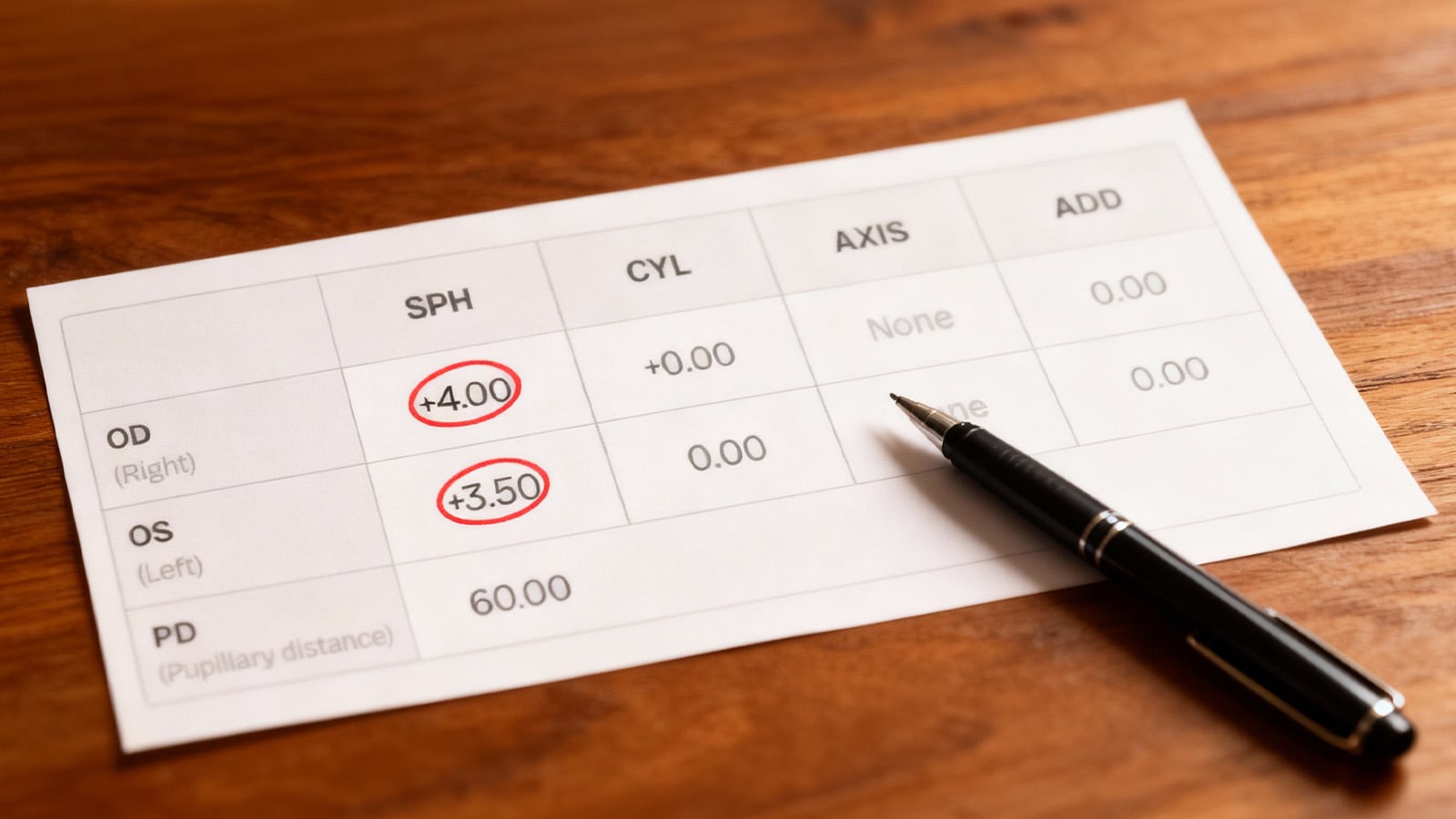
You know that “+” symbol in your prescription? That’s the clue. It means you’re farsighted. The plus sign shows your eyes need converging lenses, lenses that pull light inward so it hits the right spot on the retina.
Interpreting Diopter Strength
Lens power is measured in diopters (D). Higher number, stronger lens.
Here’s the quick breakdown:
- +0.25 D → super mild. You’ll feel it more while reading.
- +1.75 D → moderate. You’ll probably need glasses for close-up and maybe distance, too.
- Over +3.00 D → strong correction.
It’s not bad news. Just helpful information your optometrist uses to tailor your lenses.
Hyperopia vs. Myopia vs. Astigmatism: A Quick Comparison
These three often mix people up. Let’s lay it out plain:
- Hyperopia (Farsighted): Light hits behind the retina. Close-up stuff looks blurry. Needs Plus (+) lenses.
- Myopia (Nearsighted): Light hits in front of the retina. Far things go fuzzy. Needs minus (–) lenses.
- Astigmatism: Light lands unevenly on two spots. Everything’s just… off. Fixed with a cylinder (CYL) power.
Advanced Knowledge About Hyperopia and Aging
Hyperopia’s kinda sneaky. It acts differently depending on your age.
Latent Hyperopia: The Hidden Cause of Eye Strain in Young Adults
If you’re young, your eyes can still adjust on their own. The lens inside bends more to hide the blur. You feel like your vision’s okay, right? But really, your eyes are just doing all the heavy lifting. That’s why you end up tired, kinda drained, after a long day on your phone or laptop.

Hyperopia and Presbyopia (Age-Related Farsightedness)
After 40-ish, the eye lens hardens. That’s presbyopia. Different cause, same result: near things turn blurry. If you already have hyperopia, both pile up, and suddenly you’re holding menus out like a trombone player.
Hyperopia Risks in Children
For children, strong, untreated hyperopia can interfere with normal vision growth. It can cause lazy eye (amblyopia) or crossed eyes (strabismus). So yeah, kids need those checkups early.
Finding the Right Corrective Solutions for Farsightedness
Now the fix is simple. Convex (or 'plus') lenses bend light so it focuses correctly on your retina. That’s all your eyes need. Glasses do it best.
Choosing the Right Corrective Lens Type
Single Vision Lenses: For young adults who just need a bit of help with reading or desk work.
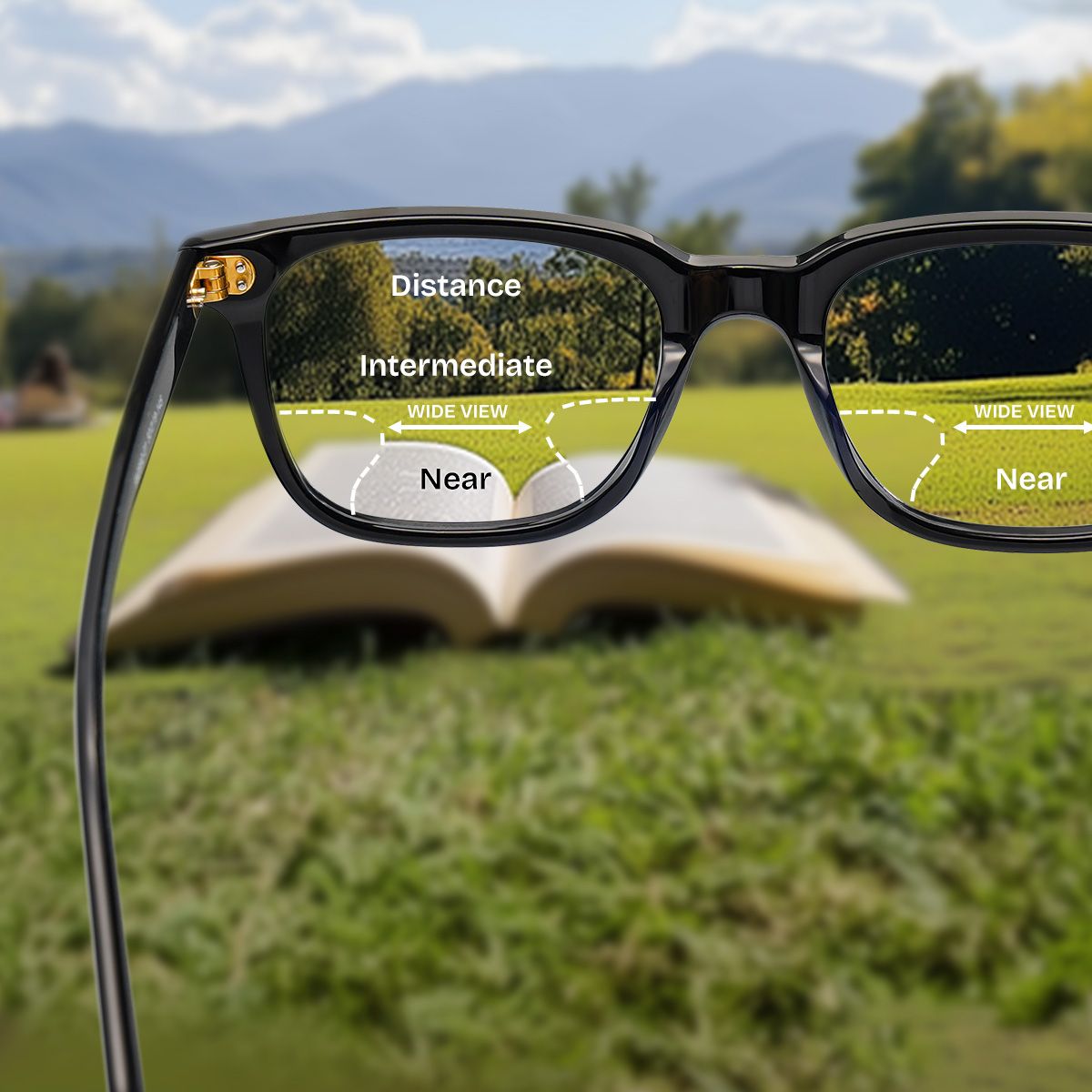
Progressive Lenses: If you’re past 40 or juggling both far and near blur, go for progressives. No harsh line between powers, just smooth transitions.
Addressing High-Power Prescriptions (Thin Lenses)
If your prescription’s higher, like +3.00 D or more, you might notice thick lenses. That's what people mean when they talk about high-prescription farsightedness glasses. They can look heavy. But high-index lenses (1.67 or 1.74) fix that. Thinner, lighter, cleaner.
Essential Features for Visual Comfort
Add some comfort features too:
- Anti-reflective coating is ideal to reduce glare.
- Blue-light blocking if you’re always on screens.
Fact vs. Myth: Will Glasses Weaken Your Eyes?
Nope, glasses don’t make your eyes weaker; they simply reduce eye strain.
Conclusion
Farsightedness means your eyes focus light a bit behind where it should land. Nothing scary. Just something that needs the right lenses to fix. Once you get the right plus-power glasses, your eyes relax, words sharpen, and headaches ease.
Go get your prescription checked, then hop on ZEELOOL. Find the frame that feels you, and set up lenses that make your eyes happy again.
FAQ
What does farsighted mean?
If you’re farsighted, or hyperopic, your eyes can see things far away better than they can see things up close. When you try to read, text, or look at a screen, the image tends to blur because light is focusing behind the retina instead of right on it. This is usually because the eyeball is a little shorter than average, or the cornea is too flat, and both affect how light bends as it enters the eye.
What does it feel like to be farsighted?
For a lot of people, the clearest sign isn't blurry vision—it's tired eyes. Because farsighted eyes have to work extra hard to compensate, especially for close-up tasks, you end up with that burned-out, heavy-eyed feeling after reading or using your phone for a while. Headaches and squinting are also common, and some people notice they instinctively hold things farther away to try to get them in focus.
What is the difference between farsighted and nearsighted?
Nearsighted people see close objects clearly but struggle with distance. Farsighted people are essentially the opposite—distance tends to be fine, but anything up close goes soft. The underlying cause differs too: nearsightedness usually involves a longer eyeball, while farsightedness involves a shorter one or a flatter cornea. Prescription-wise, nearsighted lenses have a minus (–) power and farsighted lenses have a plus (+) power.
What does the plus sign on a glasses prescription mean?
A plus sign in front of your sphere number is the indicator that you're farsighted. It tells the lens maker to use a convex lens—one that bends light inward so it focuses on the retina correctly instead of landing behind it. The number that follows (measured in diopters) tells you how strong that correction needs to be, with higher numbers indicating a stronger prescription.
Does farsightedness get worse with age?
It often does, particularly once you hit your forties. Younger eyes can quietly compensate for mild farsightedness because the internal lens is still flexible enough to adjust. Around 40, that lens starts to harden—a separate condition called presbyopia—and the ability to compensate fades. If you already have hyperopia, the two conditions can compound each other, making near vision noticeably more difficult than it was in your younger years.
What type of glasses do farsighted people need?
Farsighted prescriptions require convex (plus) lenses that converge light so it lands on the right spot on the retina. For younger adults who mainly struggle with reading or screens, single vision lenses are usually enough. If you're over 40 and have both hyperopia and presbyopia, then progressive lenses will correct for both near and distance vision all in one lens. If your prescription is higher than +3.00 diopters, you might want to consider high-index lenses because they provide the same correction in a thinner and lighter lens profile.