





Key Factors and Conclusion
Presbyopia is age-related stiffening of the eye's lens, causing blurry near vision after 40.
Common signs include holding items at arm's length, eye fatigue, and needing brighter light for reading.
Progressive lenses offer seamless correction for all distances without visible lines or constant switching.

It usually sneaks up on you. One day, you’re scrolling your phone like always, and the next, the text feels oddly blurry. So you move the screen away. Then a bit farther. Maybe you tilt your head. Eventually, your arm is fully stretched out like you’re playing an invisible instrument. Eye doctors jokingly call this “The Trombone Effect,” and once it starts, you start noticing it everywhere.
If this sounds familiar, take a breath. This isn’t an eye disease. There is no medical issue with your eyes. It’s simply part of getting older, and it happens to almost everyone sooner or later. Even people who’ve always had perfect vision run into it.
The medical name for this change is presbyopia. The term comes from Greek and literally means “aging eye,” which sounds somewhat harsh, but the reality isn’t nearly that dramatic. You can’t stop it from happening, but you can manage it easily. These days, modern eyewear, especially progressive lenses, makes the whole thing far less annoying and way more stylish than reading glasses from a pharmacy rack.
Why is Presbyopia Happening?
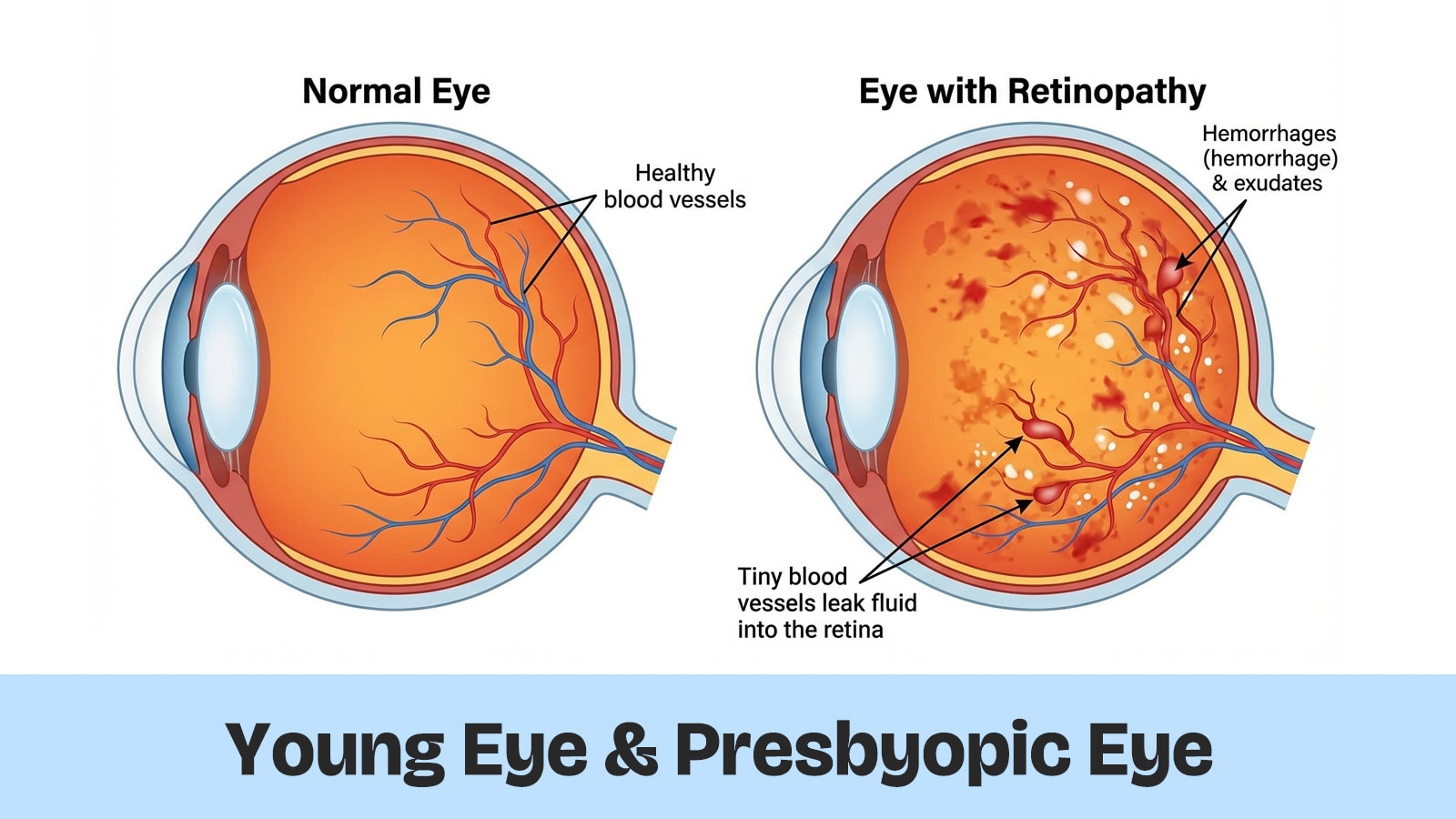
Inside your eye sits a clear structure called the crystalline lens. When you’re young, that lens is soft and flexible. It bends easily, changing shape to help you focus on things up close, like a book or your phone screen. You don’t think about it because it just works.
Over time, though, the lens slowly stiffens. Think less "soft jelly" and more "firm rubber over time." It doesn’t happen overnight, and you don’t notice the change day to day. But year after year, that flexibility fades.
At the same time, the tiny muscles that control the lens, called ciliary muscles, also lose a bit of their strength. They still do their job, just not as efficiently as before.
When you try to focus on something close, the lens can’t curve enough anymore. Because of that, light entering your eye doesn’t land exactly where it should. Instead of focusing directly on the retina, it ends up slightly behind it. That’s what causes near objects to appear blurry, even if distance vision still seems fine.
Top Signs You Have Presbyopia
Many people “self-diagnose” presbyopia before they ever see an eye doctor. If you’re wondering whether this applies to you, these are common signs of presbyopia:
- Arm’s-length reading: You constantly push reading material farther away to make words clearer.
- Lighting matters more: Dim light suddenly feels like a problem. You need brighter lamps to read comfortably.
- Eye fatigue: Your eyes feel tired, sore, or strained after reading, sewing, working on a laptop, or scrolling.
- Focus delay: Switching focus from something close to something far takes longer than it used to.
One key detail: presbyopia symptoms are persistent. If these signs of aging eyes show up most days, not just when you’re exhausted, it’s probably presbyopia, not just eye strain.

Presbyopia vs. Hyperopia (Farsightedness)
Many people confuse presbyopia with farsightedness, and it makes sense. Both make close-up vision harder.
The difference is in the cause. Hyperopia usually has to do with the shape of your eye. It can show up at any age, even in kids. Presbyopia, on the other hand, is strictly age-related. It happens because the lens inside your eye hardens over time.
To make things more confusing, you can have both. Someone might be nearsighted or farsighted for years and then develop presbyopia later. That’s why eye prescriptions often change more after 40.
The Solutions: From Readers to Progressives
The good news is that presbyopia is one of the easiest vision issues to correct. There’s no shortage of presbyopia treatment options.
Option 1: Reading Glasses:
Reading glasses are often the first thing people try. They work well for short tasks, but they’re annoying long-term. You have to keep putting them on and taking them off. They also don’t help at all with distance vision. Cheap drugstore readers can be especially limiting if you have astigmatism or different prescriptions in each eye. Custom readers, like those from ZEELOOL, are far more comfortable and accurate.
Option 2: Bifocals:
Bifocals were the classic solution for years. They have a visible line separating distance and near vision. While effective, many people dislike the sudden “jump” in vision when their eyes cross that line. And for many people, the visible line isn't their preferred look.
Option 3: Progressive Lenses:
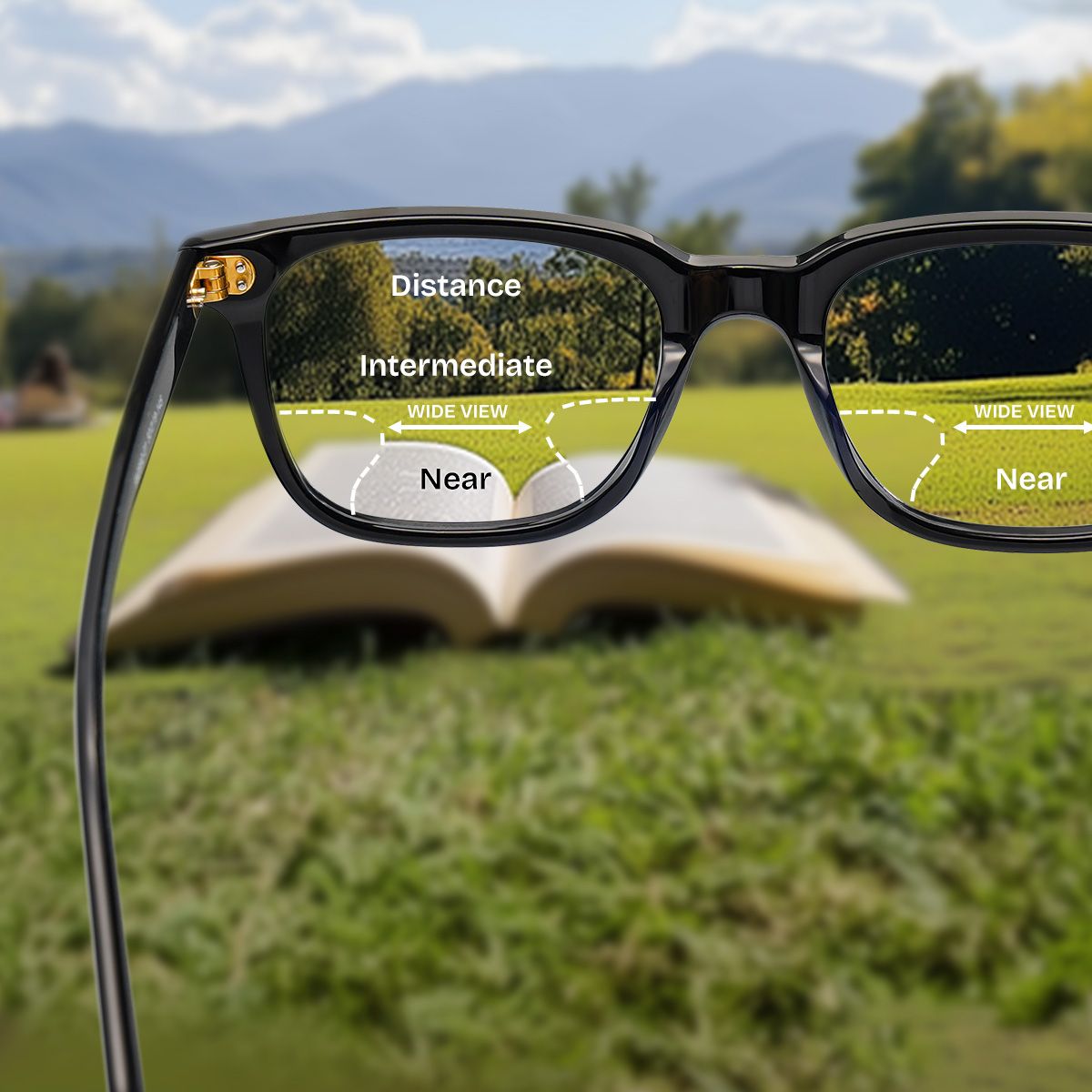
Progressive lenses are where things really improve. These are no-line multifocal lenses that look just like regular glasses. The lens is divided into smooth zones: distance at the top, intermediate in the middle (great for screens), and reading at the bottom. There’s no sharp cutoff, just a natural transition.
The biggest advantage? Convenience. One pair of glasses does everything. Add modern frame designs, and progressive glasses don’t feel like a symbol of aging anymore; they feel like an upgrade.
Option 4: Surgical Options:
There are also surgical options, like monovision LASIK or lens implants, but those come with higher costs and permanent changes. For most people, glasses remain the simplest and safest choice.
Conclusion
Presbyopia isn’t a failure of your eyes; it’s a normal part of aging. With the right lenses, it doesn’t have to get in your way. If you’re ready for clarity without compromise, explore ZEELOOL’s progressive glasses and find a pair that fits both your vision and your style.