








Key Factors and Conclusion
Glaucoma damages the optic nerve and, in most cases, blurs peripheral vision rather than causing refractive changes.
The condition may present without initial symptoms and is usually detected through routine eye examinations.
Polarized and contrast-colored lenses are specialized options that enhance comfort and safety in everyday use.

When we think about vision health, we often focus on sharpness—the "20/20" clarity of the world. Glaucoma, however, is a group of eye conditions that affects vision in a subtle yet serious way.
Understanding your eye health is the first step toward maintaining a high quality of life. This guide explains what glaucoma is and how the right eyeglasses can help you navigate the world more comfortably if you are living with this condition.
What is Glaucoma? The "Silent Thief of Sight"
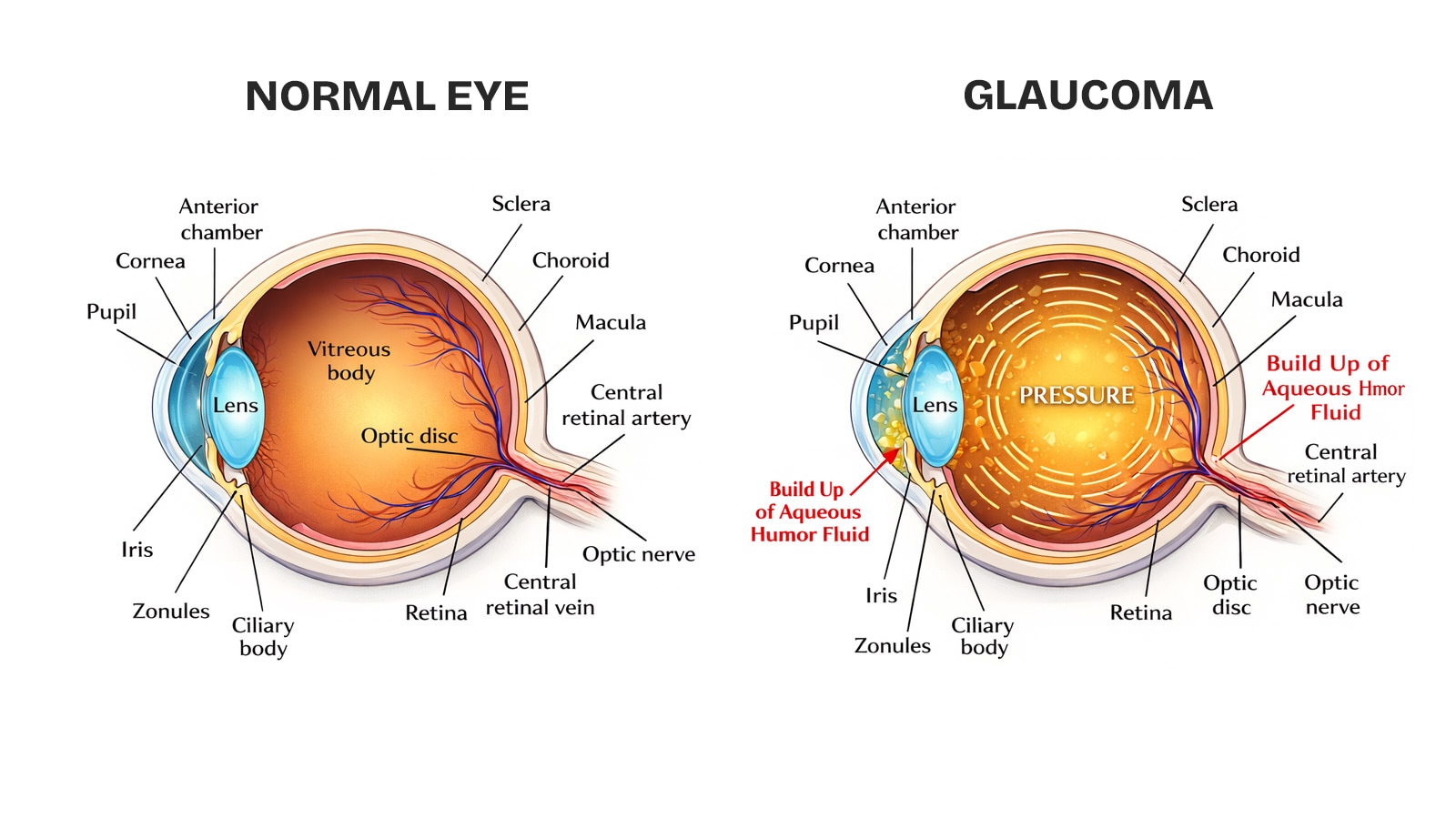
Glaucoma is not a single disease, but a group of conditions that damage the optic nerve. The optic nerve acts like a communication cable for your vision, carrying visual information from the retina to the brain. When this nerve is damaged, usually due to high intraocular pressure, the visual signal is disrupted, which can lead to permanent vision loss.
Does Glaucoma Change Your Glasses Prescription?
A common misconception is that glaucoma changes your refractive error (the need for nearsighted or farsighted correction).
Glaucoma itself does not directly cause your eyes to need a different prescription power. Unlike cataracts, which cloud the lens, or natural aging (presbyopia), glaucoma affects the nerve, not the focusing mechanism of the eye. However, the effects of the condition—such as loss of peripheral vision and extreme light sensitivity—can make your current prescription feel inadequate because your overall visual experience has changed.
The Impact of Visual Field Loss
In later stages, glaucoma may result in a severe loss of visual field. Many patients report a loss of peripheral (side) vision before it causes tunnel vision. Compared to central vision, the vision that is central can be sharp enough to read a book, but it requires more time to move around the room, drive on the road at night, or see objects on the road. This is where specialized eyewear becomes part of daily life.

Why Specialized Eyewear Matters for Glaucoma Patients
- Treatment of Photophobia (Light Sensitivity): Photophobia (high sensitivity to light) is felt sharply by many patients, particularly when they are taking special eye drops or are recovering after a surgery. Bright sunlight or harsh fluorescent lighting can cause significant discomfort.
- Improving Contrast Sensitivity: Glaucoma often reduces contrast sensitivity, making it harder to distinguish objects from their surroundings. Depth perception can be corrected by using contrast created with certain lens tints.
- Minimizing Glare and Halos: If you notice halos around lights at night, you can reduce them with specialized coatings and improve visibility.
A Guide to Choosing Frames and Lenses for Glaucoma
When deciding whether to purchase a pair of glasses, it is important to consider comfort and Clarity. We offer a number of customizations that meet these special needs at ZEELOOL:
Essential Lens Features
- Polarized glasses: These glasses are essential in outdoor activities. The horizontal light rays (glare) that are reflected off cars and the pavement are filtered out by them, and these are the ones that are usually the most irritating to the sensitive eyes.
- Contrast-Enhancing Tints: Yellow, amber, or brown tints filter out blue light and sharpen the boundaries of objects, helping you navigate your surroundings with more confidence.
- Anti-Reflective (AR) Coating: This coating eliminates reflections from the front and back of your lenses, reducing visual "noise" and assisting significantly with night vision.
- Photochromic (Transition) Lenses: Since glaucoma may also make it difficult for a patient to adapt to changes in light, auto-darkening and auto-brightening lenses allow the eye to transition smoothly.
Frame Features for Daily Comfort
- Lightweight Materials: Frames of Titanium or TR90 make the feel of the frames barely there, and put less pressure on the bridge of the nose.
- Wider Field of View: To avoid further limiting your field of view, choose frames with a larger lens area (such as an oversized or aviator frame) so that the thick frame borders will not obscure the rest of your vision.
Conclusion
While glaucoma is a serious condition, it does not mean you have to stop living an active, stylish life. By shifting your focus toward "protection and comfort" rather than just "correction," you can choose eyewear that truly supports your daily activities.
We always recommend regular check-ups with your ophthalmologist. Once you have your health plan in place, we invite you to explore our collections to find the protective, high-contrast, and lightweight eyewear that helps you see the world more comfortably.
FAQ
Do glaucoma patients need glasses?
Not necessarily for the glaucoma itself. The condition affects the optic nerve, not the ability of your eye to focus. But many glaucoma patients do wear glasses, either to correct their vision as they did prior to diagnosis or for special lenses to help with light sensitivity and contrast.
Can glasses help with glaucoma?
Glasses can’t cure or reverse glaucoma, but they can make living with the disease easier. Glare-reducing outdoor polarized lenses, contrast-enhancing tints for better depth perception, and anti-reflective coatings to cut down on the halos that often develop around lights at night for glaucoma patients.
Do glasses change your prescription if you have glaucoma?
Glaucoma itself doesn't change your refractive prescription the way aging or cataracts would. What it does change is your overall visual experience—peripheral vision loss and increased light sensitivity can make your current prescription feel like it's not working as well as it used to, even if the numbers haven't shifted.
What kind of sunglasses are best for glaucoma?
Polarized lenses are generally the top recommendation because they block reflected glare—particularly the horizontal light that bounces off roads and cars—which is often the most uncomfortable for light-sensitive eyes. Amber or yellow-tinted lenses are also useful because they enhance contrast and make it easier to distinguish objects from their surroundings. Wraparound or larger frames are worth considering too, since they block light from the sides without narrowing your already-compromised field of view.