









We understand. Trying to decrypt your eyeglasses prescription is daunting! What do all these letters and numbers mean? It can feel like you need 10 years of college to understand what all of this means. However, you don’t need to be an expert to understand what's best for your eye health. This guide will break down each constituent element of your prescription to have you looking and feeling your best.

Understanding Your Eye Prescription: The Basics
At the most basic level, a prescription is a set of instructions your optometrist (that's a fancy term for eye doctor) provides to you that specifies the lens type needed to correct your vision. It’s made up of the following key components:

To better understand your prescription, it's important to know what OD and OS mean in eye prescriptions.
If your prescription includes astigmatism correction, you’ll also see values like cylinder (CYL) and axis in an eye prescription.
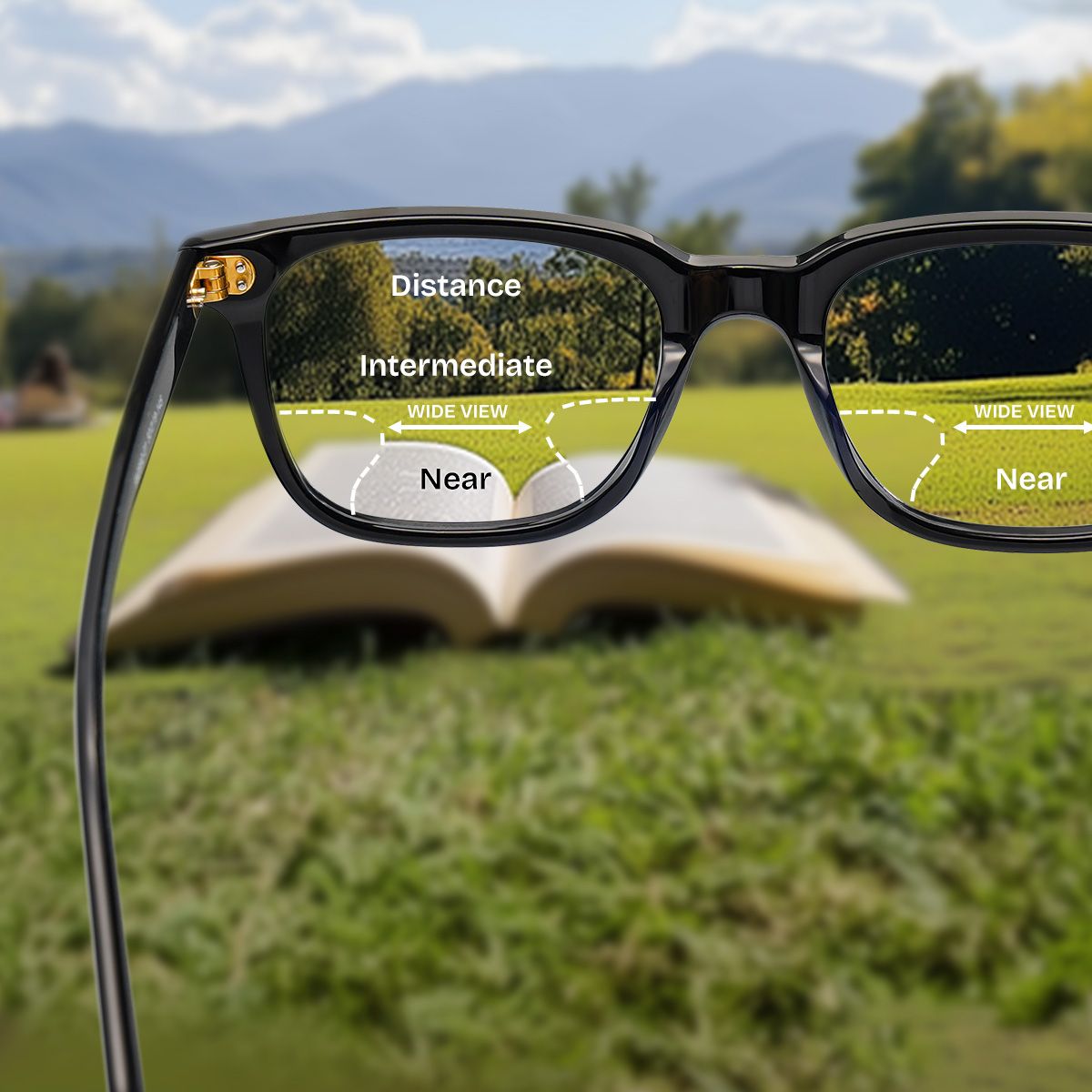
For reading or multifocal lenses, your doctor may include an ADD value for near vision.
Another key measurement is pupillary distance (PD), which ensures your lenses are properly aligned.
Prescription strength is measured in terms of diopters, which indicate how much correction your eyes need.
Eye Designation in Prescriptions (OD, OS, OU)
Your prescription uses specific terminology rooted in medical science to refer to your eyes:
OD (Oculus Dexter): Refers to your right eye
OS (Oculus Sinister): Refers to your left eye
OU (Oculus Uterque): When present, refers to both eyes
Sphere Power (SPH) in Eyeglass Prescriptions
Sphere power indicates the main lens power needed to correct your vision:
Plus (+) Values: Correct farsightedness (hyperopia)
Minus (-) Values: Correct nearsightedness (myopia)
Higher numbers indicate stronger prescriptions
Measured in diopters
Cylinder (CYL) for Astigmatism Correction
Cylinder power addresses astigmatism correction:
Is written as either a positive or negative value
Corresponds to your type of astigmatism
Works in relationship with SPH
Indicates the additional power needed for astigmatism correction
Understanding Axis in Eye Prescriptions
The axis number is crucial for astigmatism correction:
Measured in degrees from 1 to 180
Indicates the orientation of astigmatism
Essential for proper lens alignment
Does not ndicate prescription strength
ADD Power for Presbyopia
ADD power is specifically for near-vision correction:
Often used in bifocal and progressive lenses
Indicates additional magnification needed for reading
Prism Correction in Eyeglass Prescriptions
Some prescriptions include prism correction:
Measured in diopters, which refers to the focusing strength of your prescription
Helps align your eyes correctly
How Does Your Prescription Affect Eyewear Choices?
It's tempting to leave all the heavy lifting to the experts, but understanding your prescription affects your consumer and health decisions in the following ways:
Selecting Prescription Lenses
Think of your prescription as the blueprint for your personal reality enhancers. They dictate everything from lens thickness to material options, and yes, how much you’ll need to bug your insurance company for coverage.
Advanced Lens Options for Prescriptions
Welcome to the optical buffet, where your prescription strength determines the menu. High-index lenses are like shapewear for your glasses, while toric lenses rescue you from the distortions of astigmatism. While progressive lenses are your all-rounders, perfect for whatever daily life throws at them.
Customizing Your Prescription Eyewear
Time to accessorize! Anti-reflective coatings banish those UFO-light circles in photos, while UV protection keeps your eyes from getting sunburned (yes, really). Blue light filtering claims to save you from screen addiction, and impact-resistant materials protect against life's little accidents—like when your cat decides your glasses are a toy.
Professional Consultation Tips
Eye doctors are the good guys. They’re specially trained and here to help you see your best. However, they’re not mind readers. Come prepared to appointments with questions and concerns, and never feel shy or ashamed of asking. After all, it’s your vision and eye health on the line.

Maintaining Current Prescriptions
For optimal vision care, you can do a few things to work with your existing prescription:
Check your vision regularly. Schedule an annual eye exam and get your blinkers taken care of.
Monitor and take note of vision changes, especially as you approach age 40. Difficulty focusing or blurry vision might be a sign to change your prescription.
Speaking of changing your prescription, if you’re experiencing eye strain or frequent headaches, that can also be a sign your glasses aren’t working for you, and you may need to update them.

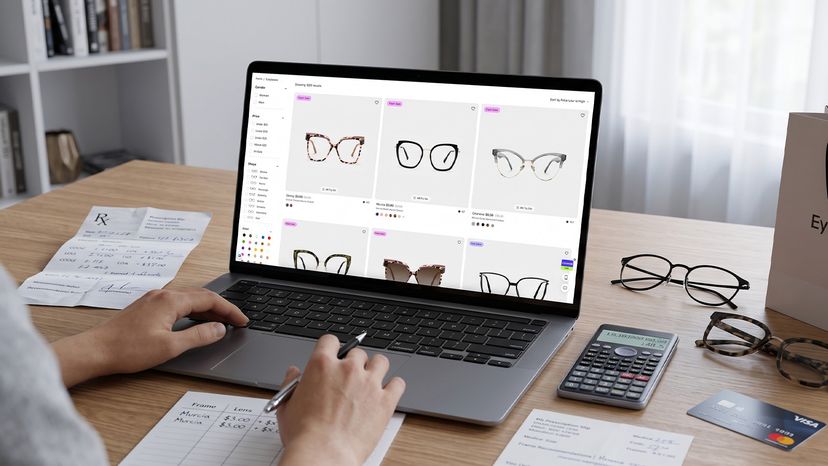
Online Eyeglass Shopping with Your Prescription
Ordering something as important as eyewear online can be scary and fraught with issues. Here are some tips to ensure a successful transaction:
Double- and triple-checking all prescription values
Make sure you know your PD measurement by heart
Try our virtual try-on tool, so you know how frames will fit your face.
Checking frame measurements and comparing to your existing pairs
Conclusion: Control What You See
You should now be primed with the basic knowledge of prescriptions and what all those fancy acronyms mean. Armed with this information, you should be able to communicate effectively with optometrists and eye health care professionals to make better-informed decisions about lens types and prescriptions.
As always, ZEELOOL eyewear is not a substitute for a trained professional. While we strive to provide helpful, practical, and accurate information about eyewear, lenses, and prescriptions, we always recommend consulting with a licensed and educated optometrist.
FAQ
How do I read my eyeglass prescription?
Your prescription has a few important numbers. The SPH (sphere) is the primary correction the eye needs; a minus sign means nearsightedness, and a plus sign is for farsightedness. If you have astigmatism, you'll also see your PD (pupillary distance), CYL (cylinder), and axis values, which work together to correct the irregular curvature of your eye. ADD appears on prescriptions for progressive or bifocal lenses and indicates the extra magnification needed for reading. "OD" refers to your right eye and "OS" to your left—once you know what each abbreviation means, the rest follows pretty naturally.
What does a progressive lens prescription look like?
A progressive prescription looks similar to a standard one, but with an additional ADD value—this is the extra power needed for the reading portion of the lens, and it's usually the same for both eyes. You will still be able to see the standard SPH, CYL, and axis values for each eye as well as your PD (pupillary distance), which is especially important for progressives as lens alignment is more critical with multifocal designs. If you see an ADD value on your prescription, your optometrist is recommending progressive or bifocal lenses.
What is pupillary distance (PD), and why is it important when ordering glasses online?
PD is the distance in millimeters between the centers of your pupils and tells the lab exactly where to position the optical center of each lens in your frame. Getting this wrong—even by a few millimeters—can cause distortion, eye strain, or headaches, which is why it matters more for online orders where there's no optician to physically adjust the fit. Most optometrists will provide your PD if you ask, and some online retailers, including ZEELOOL, offer tools to help you measure it at home.
What do the numbers on a glasses prescription mean?
The numbers are measured in diopters and represent the focusing power your lenses need to correct your vision. A higher number — whether plus or minus — means a stronger prescription and typically results in thicker lenses unless you opt for high-index materials. The minus sign means your eye is nearsighted (struggles with distance); the plus sign means farsighted (struggles up close), and the CYL and axis values fine-tune the correction for any astigmatism on top of that. Those numbers together form a very exact pattern for making lenses that fit your eyes.
How often should I get a new prescription for glasses?
Most eye doctors will tell you to come in for an eye exam every year to see if anything has changed with your prescription, even if your vision seems okay—small changes can be hard to notice unless you see them right next to each other. If you get frequent headaches, eye strain, or notice things look a little blurry in your current glasses, those are all clues that you might need a new prescription sooner. After the age of 40, vision tends to change more noticeably, especially for reading and other close-up tasks, so it’s even more important to stay on top of regular eye exams.