


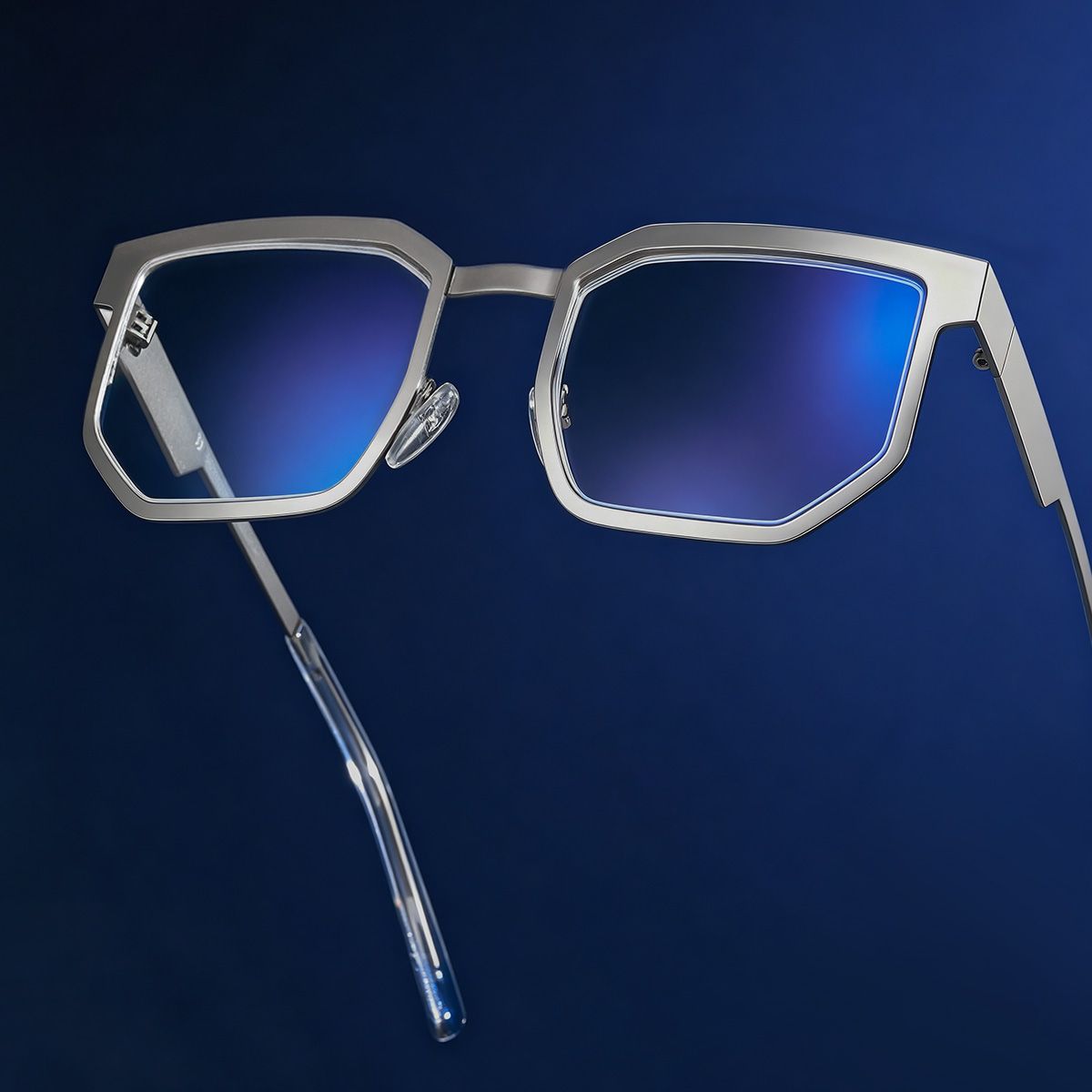







To check out new prescription glasses, begin by comparing them with your order and prescription. Then check the frame and lenses for damage, see how the glasses fit on your face and test your vision at the distances that the lenses are designed for. Many common issues you can find at home, but you cannot verify every optical measurement yourself. Persistent blurriness, double vision, eye pain, or extreme discomfort should be examined by an eye care professional.
Key Takeaways
- Inspect your order and prescription first before judging the glasses by vision alone.
- Inspect lenses and frame for physical defects or damage.
- Ensure that the bridge, temples and overall frame width feel snug and comfortable.
- Test your glasses at their intended viewing distances.
- Mild adjustment symptoms can occur with a new prescription, but persistent or severe symptoms deserve attention.
- Prescriptions, packaging, photos and your order details if you need support.
What to Prepare Before You Check Your New Glasses
Before you put on your new glasses and decide if they feel “right,” take a minute to collect a few things. Having your order information close by makes it much easier to separate a product issue from a normal adjustment period.
Keep the Packaging and Photograph the Condition on Arrival
Do not discard the shipping box, glasses case, protective materials or labels immediately.
When you first open the package, check out the glasses before cleaning or adjusting them. If you see a bent frame, loose part, scratch, chip or other visible problem, take clear photos from several angles. Photographing the package if it appears damaged can also help.
These photos provide a record of the condition in which the glasses arrived and can make a later conversation with customer support much easier.
Open the Order Confirmation and Original Prescription
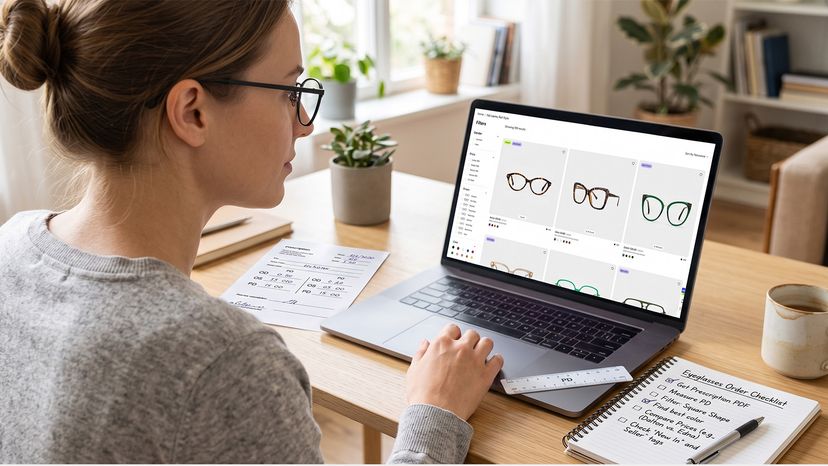
Have your order confirmation and prescription used for the order available. Depending on the lenses you wear, useful fields may include sphere (SPH), cylinder (CYL), axis, ADD and pupillary distance (PD).
The point is not to read your prescription medically. You're just verifying that the information entered on your order matches the prescription you wanted to use.
If you ordered single vision distance lenses, reading glasses or progressive lenses, also check that the lens type shown in your order matches what you ordered.
What Should You Inspect When Glasses Arrive?
With the glasses received you should check four things; condition, order correctness, fit and basic vision performance. It takes 10 minutes before you start wearing the glasses full time to check for obvious frame or lens problems in a structured way.
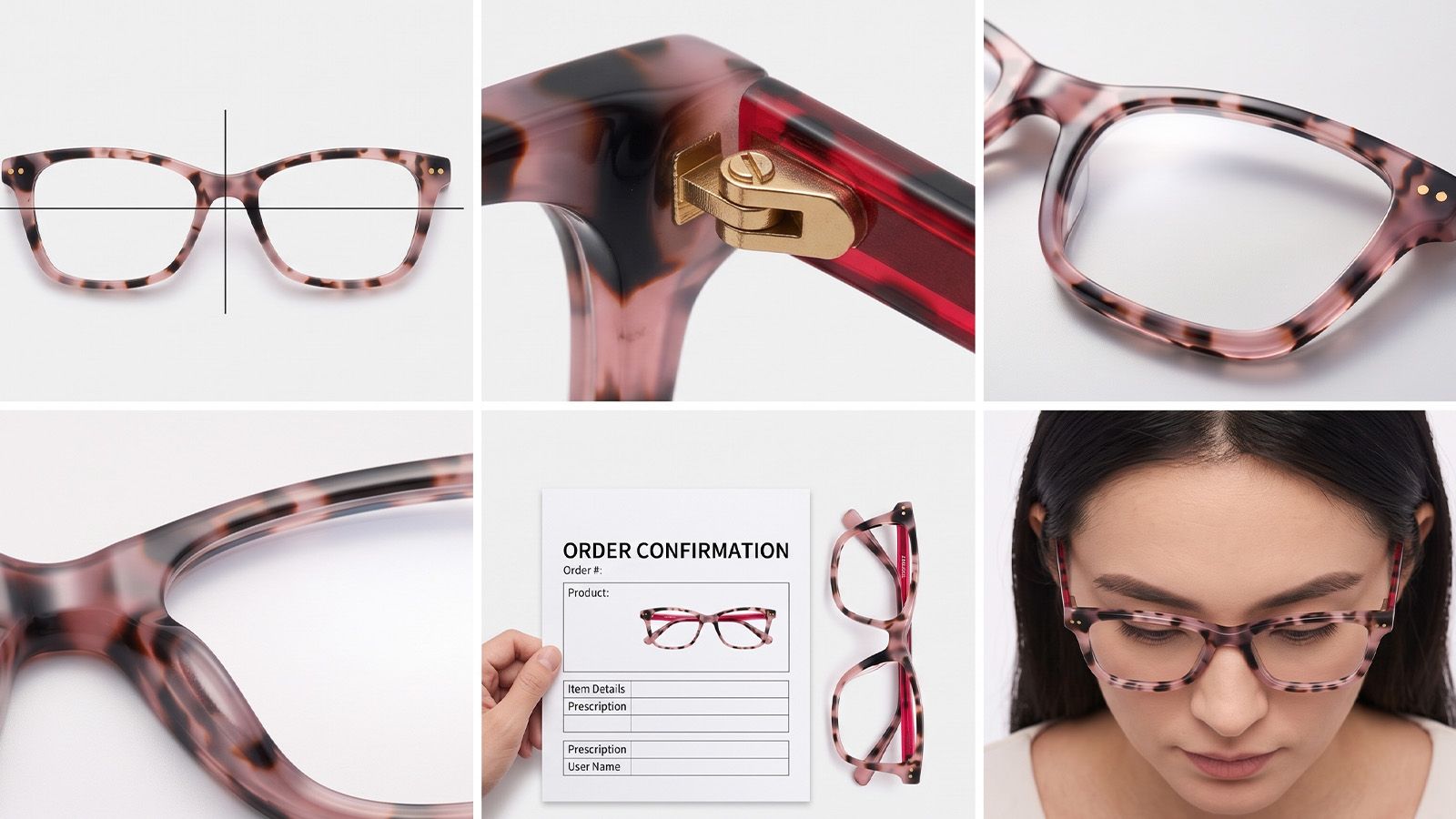
The 10min New Glasses Checklist
| Time | What to Check | What You're Looking For |
|---|---|---|
| Minutes 1–2 | Frame | Damage, symmetry, screws and moving parts |
| Minutes 3–4 | Lenses | Scratches, chips, appearance of coating, fit |
| Minutes 5–6 | Order | Frame, lens type and prescription details |
| Minutes 7–8 | Fit | Bridge width temples ears cheek lashes |
| Minutes 9–10 | Vision | Intended for near, intermediate or distance use |
Minutes 1–2: Inspect the Frame for Damage, Symmetry and Loose Parts
Start with the frame and then check your sight.
Position the glasses in front of you in good light. Inspect for cracks, chips, obvious discoloration or parts that look bent. Open and close both temples slowly. They should move fluidly without feeling too loose.
Lay the glasses flat on a surface with the temples open. There may be some minor differences as frames are fitted to a face but a clearly twisted or uneven frame is worth recording.
Inspect the nose piece, if your frame has one, and the screws around the hinges and eyewires. Nothing should seem obviously loose or missing.
Frame size matters for the fit of glasses as well. If you don’t know how those numbers work, see our guide on how to measure your glasses frame size.
Minutes 3–4: Check the Lenses for Scratches, Chips, Coating Defects and Secure Mounting
Then, examine each lens in bright indirect light.
See the front and back surfaces from different angles. New lenses should not have any noticeable scratches, chips or cracks. Focus on the edges of the lens and the points where the lenses meet the frame.
The lenses should also appear well-mounted. When you normally manipulate the frame they should not shake or visibly move.
Reflections may differ the lens material and coatings you ordered, so a colored reflection does not mean something is wrong. You are looking for something that is clearly not right, like a damaged area or a defect that consistently messes up your view.
Do not try to repair or polish a suspected coating problem yourself. If needed, snap a picture and contact the retailer.
Minutes 5–6: Match the Frame, Lens Type and Prescription Fields to the Order
Now compare the glasses with your order confirmation.
Check first the frame model, color and size. Then check the lens type and any options you chose, such as single-vision, reading, progressive, photochromic, or other lens features.
Then compare the prescription information on the order to your original prescription.
Pay particular attention to right eye (OD) and left eye (OS) values. A simple data entry error or transposed value can have a huge impact.
But an order confirmation just tells you what you put in. It does not prove the finished lenses have correct optical power and/or PD placement or optical-center measurements.
Those measurements need proper optical equipment and should be verified by optician or eye care professional if needed.
Minutes 7–8: Check Bridge Position, Width, Temples, Ears, Cheeks and Eyelashes
Put on the glasses and look straight ahead at a mirror.
The frame should be stable and not require constant pushing back into place. It shouldn't immediately slip down your nose, pinch the sides of your head or create painful pressure behind your ears.
Look for multiple contact points:
- Bridge: Is the frame sitting comfortably and securely without pressure?
- Frame width: Are the temples flared dramatically outward or squeezing your head?
- Ears: Are the temple tips comfortable?
- Cheeks: Does the frame seem to lift or move noticeably when you smile?
- Eyelashes: Are your eyelashes always hitting the lenses?
- Position: Does the frame look like it’s tilted too much or sits much higher on one side?
You can make a big difference in how a frame sits with your bridge shape. Read more about high-bridge and low-bridge fit.
ZEELOOL has also got the Low Bridge Fit Glasses and Wide Glasses for you if fit is your main focus.
Some fit issues can be fixed with a professional frame adjustment. That a frame feels a little different than your previous pair does not mean it is defected.
Minutes 9–10: Test the Intended Viewing Distances Without Covering Up Symptoms
Watch the last two minutes with your glasses the way they were meant to be worn.
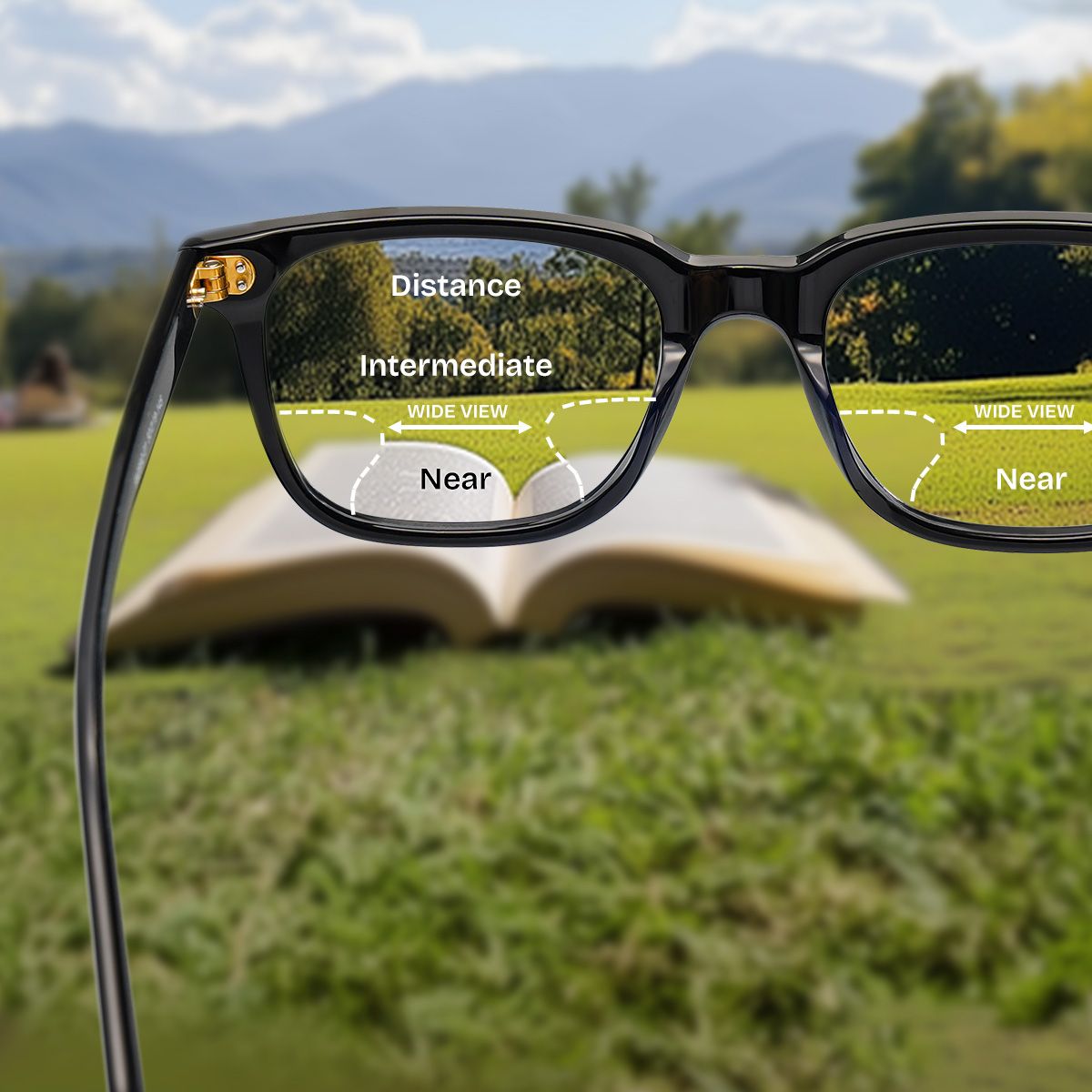
For glasses for distance, look at familiar objects across the room and farther away. Normal size print at your normal reading distance is good for reading glasses. Test distance, intermediate and near vision separately in progressive lenses. Move your eyes and head naturally.
Instead of trying to do your own clinical vision test, use familiar objects.
Ask yourself this:
Can you see the image clearly enough with these lenses? Do they play well with each other? Will my vision get better as my eyes get used to the glasses or is there something seriously wrong?
Do not squint on purpose, adjust the frame to an abnormal angle or keep covering one eye just to make the image clearer. Those tricks can hide a problem instead of helping you assess the glasses.
And don’t rely on this quick test to decide whether it’s safe for you to drive on a new prescription. Do not drive if you can not see clearly at a distance reliably until the problem is corrected.
Quick New Glasses Quality Checklist
| Check | Usually Looks/Feels OK | Worth Following Up |
|---|---|---|
| Frame | Stable, intact and typically even | Cracked, broken, badly twisted or loose |
| Lenses | Clear surface, mounted securely | Scratches, chips, cracks or visible defects |
| Bridge | Secure without painful pressure | Constant sliding or pressure |
| Temples | Comfortable and stable | Strong pinching or too loose |
| Distance vision | Clarity for use prescribed | Significant or persistent blur |
| Near vision | Comfortable at working distance intended | Cannot do intended near task comfortably |
| Both eyes together | Vision seems to be reasonably coordinated | Double vision that is new or persistent |
| Overall comfort | Mild unfamiliarity that improves. | Progressive or prolonged pain or symptoms |
How Can You Tell If Your New Glasses Were Made Correctly?
You can check for obvious signs that your new glasses are what you ordered and are functioning as they should be, but you can't fully confirm lens accuracy at home. Check order details, physical condition, fit and vision first. If something still isn’t right, an optician or eye care professional can use specialized equipment to confirm lens power, positioning and other optical measurements.
Normal Adjustment or a Possible Problem?
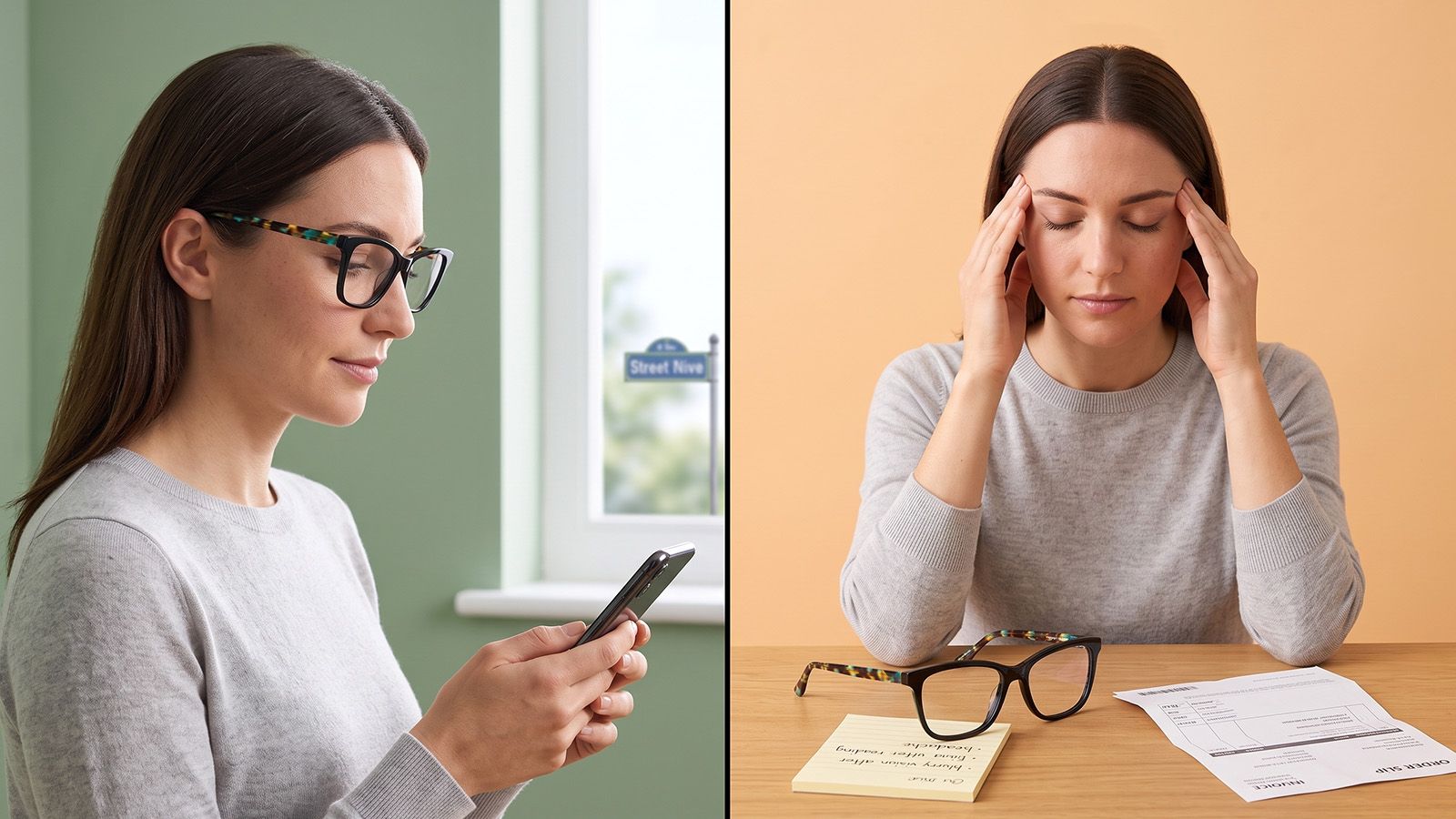
A new prescription doesn’t always feel natural right away.
Cleveland Clinic says it can take time to adjust to a new prescription. You may experience temporary blurring, eye strain, headaches or a feeling that something is “off”. Some people – especially those transitioning to progressives or with a larger change in prescription – may take longer to adjust.
The key is not if you see something odd on day one. Watch for severity, persistence and symptoms improving.
| Experience | May Occur During Adjustment | Should Be Checked |
|---|---|---|
| Glasses feel visually different first | ✓ | If it don't get better |
| Mild edge distortion | ✓ Especially with certain lens designs | Severe or persistent if |
| Mild temporary eye strain | ✓ | If it continues, or gets worse |
| Light headache | ✓ | If persistent, severe, or worsening |
| Slightly blurred temporarily | ✓ | If substantial or not improving |
| Continued double vision | — | ✓ |
| Severe eye pain | — | ✓ |
| One eye has a very different appearance or is strangely cloudy | — | ✓ |
| Loss of vision, sudden | — | Seek medical attention immediately |
A wrong or outdated prescription can also cause eye strain, headaches, blurry or distorted vision and dizziness. If symptoms don’t improve or your vision doesn’t get better, Cleveland Clinic suggests following up with an eye doctor. The eye doctor can check the prescription and make sure the glasses were made properly.
Don't Ignore Sudden or Severe Symptoms
Don't assume that every new vision symptom is due to a new pair of glasses.
If you have sudden or severe changes in vision, especially sudden double vision, vision loss or severe eye pain, seek immediate medical attention. Sudden changes in vision, double vision and severe eye pain are some of the symptoms that may require urgent medical assessment, Mayo Clinic says.
If you’re just not sure whether what you’re experiencing is part of normal adaptation, an optometrist or ophthalmologist can help you determine what to do next.
What to Do If Something Seems Wrong
If you feel something is wrong with your new glasses, don’t begin by trying to fix them yourself. Write down the problem and collect the information that will help the retailer or eye care professional understand what you are experiencing.
Picture:
- The front of the glasses
- Both sides of the frame
- Any visible scratch, chip, crack or damaged part
- Lenses from an angle showing the issue
- The packaging, if it came damaged
Then prepare:
- Order No
- Copy of the prescription used for the order
- Your PD information, if relevant
- Brief description of what doesn't feel right
- If the problem is with distance, or intermediate or near vision
- If it affects either one or both eyes
- The first time you saw it
- If the problem is improving, remaining the same or getting worse
Don’t try to self-diagnose the cause. The prescription was made wrong . It is more useful to say " distance signs are blurry out of both eyes . "
Have a product, fit or order issue with your ZEELOOL glasses? Check out the latest Return & Refund information. Policies can change, so be sure to check out the live policy page instead of relying on an older blog post for specific eligibility periods or conditions.
Conclusion
A Good 10min Check Is About Confidence, Not DIY Optometry
Checking your new prescription glasses at home is useful as you can catch visible damage, mismatches in the order, poor fit and obvious vision problems early on.
But there’s an important caveat: you’re screening the glasses, not replacing an eye exam or professional optical verification.
Prescription glasses are glasses that are made to correct the vision. If the frame looks good, the order is right and your vision is starting to feel natural, you can continue getting used to your new pair. If something continues to feel off, write it down and seek help instead of pushing yourself through a lot of discomfort.
Need help picking your next frame? Browse ZEELOOL Eyeglasses Guide, contact ZEELOOL for order-related support, or browse ZEELOOL prescription glasses to find a frame for your next look.
FAQs
Is blurry vision with new glasses normal?
It's possible to get a little temporary blurriness as you get used to a new prescription, particularly when there's a big change in prescription or when you switch to a different lens design. Many people adjust in just a few days, the Cleveland Clinic says, but some may take longer. If the blur is significant and continues to worsen or does not improve, contact an eye care professional rather than assuming you just need more time.
What happens if my glasses arrive scratched?
Capture a photo of the scratch before attempting to clean, polish or repair the lens. Retain your packaging and order information and contact the retailer and follow their current support or return process. Please check the current Return & Refund policy options that may apply to ZEELOOL orders.
Can I get a refund if my glasses don't fit?
Return and exchange eligibility is subject to the retailer’s current policy, product and circumstances. A professional frame adjustment can also correct some fitting problems. If you purchased from ZEELOOL, please refer to the updated Return & Refund policy, not the old policy quoted elsewhere.
Medical Disclaimer
This article is for general educational purposes only and is not medical advice, diagnosis or a substitute for a professional eye exam. Individual prescription, lens designs and adjustment experiences vary. If you have ongoing or concerning vision symptoms, please consult a qualified eye care professional. Sudden loss of vision or other sudden or severe visual symptoms should be evaluated promptly by a physician.