









Yes, online prescription glasses can be made accurately provided that the order is based on a current prescription, the prescription values are entered correctly, the pupillary distance (PD) is correct, the frame fit is proper, the lens design is correct, and the manufacturing is reliable. Ordering is part of the overall process that results in accuracy. It’s not just the prescription numbers.” Ordering glasses online isn’t a substitute for a thorough eye exam or a professional assessment when your vision changes.
Key Takeaways
- Prescription accuracy relies on the entire process, from your eye exam to the manufacture of your lenses.
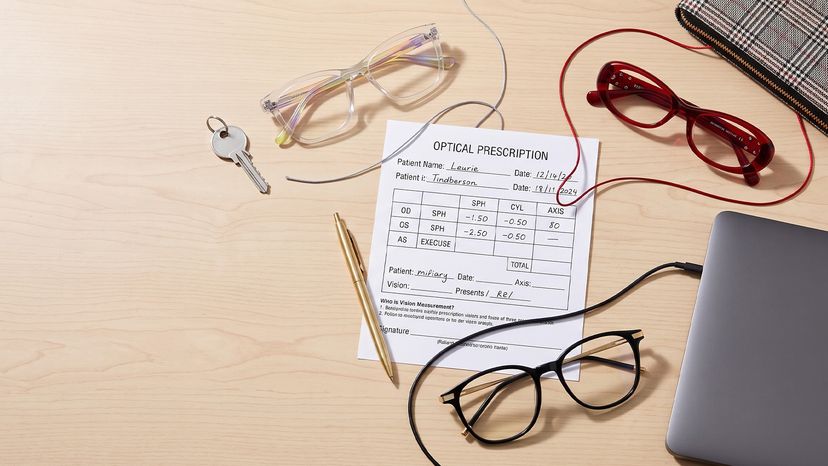
- The foundation is a current prescription with accurate entry of OD/OS, SPH, CYL, AXIS and ADD.
- Frame position and pupillary distance determine where you look through the lenses.
- Even if the prescription is technically correct, it can feel different if the frame, lens design or prescription has been changed.
- When prescriptions are complicated or measurements are uncertain, professional guidance can be helpful.
- Persistent blur, double vision, headaches or significant discomfort should be checked, rather than automatically blamed on “adjustment.”
What “Accurate” Means for Prescription Glasses
When people ask are prescription glasses online accurate, they’re usually asking one question:
“Will I be able to see right with the glasses I get?
But optical precision is a couple of layers different.
The right prescription numbers are in a pair of glasses and still feel off if the lenses aren't positioned correctly in relation to your eyes. A frame can be a perfect fit and still have the wrong lens type. And it can take a few days of wear for a new prescription to feel familiar and be done correctly.
It’s easier to think about accuracy in four parts.
1. Prescription accuracy
The lens powers should match the prescription for your right and left eyes.
This includes values like:
- Sphere (SPH)
- Cylinder (CYL)
- Axis
- ADD, as required
- Prism prescribed
2. Optical positioning
Your eyes have to be looking through the right parts of the lenses.
Measurements such as the pupillary distance are used to align the optical centers horizontally. With some designs of multifocal or progressive lenses, the vertical fitting and the way the frame sits can become especially significant.
3. Lens and frame assembly
The right lenses need to be manufactured and securely fitted in the chosen frame.
The final product can be influenced by lens design, material, thickness and frame shape.
4. Real world visual performance
Finally, the glasses should work in the activities for which they have been prescribed.
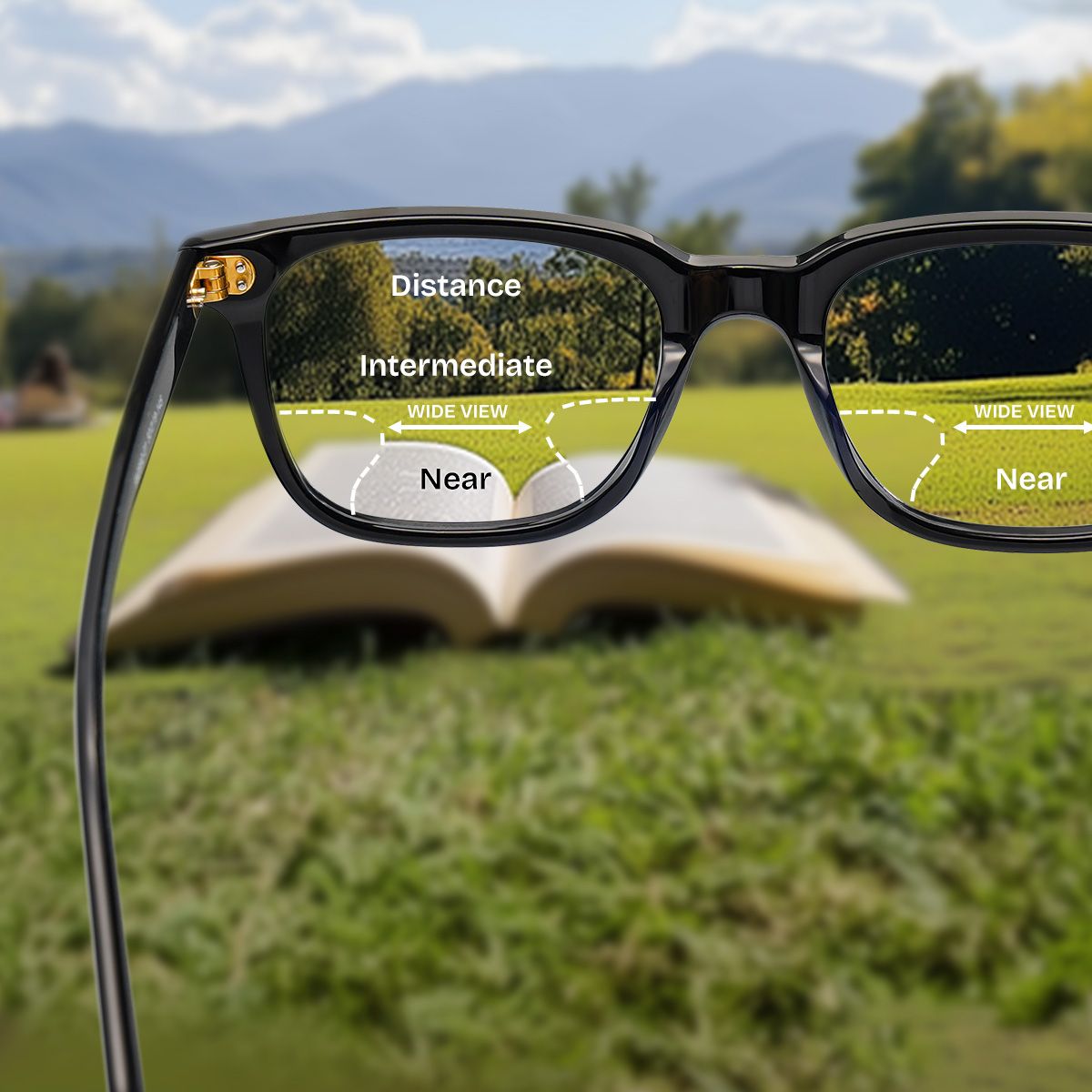
Distance prescription should be for distance vision. Reading lenses should work at the distance they were designed for. Progressive lenses must have useful areas for far, intermediate and near vision.
The four areas are related but are not identical.
And that’s why “the numbers fit my prescription” is not always the same question as “the glasses feel just right.”
What Measurements Matter When Ordering Glasses Online?
The most important measurements and inputs when ordering prescription glasses online are: a current prescription, correct input of the prescription values, accurate pupillary distance, correct frame size and fit and the correct lens design.
No single measurement can be used to determine accuracy.
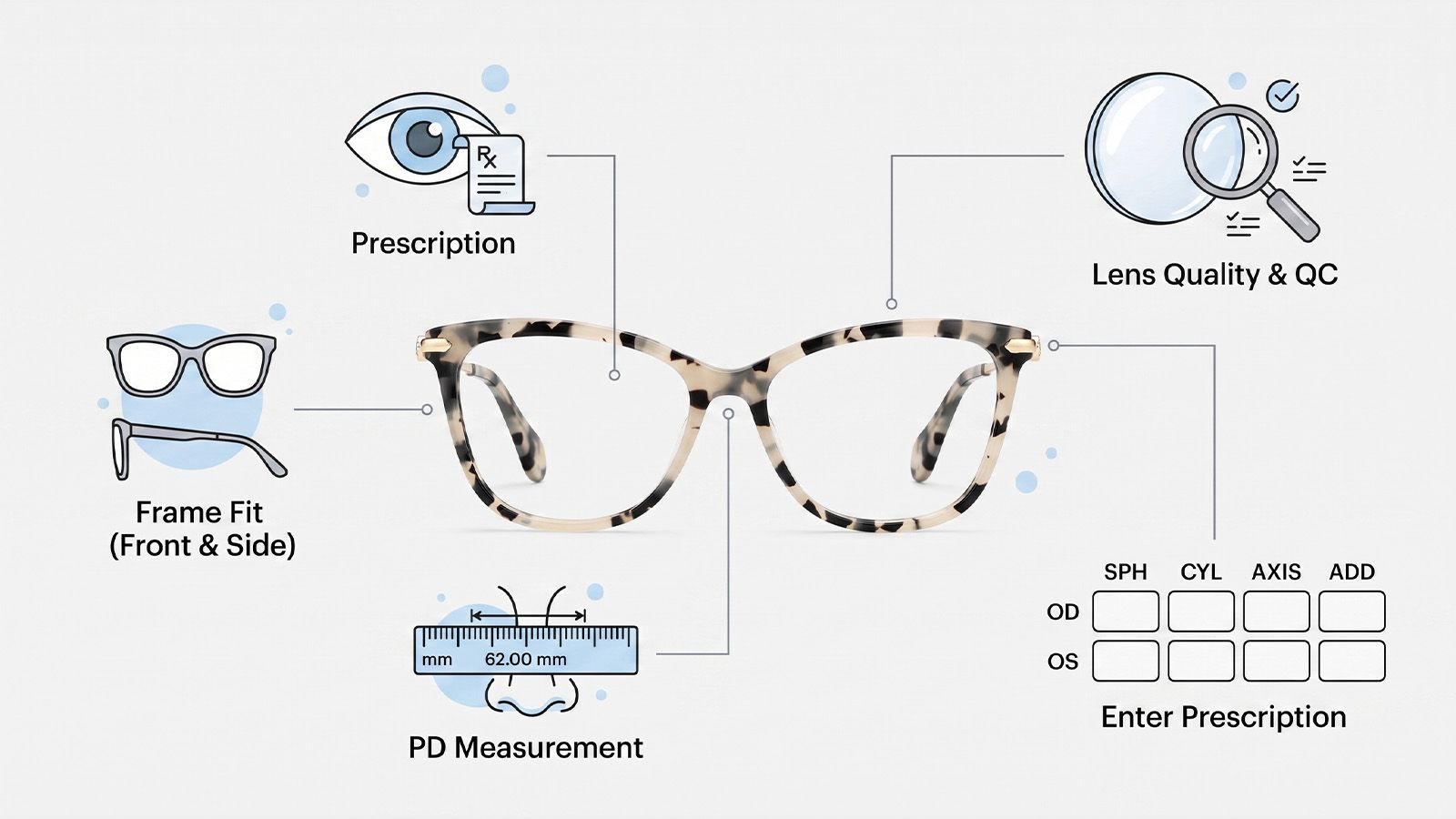
The Five Factors That Impact Accuracy:
1. Current, Full Prescription
It all begins with the prescription.
A prescription is a record of your vision needs at the time of your eye exam. If your vision has changed a lot since that exam, then perfectly made lenses from an old prescription do not magically bring that old prescription up to date.
A full prescription can have different fields depending on your needs. Some people have SPH values only. Others might also have CYL and AXIS for astigmatism, ADD for near-vision support or prism measurements.
Do not interpolate missing values.
If you’ve noticed a change in your vision, you’re experiencing new symptoms or you’re not sure whether your prescription is still appropriate, an eye exam should take precedence over ordering new corrective lenses.
According to Cleveland Clinic, eyeglasses are medical devices to correct refractive errors and an eye examination is used to determine the prescription needed for an individual’s vision.
2. Correct Input of SPH, CYL, AXIS and ADD
If the information is entered incorrectly, the order can be wrong even if the prescription is right.
Three mistakes deserve special attention:
● Right eye or left eye
OD right eye, OS left eye. You should never just swap values between the two.
● Plus & minus signs
The prescription value is preceded by the "+" or "-" sign. Leaving out or altering a sign can alter what is ordered considerably.
● CYL and AXIS
If your prescription corrects astigmatism, cylinder and axis work together. Axis refers to the orientation for cylindrical correction, not the strength of the prescription per se.
For more information, read our beginner’s guide to AXIS on an eye prescription.
● ADD
ADD is most commonly associated with extra near-vision strength in multifocal prescriptions. This is not meant to be equivalent to your normal SPH value.
How to find out about ADD on an eye prescription.
The best way is simple: just copy the prescription exactly, rather than trying to interpret it or “correct” it yourself.
3. Accurate Determination of Pupillary Distance
Your pupillary distance, or PD, is the distance between the centers of your pupils .
And what does it matter?
The prescription lenses are designed so your eyes see through certain optical zones. PD is used to calculate where those areas will sit horizontally against your pupils.
You might see:
- Single PD: One overall measurement between the two pupils.
- Dual PD: Right and left measurements taken from the center of the nose.
The exact format needed may be dependent on the ordering system and lens design.
A common mistake is to think of PD as a measurement of frame size. It doesn't. Frame size is the physical size of the glasses, PD is all about where your eyes are.
Another mistake is measuring over and over again until you get the number you expect.
If the results you get are significantly different from one measurement to the next, don’t just pick the number you like best. Make sure that your measuring technique is correct or get it checked by a professional.
For more information, see our pupillary distance measurement guide.
4. Frame Size, Position of Bridge and How Frame Sits
Frame fit is more than simply comfort or looks. It can also effect how your eyes sit with the lenses.
Use two frames with the same prescription lenses.
It sits close to the eyes . Stays centered . The other is always running down your nose, or sits conspicuously higher on one side.
The prescription numbers may be the same, but the visual experience may not be identical.
Important considerations for fit include:
- Total width of frame
- Width and height of the lens
- Bridge width
- Placement of bridge on your nose
- The temple length
- How far the frame slides back
- Whether the frame is level
- The distance of the lenses from your eyes
This becomes especially important with lenses that have multiple viewing areas such as progressives.
Before ordering, compare the frame size to the size of glasses that fit you well. Our guide tells you how to measure your glasses frame size.
5. Lens Selection, Manufacturing & Quality Control
The prescription figures are only one part of the final lens.
You also need to select a lens that’s suitable for how you expect to use the glasses.
Examples of this are:
- Single-vision distance spectacles
- Reading glasses for single-vision
- Progressive lenses
- Prescription sunglasses
- Photochromic lenses
Lens material and index can also impact thickness, weight and overall wearing experience, especially in higher prescriptions.
A higher index does not mean a "more accurate" prescription. It’s main job is how well the material bends light. In many situations this can allow for a stronger prescription made with thinner lenses.
If you're comparing materials, see our guide on how to choose lens index.
You can also explore ZEELOOL's single-vision lens options and progressive lens options when deciding on the right lens design for your intended use.
And finally, manufacturing quality matters.
The finished lenses must be made to the ordered specification, properly positioned and then securely held in the frame. So quality-control checks are another aspect of prescription-glasses accuracy.
What Can Affect Online Glasses Accuracy?
| Variable | Possible Impact | What to Check Before Ordering |
|---|---|---|
| Prescription | Calculates the power needed for correction | Keep it up-to-date and complete |
| OD/OS | Naming of right and left eyes | Check that the values have not been swapped |
| Plus/minus signs | Changes in prescription meaning | Copy signs as received |
| CYL & AXIS | Effect on correction of astigmatism | Enter exactly as appears In both boxes |
| ADD | Impact on near-power in relevant lenses | Verify the right multifocal information |
| PD | Helps locate optical center | Make careful measurements & check the format |
| Frame size | Affects lens and eye positioning | Compare dimensions to a fitting frame |
| Bridge fit | Position of the frame vertically and horizontally changes | Choose a bridge that suits your face |
| Lens type | Identifies desired viewing areas | Choose lens based on distance, near or multifocal use |
| Lens index | Affects thickness and properties of material | Select by prescription and lens needs |
| Manufacturing | Transforms order information into finished lenses | Review of eyeglasses after delivery finished |
Which Prescription Fields Need Extra Attention?
You don’t have to be an optometrist to order glasses online, but understanding the basic function of common prescription fields can help you avoid simple entry mistakes.
| Field | Basic Meaning | Common Ordering Mistake |
|---|---|---|
| OD | Right eye | Put the values for the left eye |
| OS | Left eye | Enter the values for the right eye here. |
| SPH | Simple lens power for nearsightedness or farsightedness | Missing the + or − sign |
| CYL | Degree of correction for astigmatism | When it is present on the Rx, leave it blank |
| AXIS | Correction for cylinder orientation | Mistaking it for lens power |
| ADD | Additional near power used with some multifocal prescriptions | Directly adding it yourself to SPH |
| PD | Distance relative to the pupil position | PD confused with frame width |
This table is designed to help you transcribe, not interpret, your prescription.
If your prescription has numbers that you do not recognize, prism, a different format or anything else that you do not get, do not guess. Only order after consulting with prescribing eye care professional or eyewear provider.
What Causes Online Glasses to Feel Wrong?
There are several reasons why online glasses might feel wrong, including a changed prescription, wrong order details, incorrect measurements, poor frame fit, a different lens design or the normal adjustment to new glasses.
That feeling doesn’t tell you which of those factors immediately is responsible.
That distinction is significant.
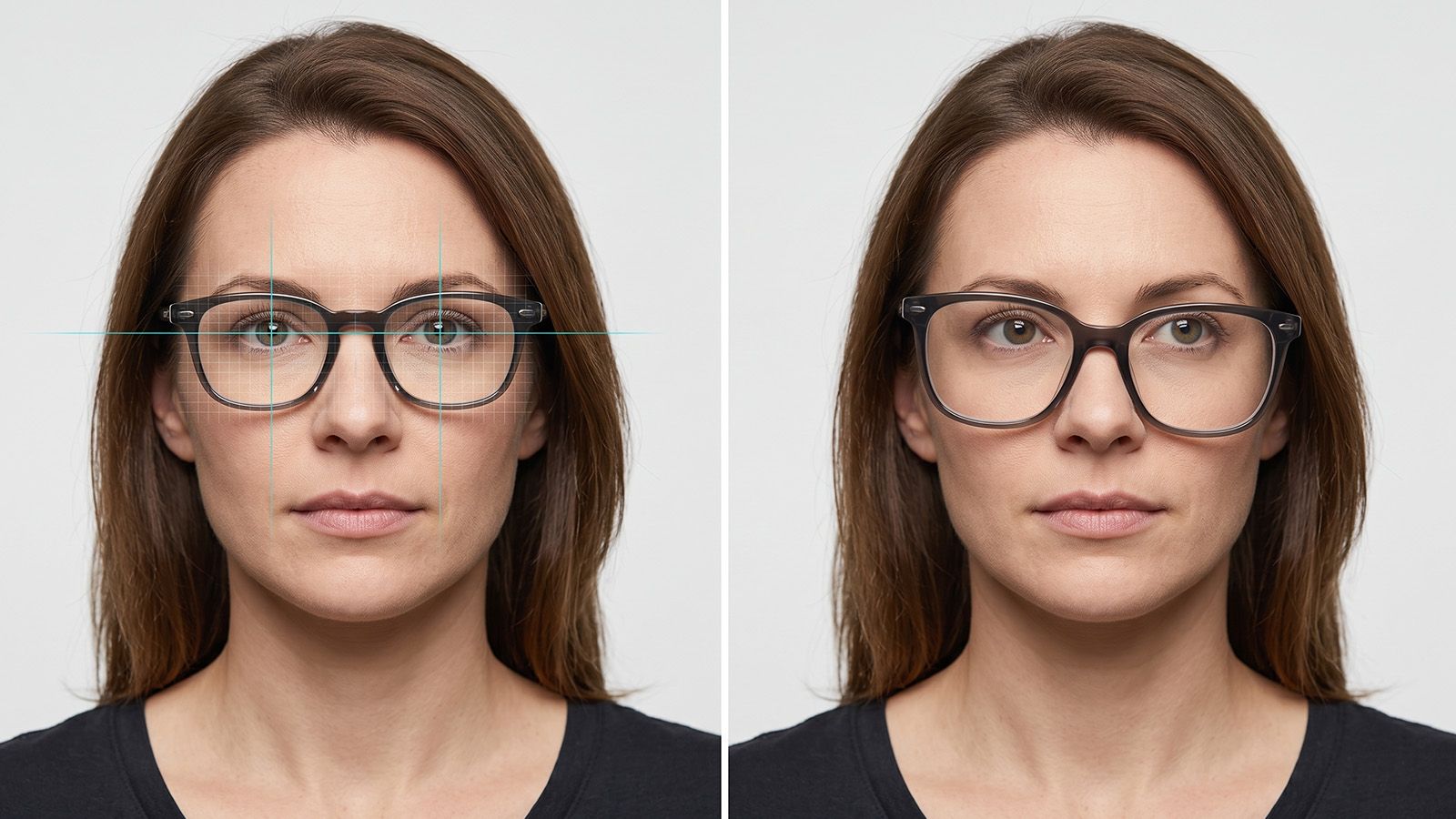
Why Correct Glasses Can Still Feel Different at First
A new prescription changes the way light is being corrected before it hits your eyes. Your visual system may require time to adjust to that change.
Cleveland Clinic states that new glasses can temporarily cause blurred vision, headaches, eye strain, a feeling of being “off-kilter,” and visual distortion. Adjustment can take longer for larger prescription changes or progressive lenses. Most improve within a few days, some may take longer.
That means that an unfamiliar feeling on the first day does not automatically prove that your glasses were made incorrectly.
A few real differences can make a new pair feel different:
● Change in your prescription
A stronger or significantly different prescription may affect image size, sharpness or spatial perception compared to your old glasses.
● Your frame is different
Even with the same prescription, a bigger, smaller or differently shaped frame will change where the lenses sit in relation to your eyes.
● Your lens design was changed
When you switch from single-vision lenses to progressives, or from one progressive design to another, the areas of clearest viewing can shift.
● Astigmatism correction changed
You may notice that changes in the cylinder or axis first make straight lines, distances or spatial relationships feel unfamiliar.
● Your old glasses don’t fit quite right.
Even before you factor in the prescription, the new pair might feel noticeably different if your old frame sat lower, closer, further away or at a different angle.
But adjustment should not be automatic for every problem.
Cleveland Clinic also recommends that blurry vision, eye strain, headaches or dizziness are symptoms that can occur with an incorrect or outdated prescription, and should be reviewed by an eye care professional.
Adjustment vs. Possible Problem
| Experience | Can Happen During Adjustment | Worth Following Up |
|---|---|---|
| It’s a new prescription and it doesn’t feel familiar | Yes | If it doesn’t improve |
| Temporary mild blurriness | Possible | If serious, getting worse or is continuing |
| Edge distortion (minor) | May be possible with some lens designs | If severe and interferes with normal use |
| Slight transient headache | Possible | If it stays or gets worse |
| Mild eyestrain | Possible | If it persists or becomes significant |
| Frame feels a bit different | Common | If you have constant sliding or painful pressure |
| Long-lasting double vision | This is not something to be ignored. | Consult an eye care professional |
| Severe pain in the eyes | Not a normal ‘wait it out’ symptom | Have a professional assessment |
| Sudden significant vision change | No new glasses to blame. | Get early medical attention |
If you suddenly get blurry vision, or if it gets noticeably worse, you should see a doctor, not an optician.
When Is Ordering Glasses Online Appropriate?
For many adults with a reliable, straightforward prescription, ordering prescription glasses online can be a convenient way to shop for eyewear.
This might be particularly easy if you:
- Have a current prescription that you understand
- No recent unexplained changes in vision
- Know your PD
- Know already what frame size fits you
- Ordering a familiar lens type
- Ability to review the prescription clearly prior to checkout
But online ordering is not a replacement for professional judgment where your case demands more clinical assessment.
Seek professional advice first if:
- Your prescription is expired or you’re unsure if it is still valid
- Your vision has now changed
- You are having unexplained blur, double vision, pain or other concerning symptoms
- You are ordering for a child
- Your prescription contains measurements or corrections you do not understand
- You need prism or some other more specialized correction
- You don’t know a complex multifocal lens design
- Your PD or other measurements are skewed
- Previous glasses would never provide comfortable vision
The problem isn't that one shopping channel is inherently "accurate" and another is "inaccurate."
A more interesting question is:
Do you have all the correct clinical and fitting information you need to make this particular pair of glasses successfully?
Accuracy Checklist Before You Place an Order
- Select suitable lens material/index. Don’t assume higher index is always better, consider prescription, frame and wearing preferences.
- Check all order before checkout. Check every field against the original prescription one last time.
- Verify the date of the prescription. Make sure you are using the prescription you mean to use and that it is still appropriate according to your eye care provider.
- Check patient name. Do not mistakenly use someone else’s family member’s prescription.
- OD and OS check. Ensure right-eye and left-eye values are inputted in the appropriate rows.
- Check every sign + and −. Do not depend on memory.
- Enter CYL, AXIS and ADD as is. Do not compute or alter them yourself.
- Verify your PD. Recheck measurement and single or dual PD required for the order.
- Check frame size. Use a comfortable pair that you already own as a practical reference.
- Check lens purpose. Distance, reading and progressive lenses are not the same.
Conclusion
Precision Is a Procedure, Not Just One Number
Online prescription glasses can be accurate, but it’s a chain of correct decisions that make them so.
The current prescription needs to be correctly entered. PD must be the position of your eyes. The frame must be in a good position. The type of lens must match how you intend to use the glasses. And the finished product must be produced as per the order.
That’s why “online vs. in-store” is often less important than the quality of the information used throughout the process.
If your prescription is up-to-date and your measurements are accurate, online eyewear provides an easy way to browse more frame shapes, colors and styles without sacrificing prescription options.
Check out the ZEELOOL Choose Eyeglasses Guide to help you find a frame that fits your face and everyday style, or browse ZEELOOL Prescription Glasses to start working on your next pair.
FAQs
Are online glasses prescriptions trustworthy?
Whether you buy your glasses online or at a brick and mortar store, the prescription should come from a qualified eye care professional. You submit your prescription information with your order and an online retailer manufactures the glasses. For accurate results, please use a current prescription, enter all fields exactly and confirm required measurements before checkout.
What if I am wrong about my PD?
PD helps determine the horizontal placement of the optical areas of your prescription lenses in relation to your pupils. A wrong measurement can affect your eyes’ alignment with the lenses and may contribute to uncomfortable vision performance. If you notice a difference between home measurements, get your PD checked again - don’t guess.
Can wrong axis make you blurry?
The axis is part of an astigmatism correction and tells the orientation of the cylinder correction. If your prescription has the CYL and AXIS, these will need to be entered exactly as written. A wrong prescription, including the correction for astigmatism, can result in blurred or distorted vision, eyestrain or headaches. Do not attempt to determine the "correct" axis based solely on symptoms; if problems continue, have the prescription and finished lenses checked by a professional.
How do I know if my new glasses are correct?
Check the order against your original prescription. Check the frame, and the lenses. Check how the frame fits your face. Check the glasses at the viewing distances they were made for. A lot of obvious problems can be spotted by home checks, but to really see the power of the lens and some optical measurements you need professional equipment to verify.
Medical Disclaimer
This article is for general educational purposes only, and is not medical advice, diagnosis or a substitute for professional eye exam. Experiences with individual prescriptions, lens designs, and adjustments vary. If you experience any ongoing or concerning vision symptoms, consult a qualified eye care specialist. If you experience sudden loss of vision or other sudden or severe visual symptoms, see a physician promptly for evaluation.