








Summary
Sports prescription sunglasses provide accurate vision correction, impact-resistant lenses, a secure frame fit, and UV400 protection — making them a practical necessity for anyone who wears corrective lenses and spends time outdoors. The right pair depends on your activity: polarized lenses for water and driving, photochromic for variable light, TR90 frames for running, and polycarbonate lenses across all sports for impact resistance. Standard single-vision, progressive, and high-index prescription options are all available in athletic frames, with the main consideration being frame curvature compatibility for stronger prescriptions.
The best sports prescription sunglasses combine impact-resistant lenses, a secure wraparound fit, UV400 protection, and accurate vision correction—all in a frame light enough to forget you're wearing them. Here is how to find the right pair for your activity and prescription.
Why Regular Sunglasses Don't Work for Sports
Standard sunglasses are designed for casual wear. They sit loosely on the face, use standard-index lenses that can shift under movement, and rarely offer the lens coverage needed for fast-moving outdoor activity. For anyone who needs vision correction, the situation is worse—wearing sunglasses over prescription glasses is uncomfortable, limits peripheral vision, and looks impractical.
Sports prescription sunglasses solve this by combining corrective lenses with frames engineered specifically for physical activity.
Athletic Prescription Sunglasses Features to Consider
Impact resistance is the starting point. Polycarbonate lenses are the gold standard for sports eyewear—they are far more impact-resistant than standard plastic and meet ANSI Z87.1 safety ratings. Trivex lenses offer similar impact resistance with slightly better optical clarity. The fit of the frame is more important in sports than in any other context.
Look for:
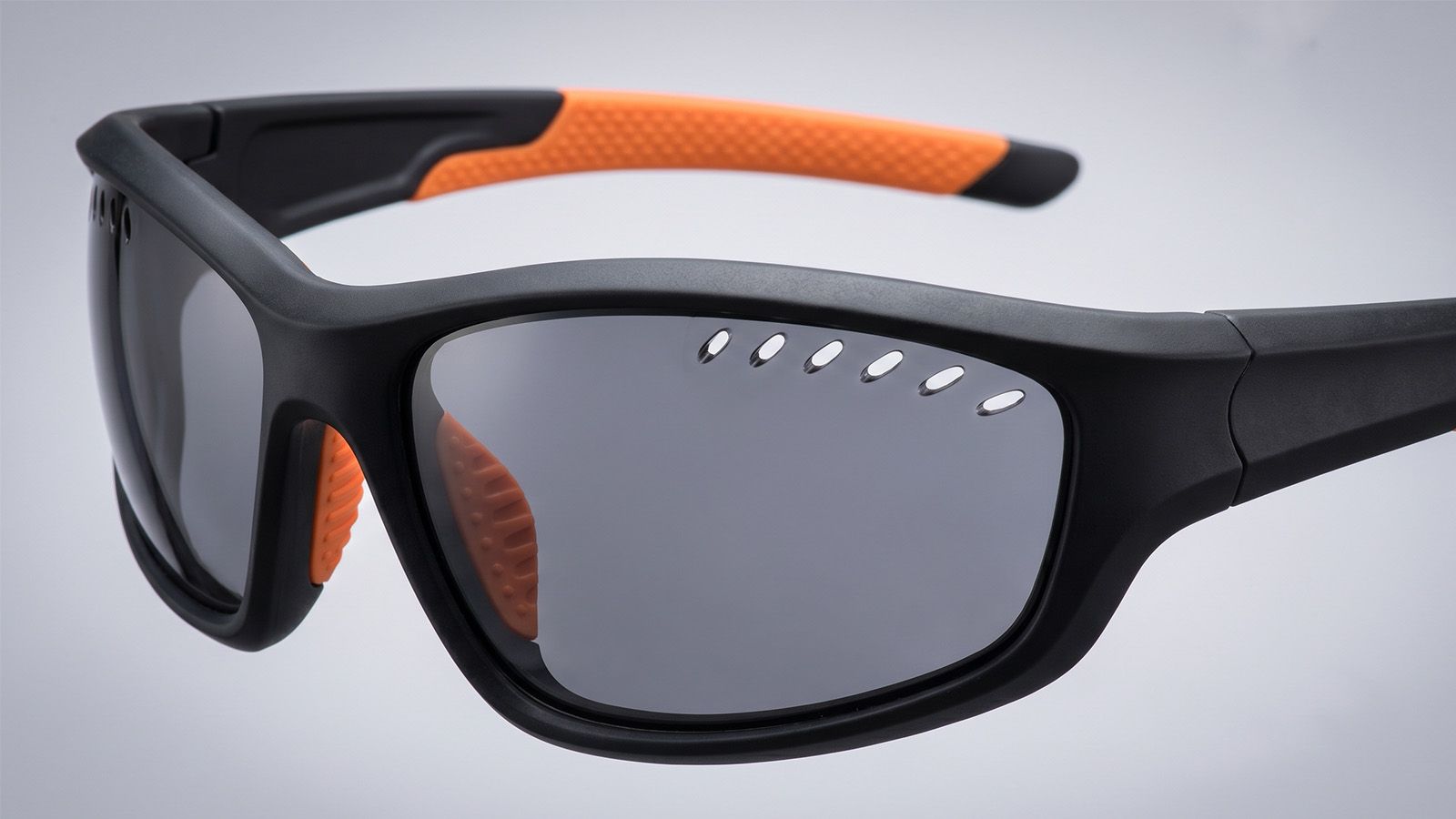
● Wraparound or semi-wraparound frames that reduce wind and debris exposure
● Rubberized nose pads and temple tips that grip when you’re moving
● Adjustable nose bridges for a custom fit
● Spring hinges that flex instead of breaking under pressure
UV protection should be UV400 — blocking 100% of UVA and UVB rays. This is non-negotiable for outdoor athletic use.

Lens options worth considering:
| Lens Type | Best For |
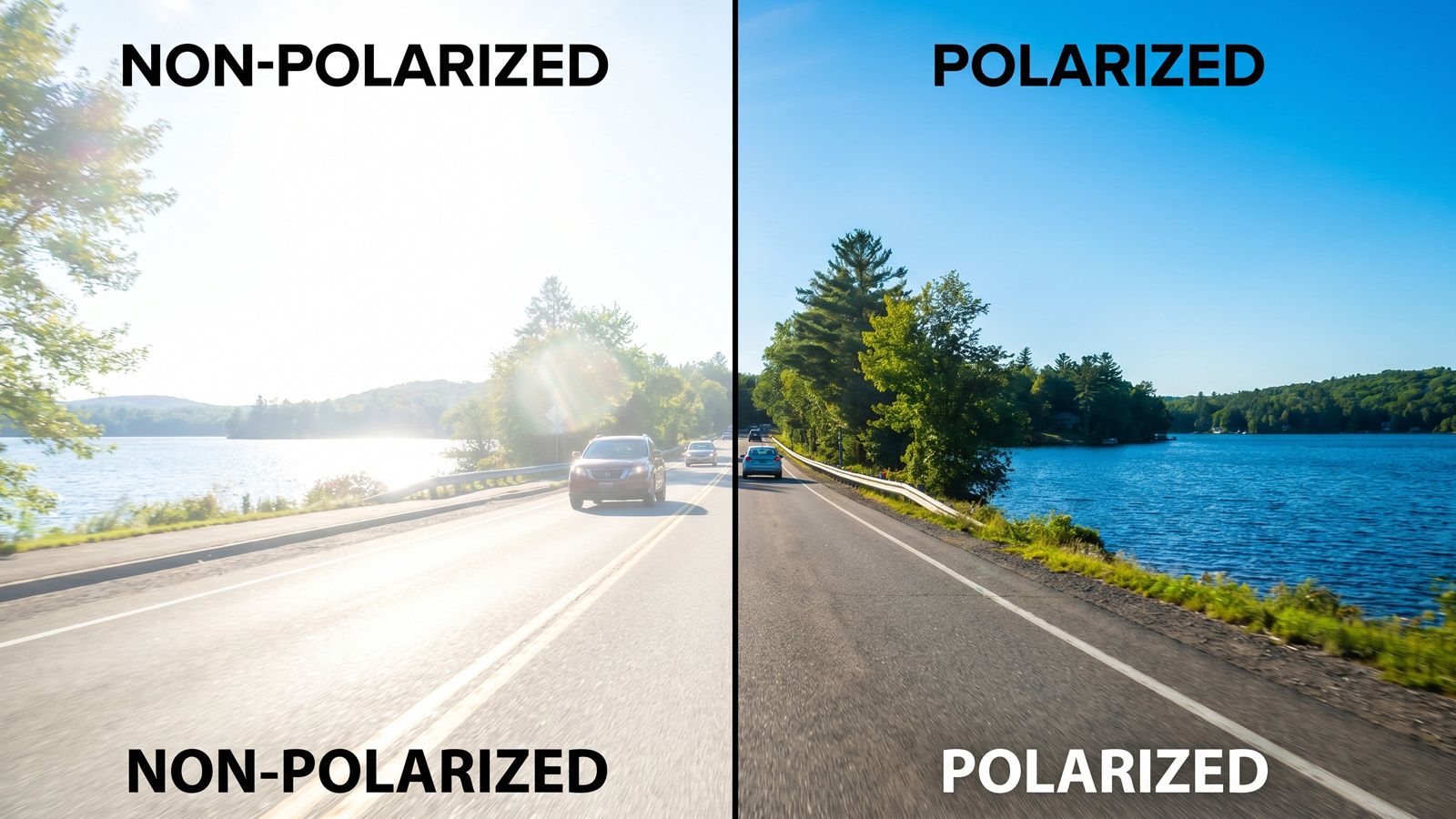
| Polarized | Driving, cycling, water sports—cuts glare from reflective surfaces |
| Photochromic | Variable light conditions—adapts from clear to tinted automatically |
| Mirrored | High-glare environments like snow or open water |
| Anti-fog coating | High-intensity activities where temperature changes cause fogging |
Best Frame Styles By Sport
Different sports have different demands on a frame:
Running: Lightweight wraparound frames that hug close to the face. TR90 plastic is best; it’s flexible, virtually unbreakable, and weighs next to nothing. Vented lenses are good to minimize fogging.
Cycling: Wraparound coverage protects from wind and debris. Interchangeable lens systems let you swap tints as the light conditions change.
Water Sports: Polarized lenses are a must to fight glare off the surface of the water. A hydrophobic lens coating helps shed water droplets quickly. Equipped with a floating retainer strap, they prevent the eyewear from being lost.
Team sports and court sports: Full-rim frames with secure fit and impact-resistant polycarbonate. Less wraparound, more standard profile — a browline or rectangle style with TR90 material works well.
General outdoor and hiking: A versatile prescription sunglass in a medium-coverage frame with polarized lenses covers most situations.
Prescription Options for Sports Sunglasses
Most athletic frames support the following prescription types:
- Single vision lenses—for distance or near correction, the most straightforward option.
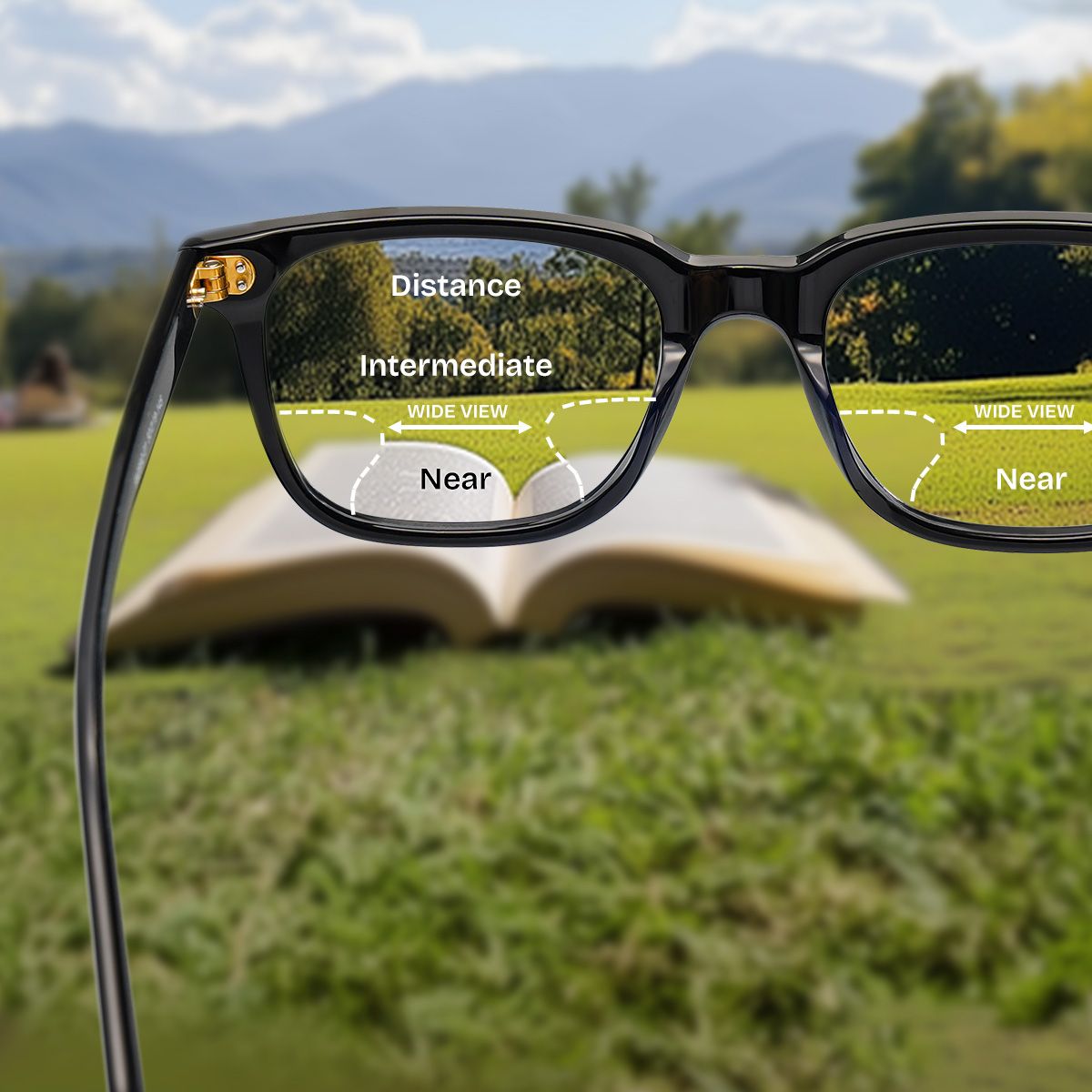
- Progressive lenses—for presbyopia—require adequate lens height, so check frame dimensions before ordering.
- High-index lenses (1.67 or 1.74) — for stronger prescriptions where standard lenses would create uncomfortable thickness in a wraparound frame.
One important note: very highly curved wraparound frames can distort prescription lenses, particularly for stronger prescriptions. If your prescription is above ±4.00 diopters, confirm frame compatibility before ordering. Flatter sports frames—base curve 6 or below—accommodate prescriptions more accurately.
ZEELOOL's Options for Athletic Eyewear
ZEELOOL carries TR90 and mixed-material frames suited to active wear, with prescription lenses available, including single-vision and polarized options. All frames include a free virtual try-on tool so you can check fit and proportions before ordering. Standard shipping across the US takes 9–14 days; business express takes 5–9 days.
Conclusion
Sports prescription sunglasses are one of the most functional eyewear investments an active person can make. The right pair eliminates the compromise between vision correction and sun protection, fits securely through any activity, and protects your eyes from both UV damage and physical impact. Focus on frame fit, lens material, and UV rating first—then choose tint and style based on your specific sport.
FAQ
Can you put prescription lenses in sports sunglasses?
Yes. Most sports sunglasses with a base curve of 8 or less can be fitted with prescription lenses. Very high-curve wraparound styles may introduce distortion for stronger prescriptions—verify frame compatibility before ordering.
Are polarized lenses worth it for sports?
For outdoor sports involving reflections off water, snow, or pavement, the answer is a resounding yes—and the benefits are significant. Polarized lenses are excellent at reducing reflective glare, improving contrast and reducing eye strain when outdoors for long stretches of time. But in indoor sports or court games, regular tinted lenses usually do the trick.
What is the best material for prescription sports sunglasses?
TR90 is the best material for sports frames because it’s lightweight, flexible, and impact-resistant. Polycarbonate is the best material for sports lenses because it combines impact resistance with optical clarity.
Do sports sunglasses come with progressive lenses?
Yes, but you will want to check the lens height of the frame first. Progressive lenses require a minimum of 28-30mm of vertical lens space to fit comfortably in the distance and reading zones. How do I stop my sports glasses from slipping while exercising? Choose frames with rubberized nose pads and temple grips and add a retainer strap for high-intensity activities. Fit is the most important factor—frames that are a match to your face width will naturally stay in place.