





Key Factors and Conclusion
Snow reflects 80-90% of UV, creating a “double sun” that causes photokeratitis (snow blindness).
Regular sunglasses fail in snow; wraparound frames or goggles block reflected light from all angles.
Symptoms hit hours later—gritty pain, tearing, light sensitivity; treat with darkness and artificial tears.
Funny thing, when you tell people you wear sunglasses in winter, they assume you're joking. It was unnecessary too. Then I went out on a bright, snowy day and felt this little sting in my eyes that didn’t feel like normal sunlight at all. It’s harsher, but in a quiet way. Winter light has this sharp, almost sneaky quality to it. It hits you harder than you expect, and sometimes you only realize the damage long after you’ve stepped inside. 
That sting is often the first sign of photokeratitis, which is basically a sunburn of the cornea. It is not rare. It is not dramatic. It is just what happens when the eyes are exposed to too much UV in a short period. If you’ve ever woken up in the middle of the night after skiing and wondered why your eyes feel like you slept with gravel glued to them, that’s probably it.
And the whole reason this happens, especially on the snow, goes back to one little physics concept most people never think about: the albedo effect. The whole point here is to show why your usual fashion sunglasses fail completely in winter light and what gear actually works.
The Physics of Albedo: Why Snow Acts Like a Mirror
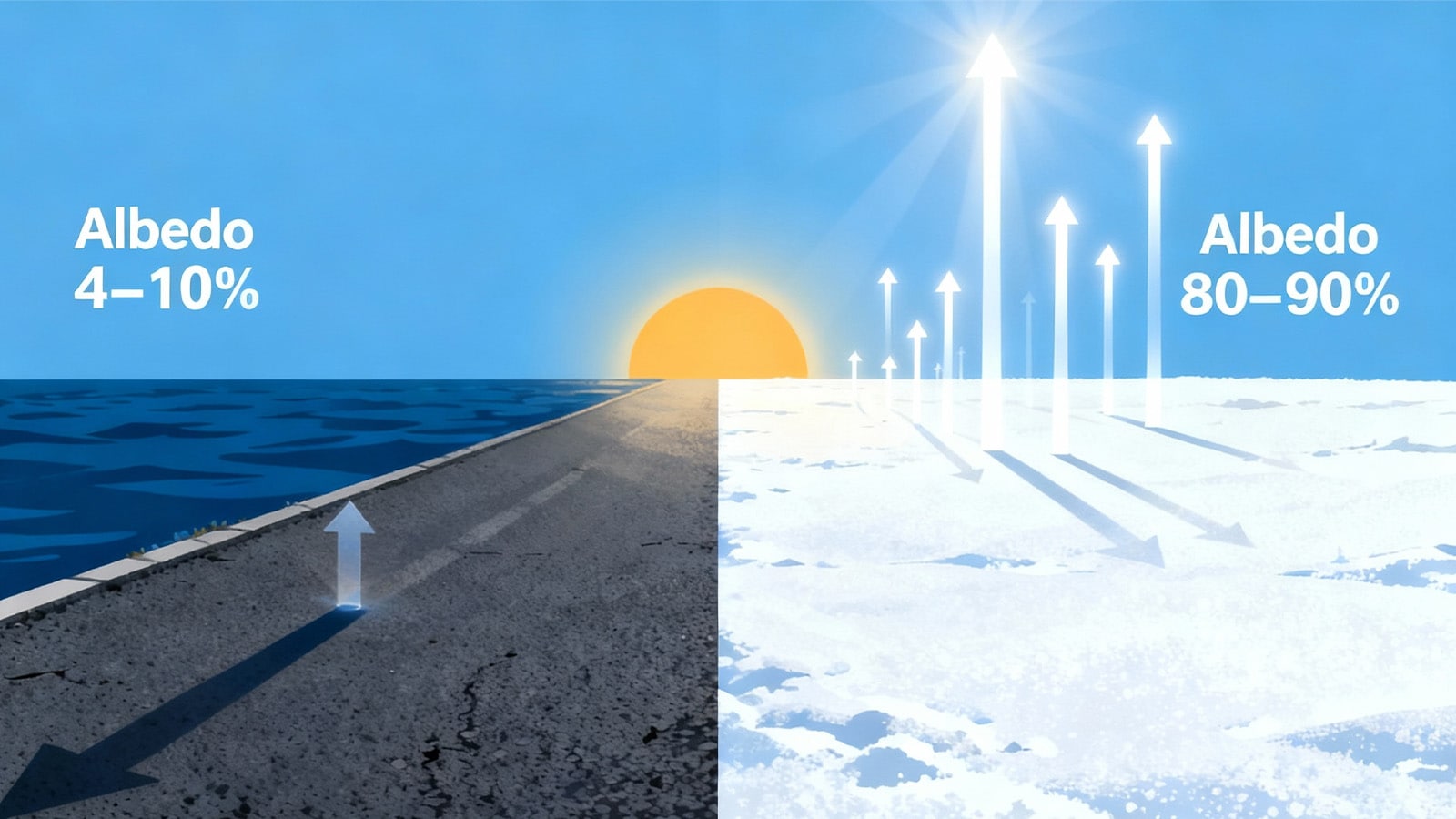
Albedo is just a measure of how much light a surface reflects. Simple idea, but it explains so much. Dirt and asphalt barely bounce any light back. Maybe four to ten percent. The ocean is similar, around six percent. But snow is a completely different world. Fresh snow reflects eighty to ninety percent of the sunlight that hits it. When you think about it, that is almost all of it coming right back up.
This is where the idea of a “double sun” starts to make sense. You get the direct light from above, the normal stuff. Then the snow throws a second wave of UV up from below. The eye can’t tell the difference between the two. It just gets overwhelmed. So when someone stands outside on a clear winter day thinking they’re fine because they’re used to summer brightness, they’re missing the fact that winter is a two-front attack. Snow blindness prevention starts with understanding this one detail.
The Altitude Multiplier: Thin Air, Strong Rays
Another factor most people overlook is altitude. The higher you go, the less atmosphere there is to filter UV. The atmosphere works like the world’s natural sunscreen, and when you climb above it, even a little, you lose some of that protection. A rough rule many guides use is that UV climbs about ten to twelve percent for every thousand meters of elevation. It adds up without you noticing.
Put that together with the snow’s massive reflection, and things get harsh pretty fast. At three thousand meters, a skier is already getting about thirty percent more UV just from being high up. Then the snow throws another huge wave upward.
It’s no surprise people get burned corneas in under an hour on a bright day. The combination is almost sneaky because the air is cold and crisp, and you don’t feel the danger building. You just feel the cold.
Recognizing Snow Blindness (Photokeratitis)
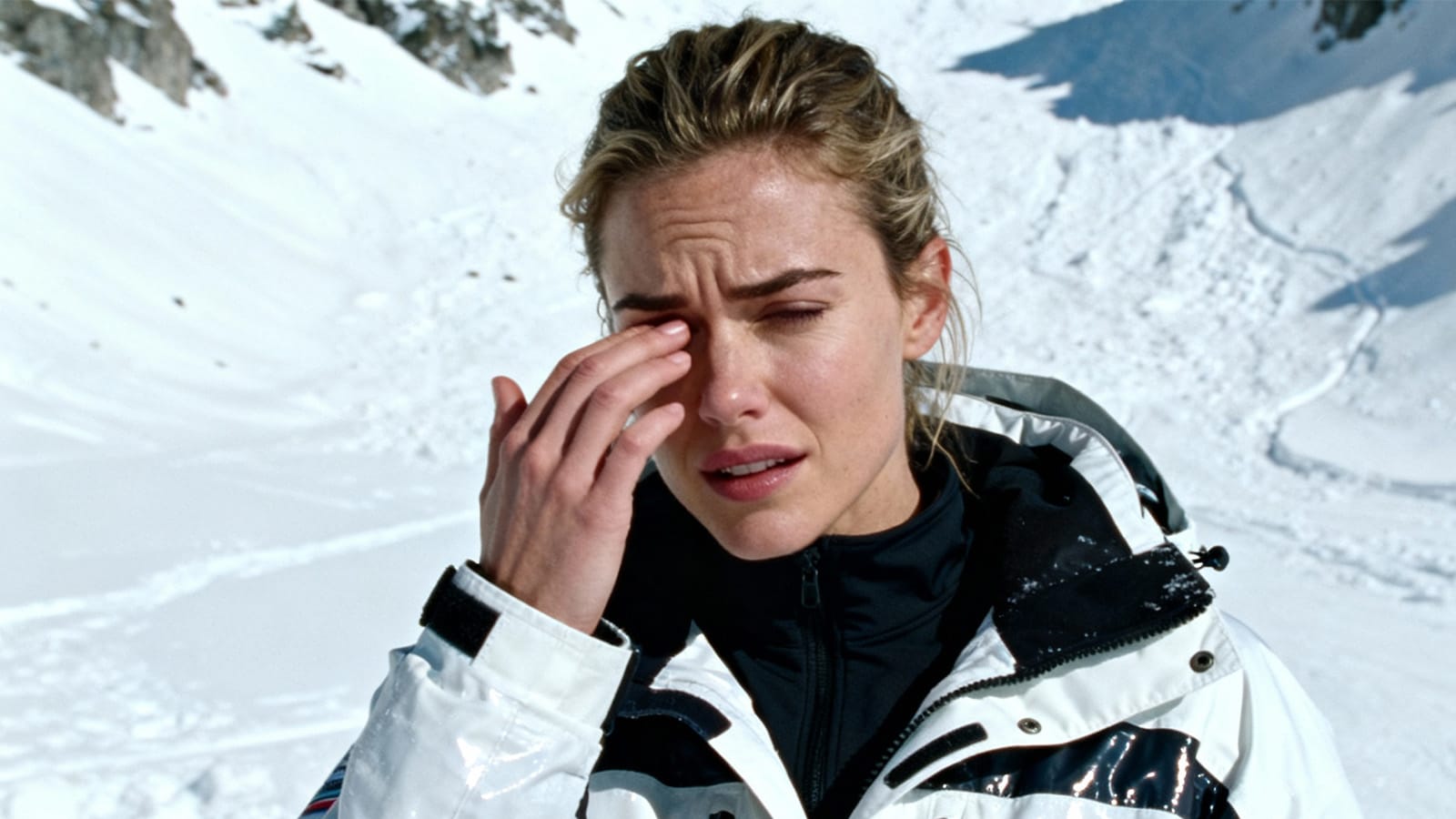
One tricky part of photokeratitis is that it doesn’t usually hurt right away. It behaves like a sunburn. You feel okay at first, maybe a little dry or tired—and that’s precisely why it’s so dangerous. You can be out on the slopes feeling perfectly fine, thinking your eyes are safe, but the UV damage is already happening. Then, usually six to twelve hours later, the real pain suddenly sets in.
Common photokeratitis symptoms show up all at once. The gritty feeling, like sand stuck under the eyelid. The sudden fear of even a small light source. Tearing that won’t stop. Redness. Sometimes, there is temporary vision loss.
If it happens, the best approach is to treat it like a real burn. Go into a dark room, remove contact lenses right away, and use preservative-free artificial tears. Rubbing the eyes only makes the injury worse, even though the instinct is to rub hard.
Choosing the Right Gear: Physics-Based Solutions
Regular sunglasses simply aren't built for winter conditions. They sit flat and leave gaps around the edges, and the reflected light slips right through those openings—a structural flaw known as peripheral light leakage. That is why even people who swear they wear sunglasses still get snow blindness. The light sneaks in from below and from the sides.
Wraparound frames with a base curve of eight do a much better job. They curve around the face and block that side leak. Goggles work even better because they seal the whole eye area. It makes a huge difference on windy, bright days.
Lens Color Science (VLT & Contrast):
Lens colors matter too. Grey or black lenses help when the sun is strong and the sky is perfectly clear. Amber, rose, or vermilion work on flat light days. Shadows on snow are actually blue due to Rayleigh scattering (the same physics that makes the sky blue); these tints filter that blue light out. They help bring back contrast so you can actually see the bumps and ice patches.
The Polarization Factor (Crucial Safety Tip):
Polarized lenses make snow look smoother by cutting glare, but there’s a small catch. They can hide the shiny layer of black ice. Drivers and fast skiers should be a little cautious with them. Polarized lenses for snow are fantastic, but knowing when to use them helps.
Why Kids Are at Higher Risk
Kids’ eyes are clearer inside, which means more UV passes through. They are also closer to the ground, which puts them near that bright white reflective surface. It doubles the risk. And a big problem is toy sunglasses that look cute but do almost nothing. Kids need real winter sunglasses with UV protection: polycarbonate or Trivex lenses with true UV400 coverage. Anything less is not worth it.
Conclusion
Winter isn’t gentle on the eyes. The albedo effect of snow and the extra UV at higher elevations work together in a way people rarely expect. And because UV goes right through clouds, you can get snow blindness even on a grey day.
If you want to protect your eyes properly, choose eyewear made for high-glare environments. ZEELOOL has polarized options built for exactly these conditions. Winter light might look soft, but it behaves like a double sun. Protecting your eyes is worth the effort.
FAQ
What is snow blindness and how does it happen?
Snow blindness, medically called photokeratitis, is essentially a sunburn of the cornea caused by overexposure to UV radiation. It happens because snow reflects 80 to 90 percent of sunlight back upward, creating what's sometimes called a "double sun"—you're getting UV from above and a second intense wave bouncing up from below. The tricky part is that the pain doesn't hit immediately; it usually arrives six to twelve hours later, by which point the damage is already done. Cold air masks the danger because you don't feel the heat that usually warns you of sun exposure.
Do regular sunglasses prevent snow blindness?
Not reliably. Standard sunglasses sit flat against the face and leave gaps around the edges where reflected light—especially the UV bouncing upward from snow—can slip in. This peripheral light leakage is the reason people who wear ordinary sunglasses on the slopes still end up with photokeratitis. Wraparound frames with a pronounced base curve, or goggles that seal around the eye area, are far more effective because they block light from the sides and below, not just directly in front.
What are the symptoms of snow blindness?
The most distinctive symptom is a gritty, sandpaper sensation under the eyelids, usually combined with intense sensitivity to light, uncontrollable tearing, and redness. Temporary vision changes can also occur. Because symptoms typically appear six to twelve hours after exposure rather than immediately, many people don't connect the discomfort with what they were doing earlier in the day. If it happens, the standard advice is to rest in a dark room, remove contact lenses, and use preservative-free artificial tears—rubbing the eyes makes the injury worse.
Why is UV exposure more intense at altitude in snowy conditions?
At higher elevations, there's less atmosphere to filter incoming UV radiation—UV intensity increases roughly 10 to 12 percent for every 1,000 meters of elevation gain. On top of that, snow reflects 80 to 90 percent of UV back upward, so skiers and hikers at altitude are being hit from two directions simultaneously. At 3,000 meters, you're already receiving around 30 percent more UV just from the altitude effect, before accounting for snow reflection at all. The combination is why people can burn their corneas in under an hour on a clear alpine day.
Are polarized lenses good for snow conditions?
Polarized lenses do an excellent job of cutting glare from the snow surface, which reduces eye strain and makes overall visibility more comfortable in bright winter conditions. The one trade-off is that they can reduce your ability to spot the shiny surface of black ice, because they smooth out reflections that would otherwise signal a slick patch. For recreational skiing or snowshoeing, polarized lenses are generally a strong choice. For fast downhill skiing or driving on icy roads, being aware of this limitation—or opting for non-polarized lenses—is worth considering.
Do children need special sunglasses for snow conditions?
Yes, and it matters more than most parents realize. Their eyes’ lenses are clearer and filter less UV than an adult’s, which means more radiation reaches the retina. Kids also tend to spend more time closer to the snow surface, which increases their exposure to reflected UV. Toy or fashion sunglasses marketed for children often provide no meaningful UV protection despite having dark lenses—the same pupil dilation problem that makes cheap sunglasses worse than no sunglasses applies here too. Look for lenses with genuine UV400 certification and polycarbonate or Trivex material, which are both impact-resistant and protective.