









Summary
Online eye tests can give you a general sense of how well you see at a distance — but they cannot replace a clinical eye exam, diagnose eye disease, or generate a valid prescription. Here is what they are actually useful for, and where their limits begin.
What Is an Online Vision Test?
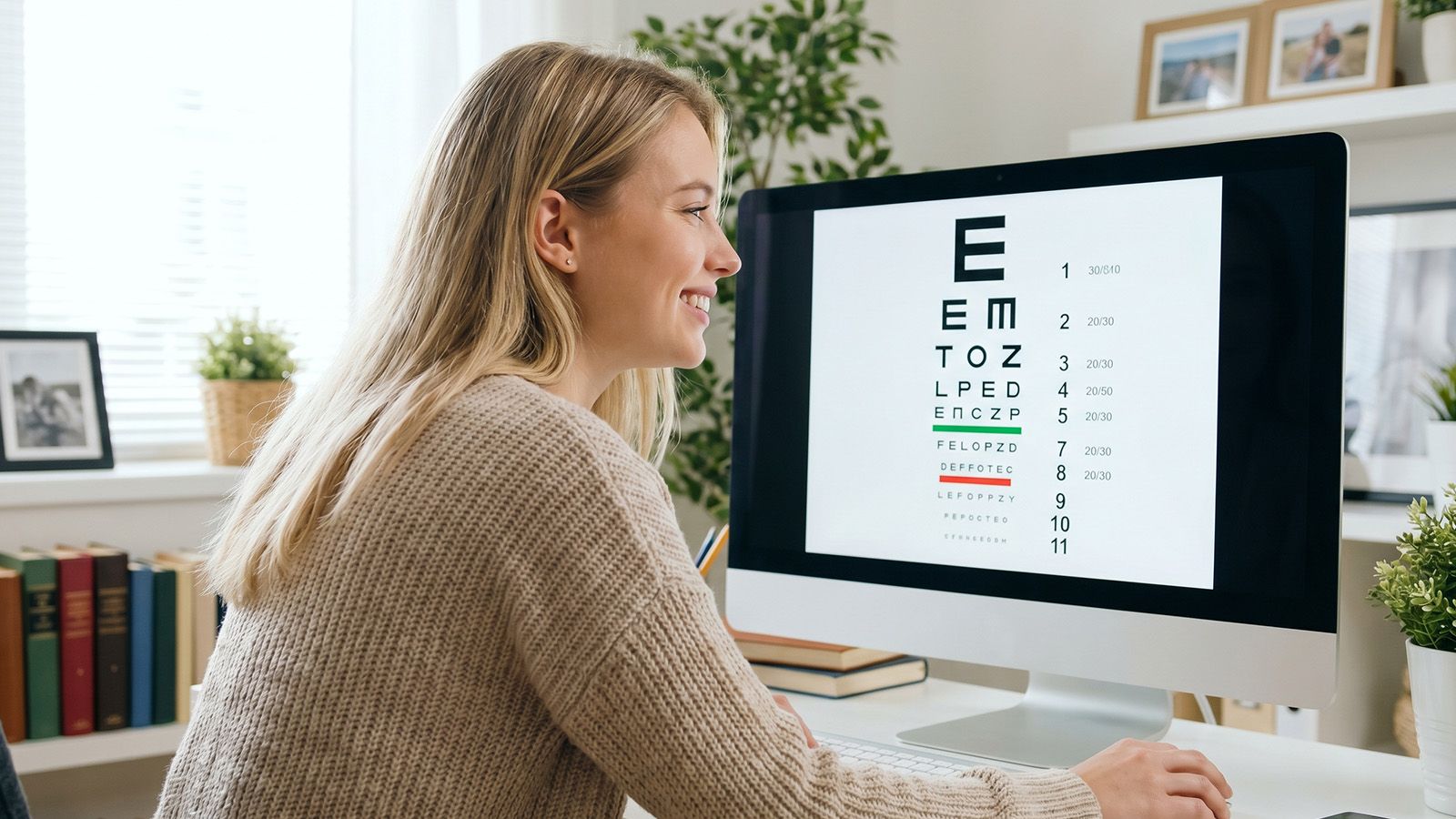
An online vision test is a screening test that you take yourself on a phone, tablet, or computer. Most of them ask you to identify letters or symbols at a certain distance, like the charts optometrists use in offices. Some of the tools also test for color blindness or astigmatism sensitivity. The key difference from a clinical exam is what's being measured. Online tests check visual acuity — how clearly you see at a specific distance. A licensed optometrist checks visual acuity and also examines the health of your eyes: retinal condition, eye pressure, pupil response, and more. These are not things a screen can assess.
Recommended Online Vision and Eye Test Resources
The most useful online vision resources fall into four categories: visual acuity screening tools, color vision tests, astigmatism checkers, and PD measurement tools—each serving a different practical purpose.
Visual Acuity Screening Tools
Essilor Online Vision Test
One of the more comprehensive browser-based screening tools available. Covers distance acuity, near vision, and basic astigmatism sensitivity in a single session. Provides a general indication of whether your vision has changed since your last exam.
Zeiss Online Vision Screening
A multi-step screening tool from a well-established optical manufacturer. Tests distance and near acuity, contrast sensitivity, and color perception. Results include a summary of potential vision concerns worth discussing with an optometrist.
EyeQue Personal Vision Tracker
A hardware-software combination that clips onto a smartphone and generates a personal refractive measurement — called an EyeGlass Number — that approximates prescription values. More accurate than purely screen-based tests because it controls viewing distance and conditions. Useful for tracking prescription changes between clinical exams.
Color Vision Tests
Enchroma Color Blind Test
The most widely used online color vision screening tool. Tests for red-green color deficiencies — the most common form of color blindness — through a series of Ishihara-style plates. Provides an indication of color vision type and severity.
Colorlite Lens Color Blind Test
An alternative color vision screening tool that covers a broader range of color deficiency types. Useful as a secondary check if EnChroma results are unclear.
Important note on color vision tests: Screen color accuracy varies significantly between devices and display settings. Online color vision tests indicate a likely deficiency but are not a substitute for a formal Ishihara test conducted by an optometrist under controlled conditions.
Astigmatism Self-Check Tools
American Optometric Association Astigmatism Test
A simple clock dial or fan chart that identifies potential astigmatism by asking you to note which lines appear darker or more defined than others. A quick initial screen rather than a diagnostic tool. Available at aoa.org.
Essilor Astigmatism Check
Part of Essilor's broader online screening suite. Presents a series of line patterns at different orientations to identify potential astigmatism sensitivity. Available alongside their general vision screening tool.
Important note on astigmatism tests: These tools can flag a potential issue worth discussing with an optometrist but cannot measure the CYL or AXIS values needed for prescription correction. Only a clinical refraction test provides these values accurately.
PD Measurement Tools
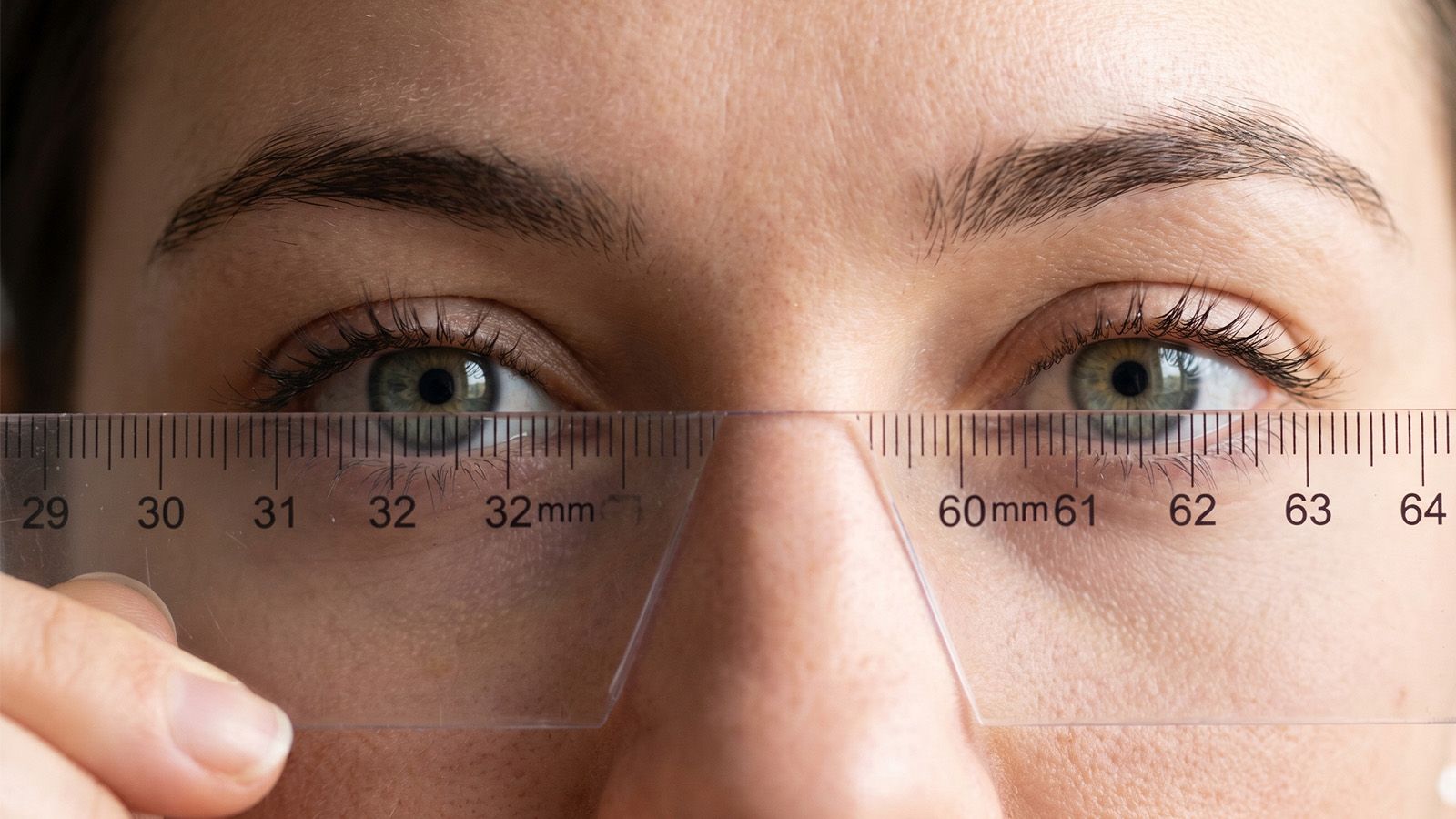
Pupillary distance—the measurement between the centers of your pupils—is required for ordering prescription glasses online. Many prescription slips from optometrists do not include this value, making an online PD tool necessary before placing an order.
Warby Parker PD Measurement Tool
Uses your device's front-facing camera and a standard credit card as a size reference to calculate PD. One of the more widely tested and reliable browser-based PD tools.
GlassesUSA PD Tool
A similar camera-based measurement tool with step-by-step guidance.
ZEELOOL PD Measurement Guide
ZEELOOL provides a step-by-step guide to measuring your own PD at home using a ruler and a mirror—a reliable low-tech method that does not require a smartphone camera or specific app. The guide is available on the ZEELOOL website and walks through the process clearly for both single PD and dual PD measurements.
Important note on PD measurement: Camera-based tools provide a reliable estimate for most standard prescriptions. For high prescriptions or progressive lenses—where precise PD alignment is more critical—an optician-measured PD is more accurate and worth obtaining before ordering.
Comparison: Which Tool to Use and When
| Situation | Recommended Resource |
| Checking if vision has changed since last exam | Essilor or Zeiss online screening |
| Tracking prescription changes over time | EyeQue Personal Vision Tracker |
| Screening for color vision deficiency | EnChroma Color Blind Test |
| Checking for potential astigmatism | AOA astigmatism clock dial test |
| Measuring PD before ordering glasses online | Warby Parker PD tool or ZEELOOL PD guide |
| Full pre-order preparation for online glasses | ZEELOOL virtual try-on + PD guide |
Limitations That Apply to All Online Resources
Regardless of which tool you use, the following limitations apply universally:
- Screen calibration affects results—color accuracy, brightness, and resolution vary between devices and influence test outcomes
- Room lighting affects results—ambient light levels during testing change how visual stimuli appear
- Viewing distance affects results—browser-based acuity tests assume a specific viewing distance that most users do not accurately maintain
- None generate a legal prescription—US law requires a valid prescription from a licensed optometrist or ophthalmologist for prescription eyewear; no online tool satisfies this requirement
Use these resources as a complement to professional eye care — not a replacement for it.
What Online Eye Tests Can Actually Do
Used correctly, online tools serve a few genuinely useful purposes:
| Tool | What It Measures | Useful For |
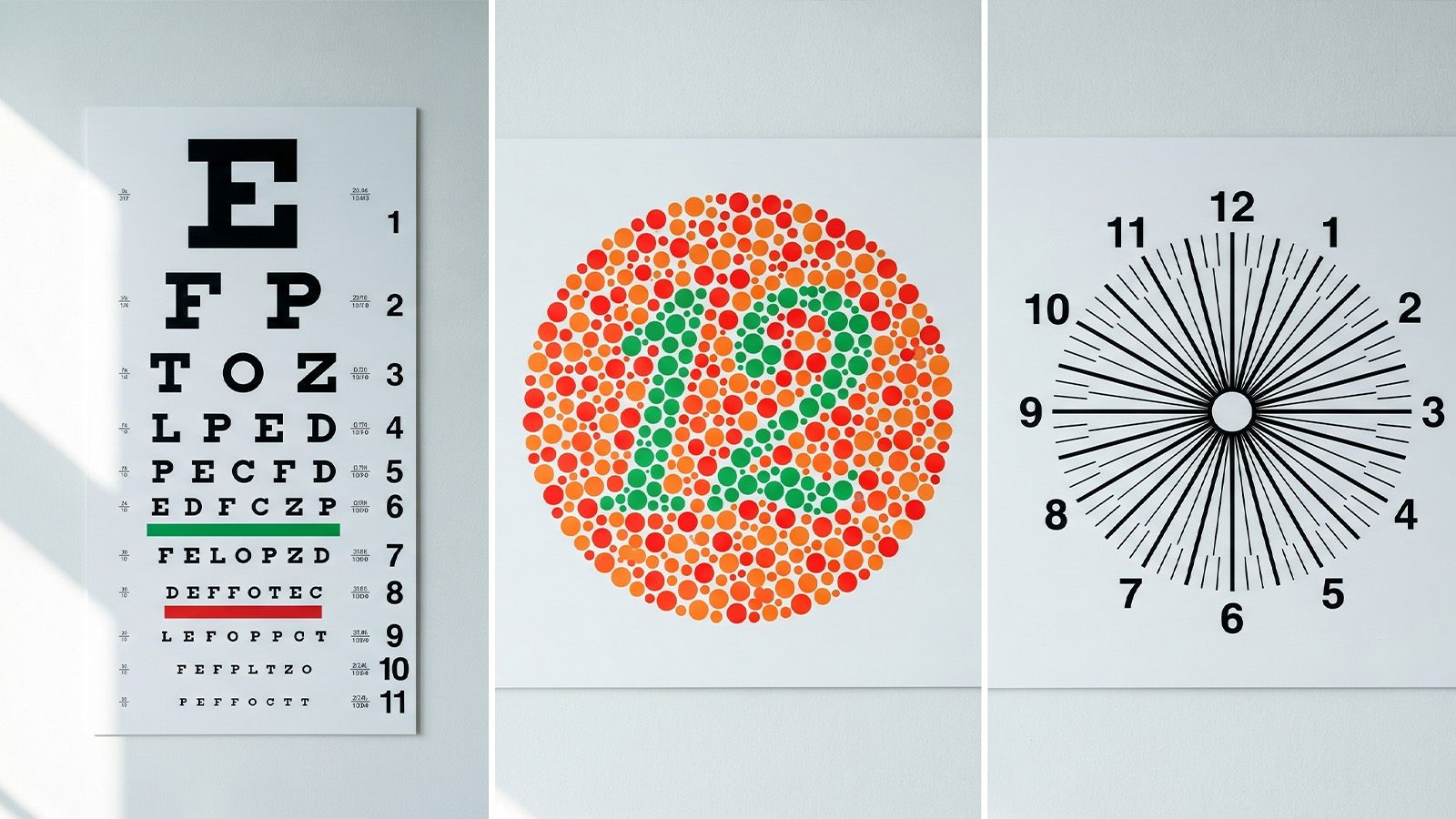
| Visual acuity test | Clarity at distance | Checking if your vision has changed |
| Color blindness test | Red-green color perception | Screening, not diagnosis |
| Astigmatism chart | Irregular focus pattern | Flagging a potential issue |
| PD measurement tool | Pupillary distance in mm | Ordering glasses online accurately |
The PD tool deserves special mention. Pupillary distance—the measurement between your pupils—is essential for ordering prescription glasses online. Many people don't have this number on their prescription slip, and an online PD tool can provide a reliable estimate. ZEELOOL's website includes guidance on measuring your PD at home before placing an order.
What Online Eye Tests Cannot Do
This is the more important half of the equation.
Online tests cannot:
- Detect glaucoma, macular degeneration, or diabetic retinopathy
- Identify cataracts or retinal damage
- Generate a legally valid glasses or contact lens prescription in the US
- Accurately test each eye independently with the precision of clinical equipment
- Account for conditions that affect peripheral vision
A screen-based test is only as good as your screen calibration, room lighting, and viewing distance — all of which vary and introduce error. Results should be viewed as indicators, not conclusions
When to See an Eye Doctor
Seek attention from a licensed optometrist or ophthalmologist if you experience:
● Sudden blurry or distorted vision
● Flashes of light or new floaters
● Eye pain or persistent redness
● Difficulty seeing at night
● Headaches that seem to be related to visual tasks
These symptoms require clinical evaluation — no online tool can evaluate them meaningfully.
How to Use Online Resources Before Ordering Glasses
If you already have a valid prescription and are ordering glasses online, the most practical steps are confirming your PD, double-checking your prescription values match the entry fields at checkout, and using a virtual try-on to preview frames before committing. ZEELOOL's free AR virtual try-on is available on every product page, alongside a step-by-step prescription entry guide covering SPH, CYL, AXIS, ADD, and PD.
Conclusion
Online vision tests are useful screening tools — not replacements for clinical care. Use them to track general changes between exams, confirm your PD before ordering glasses online, and understand your prescription values. For anything beyond that, a licensed eye exam remains the only reliable option.
FAQ
What are the best free online tools to test your eyes?
There are a lot of good tools to use depending on your needs. Essilor and Zeiss have browser-based tests for distance and near acuity for general vision screening. The EnChroma test is the most common screening tool for color vision. The AOA clock dial test is a quick way to initially check for astigmatism. Both Warby Parker’s camera-based tool and ZEELOOL’s at-home ruler method are handy ways to measure your PD before ordering glasses online. None of these tools generate a legal prescription—they are screening resources only.
How good are online vision tests?
Results may be in error due to calibration of the screen, lighting of the room, distance to view, and type of device. Browser-based acuity tests are only an estimate of visual clarity and not a clinical measurement. Hardware-based tools such as the EyeQue Personal Vision Tracker provide more controlled and reliable reference values but still should not be used as a substitute for a clinical prescription.
What is a PD measurement, and how do you find it to order glasses online?
PD, or pupillary distance, measures the distance in millimeters between the centers of your pupils. It’s used to determine where the lenses are centered in your frames and is needed to order prescription glasses online. Many prescription slips don’t include this number. Camera-based tools, such as the Warby Parker PD tool, will give you a reliable estimate, and ZEELOOL has a step-by-step ruler method that works well as a low-tech option. If you have progressive lenses or a high prescription, a PD measured by an optician is more accurate.
When should you see an eye doctor rather than use online resources?
If you experience sudden changes in vision, flashing lights, new floaters, eye pain, or ongoing headaches associated with visual tasks, see a licensed optometrist for a clinical assessment that no online tool can provide. Also see an optometrist if online screening results suggest a significant change from your current prescription, if OTC reading glasses are not resolving near-vision difficulty, or if you haven't had a clinical exam in more than two years. Adults over 40 and anyone with diabetes or a family history of glaucoma should maintain annual exams regardless of how their vision feels day to day.