










Quick Summary: Eye Exam Prices
The average cost of an eye exam falls between $50 and $250, the final cost depends on the specific type of exam being performed.
If you have insurance, anticipate co-pays typically falling somewhere between $10 and $50.
Factors: Location (urban vs. suburban), provider (retail vs. private), and specialized tests (dilation/retinal imaging).
Savings Tip: Retail chains are generally the most affordable for basic prescriptions.
Introduction
Nowadays, people gradually begin to value the regular eye examination; it's important to keep good vision. However, many people still avoid it because of uncertain costs. You will get answers through this article, including tips on what to do without insurance and how to save money.
Whether you are looking for a basic vision test or a comprehensive eye exam, you will find out how much each type of eye exam usually costs and how to save money.
Why Are Regular Eye Exams Important?
Firstly, everyone needs to know that regular eye exams are not just for solving vision issues. It helps to early detect various vision issues, like glaucoma, cataracts, macular degeneration, etc. These vision issues are also important for updating your prescription so as to ensure visual clarity in your daily life. Besides, there are two important needs to value:
Frequency
For most people, the suggested frequency is 1~2 times each year, but it still needs to be adjusted according to the specific age and health situation of the eyes.
People Need More Eye Exams
For the normal situation, 1~2 times each year is enough, but there are still special situations. If you belong to the following situation, it means that you need more frequent eye exams.
- You are over 40 years old.
- You frequently use the digital screens.
- You have the family history of eye diseases.
Besides, you need to know regular eye exams are also essential for kids and elders, you can early ask for treatment if the eye problems are diagnosed in time.
Average Cost of Eye Exam in 2026
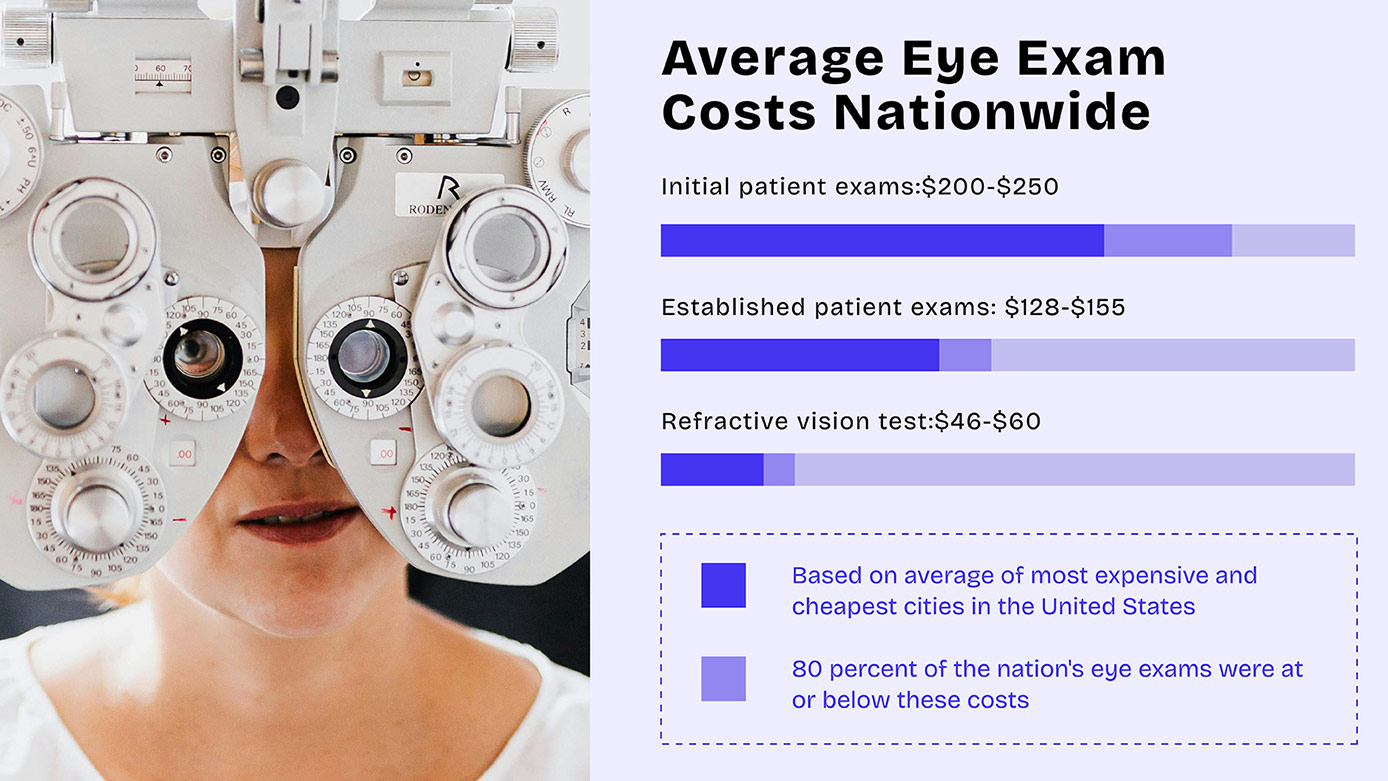
Actually, the cost of an eye exam would be different based on the type of exam and insurance; it normally includes a basic eye exam ($50~$100), a comprehensive eye exam ($100~$250), a separately paid refraction test ($25~$50), pupil dilation, and retinal imaging ($30~$75).
On the other hand, the costs are also affected based on location, provider type, and prescription. It will be specifically explained in the following part. Besides, you need to know the difference between a basic and a comprehensive eye exam. A basic eye exam only includes tests for your current prescription, but it doesn't include tests for your eye health, so regular comprehensive eye exams are necessary to keep your eyes healthy.
How Much Does an Eye Exam Cost Without Insurance?
Without vision insurance, you pay the full cost out of pocket. The range is wide depending on where you go and what type of exam you need:
Practical ways to reduce costs without insurance:
Retail optical chains (Walmart Vision Center, Costco Optical, Target Optical) consistently offer the lowest prices for basic exams—often $60–$80 with no appointment needed:
| Situation | Typical Out-of-Pocket Cost |
| Basic exam at retail chain (Walmart, Costco) | $50–$80 |
| Comprehensive exam at independent optometrist | $120–$200 |
| Comprehensive exam at ophthalmologist | $150–$300+ |
| Exam + contact lens fitting (no insurance) | $150–$350 |
| Exam + glasses prescription | $100–$200 (exam only) |
| Dilated eye exam | Add $30–$75 to base exam cost |
- Optometry school clinics offer supervised exams at 30–50% below standard rates.
- Community health centers use sliding scale fees based on income—some offer exams for as little as $20.
- FSA and HSA accounts can be used to pay for eye exams even without vision insurance, reducing the effective cost by your tax rate.
- EyeCare America and similar programs offer free or low-cost exams for qualifying patients (seniors, diabetics, and others).
- Discount vision plans (not insurance) like VSP's discount program offer reduced rates at network providers for a low monthly fee.
What Will Affect Eye Exam Costs?
There are various factors that affect the specific costs of eye exams. If you know these details, it helps to better estimate and make the right decision so as to choose the suitable exam location and method.
Insurance Coverage
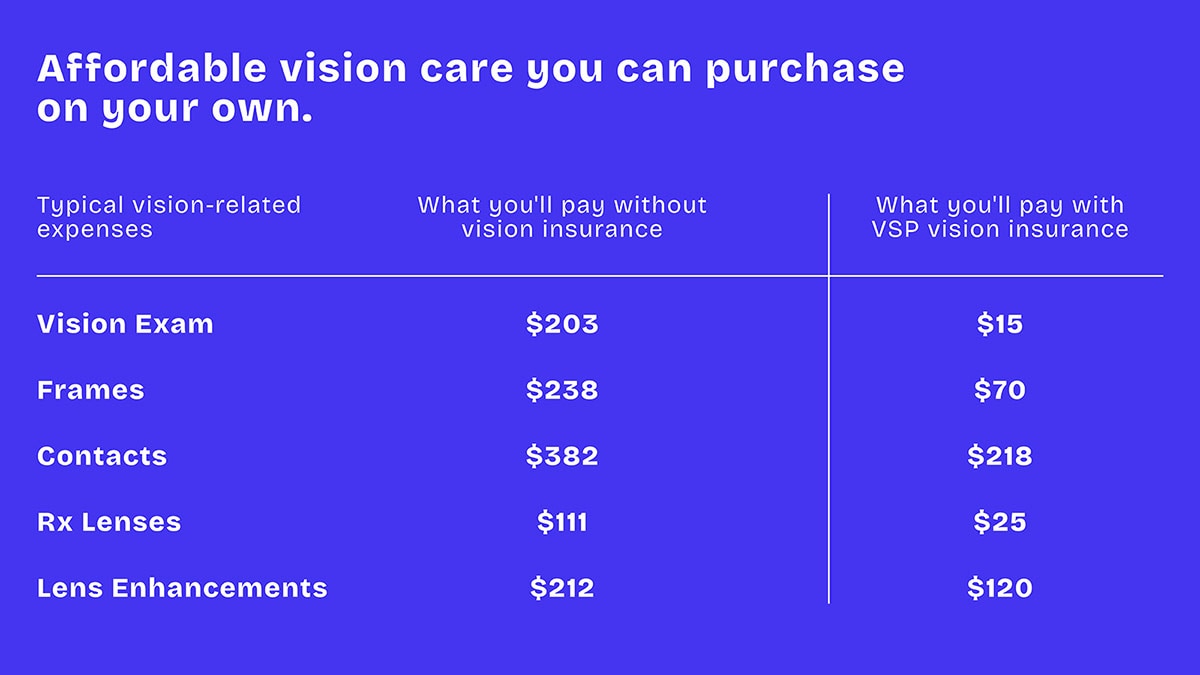
Undoubtedly, the costs of eye exams are greatly affected by the type of insurance. If you have vision insurance, the costs might be partially or fully covered. For a common insurance plan, it includes a routine eye exam in 1~2 years but needs a bit of co-pay, which is normally $10~$50 and based on your specific insurance plan.
Furthermore, some insurance covers the full cost of routine eye exams, but it commonly provides for specific types or network providers. However, if your insurance only covers partial cost, there might be a co-pay you need to take charge of, which is up to your provider and type of insurance. Of course, for people who do not have insurance for eye health, you need to fully pay by yourself.
Location
The location of the eye exam would affect the specific costs. Normally, the costs of eye exams are higher in urban areas due to the higher operating costs. However, it provides the relatively lower price because it needs fewer operating costs in suburban areas.
- Urban Areas
Eye clinics in cities or large towns normally charge more for eye exams. And, for some well-known clinics with advanced technologies, the charge would normally be higher.
- Suburban Areas
In small towns, it normally needs less charge for an eye exam, but at the same time, it might lack professional care options.
Type of Provider
The costs of an eye exam would be affected greatly by the specific providers you have chosen. The service and price structure are all different for different providers.
- Retail Chains
Normally, it's the most affordable option, providing the basic vision exam but no comprehensive eye exam and professional care by independent eye doctors.
- Personal Eye Doctor
Undoubtedly, an independent eye doctor is able to provide more personal care and advanced service. At the same time, due to the higher operating costs, they will charge higher costs for eye exams.
- Eye Doctor
If you need a more comprehensive eye exam, like for glaucoma or cataracts, it's necessary to visit a professional eye doctor. Although it requires a higher cost, it includes professional tests and treatments.

Service Level
Of course, the costs of an eye exam would be affected by the different types of eye exams you need. The costs of routine vision exams are lower than professional tests for eye diseases or different issues of eye health. Thus, additional services might be included in the following types of eye exams.
- Routine Eye Exam
Normally, it's the most affordable option, around $50~150, which includes a test for vision changes and updating \your prescription.
- Comprehensive Eye Exam
It provides more detailed tests, such as for signs of eye diseases or some issues beyond vision, like diabetes. The cost is around $100~$250.
- Specialized Tests
Sometimes, your eye doctor needs additional tests based on your eye condition, like a refraction test and retinal imaging. Such tests would increase the costs by around $50~$100.
Where Can You Have an Eye Exam?
For routine eye exams, there are several options with different prices. The following table shows the typical eye exams and their corresponding costs.
| Provider Type | Typical Cost Range | Best For |
| Retail chains (Walmart Vision, Target Optical, Costco) | $50–$100 | Budget-friendly basic exams |
| Independent optometrist | $100–$200 | Comprehensive care, personalized service |
| Ophthalmologist (MD) | $150–$300+ | Medical eye conditions, surgery referrals |
| Community health centers | $20–$60 | Low-income patients, sliding-scale fees |
| Online eye exam | $15–$50 | Prescription renewals only |
| University / optometry school clinic | $50–$100 | Supervised student exams at reduced rates |
In addition, you can get an eye exam online, with advantages and disadvantages. First, online tests are convenient and low cost. And it's quick and easy for prescription renewals. However, the possible eye disease cannot be detected by online tests, so it cannot replace the traditionally comprehensive eye exam.
FAQs
How much does an eye exam cost without insurance in 2026?
Without insurance, a basic eye exam at a retail chain (Walmart Vision, Costco Optical) typically costs $50–$80. A comprehensive exam at an independent optometrist runs $120–$200 and at an ophthalmologist $150–$300 or more. Dilation, if needed, adds $30–$75. Optometry school clinics and community health centers offer the lowest prices—sometimes $20–$60 on a sliding scale.
What is the average cost of an eye exam in 2026?
The national average for a comprehensive eye exam in the US is approximately $100–$200 without insurance. Basic exams average $50–$100. With vision insurance, most patients pay a $10–$50 copay for a routine exam covered under their plan.
Why are eye exams so expensive?
Eye exams demand a suite of specialized diagnostic tools, each running into the tens of thousands of dollars. They also require licensed professionals, typically with advanced degrees. Furthermore, the billing process can be a headache, often involving separate systems for vision and medical insurance.
Retail optical chains keep costs lower by operating at high volume within existing retail infrastructure.
How much does a dilated eye exam cost?
Dilation is sometimes included in comprehensive exam fees and sometimes billed separately at $30–$75. With insurance, dilation is usually covered when medically indicated. Without insurance, budget an additional $30–$75 on top of your base exam cost.
How often should I get an eye exam?
Most adults should get a comprehensive eye exam every 1–2 years. Annual exams are recommended for people over 40, diabetics, those with a family history of eye disease, and anyone who wears prescription glasses or contacts. Children should have their first exam at 6 months, again at age 3, and annually through school years.
Can I use FSA or HSA to pay for an eye exam?
Yes. Eye exams are an FSA and HSA-eligible expense, which means you pay with pre-tax dollars—effectively reducing the cost by your marginal tax rate. This applies even if you do not have vision insurance, making FSA/HSA accounts one of the most underutilized ways to reduce eye care costs.
How much is an online eye exam?
Online eye exams typically cost $15–$50 and are convenient for prescription renewals in patients with stable vision. However, online exams cannot detect eye diseases (glaucoma, retinal conditions, or cataracts) and are not a substitute for an in-person comprehensive exam. Most states require a licensed optometrist to review and approve online exam results before a prescription is issued.
Conclusion
There's no doubt that regular eye exams are essential for vision and eye health. If you ignore it due to concerns about the price, this article will address your concerns. Through this article, you will know the cost breakdown and explore methods to save. Whether you have insurance or not, there will be options that are suitable for you.
In a word, regular eye exams are essential to ensure your vision health so as to maintain healthy eye conditions and life quality.
Save on Your Next Pair After Your Exam
Once you have your updated prescription, where you fill it matters as much as where you get the exam. ZEELOOL prescription glasses on sale and offers prescription eyeglasses at significantly lower prices than traditional optical retailers—making it a practical option for stretching your eye care budget after exam costs.
For FSA and HSA users: ZEELOOL does not accept FSA/HSA cards directly at checkout. After your purchase, download your itemized invoice from your ZEELOOL account and submit it to your FSA/HSA provider for reimbursement. Most plans cover prescription eyewear as an eligible expense.
Free shipping applies to US orders over $59. Use ZEELOOL's AR try-on to browse frames before your exam appointment so you're ready to order the moment your new prescription arrives.