












Quick Facts about Gray Eyes
Rarity: Less than 1% of the global population.
Cause: Low melanin levels combined with high collagen density in the iris stroma.
Science: Gray eyes aren't a pigment but a result of "Mie scattering" of light.
Origins: Most common in Northern and Eastern Europe.
Have you ever met someone with gray eyes? They’re rare. You don’t see them often. When you do, it’s hard not to stare. The color looks soft, cool, and kind of mysterious. Sometimes gray eyes look blue. Other times, they show a bit of green or silver.
Less than 1 out of 100 people have gray eyes, and they're more commonly found in places like Northern and Eastern Europe. But what makes eyes gray in the first place? Is it just luck? Or is there a deeper reason? In this blog, we’ll talk about what causes gray eyes, how they’re different from other colors, and even why sunglasses matter more for people with them.
This guide covers what causes gray eyes at a scientific level, how common they actually are, what gray eyes can tell you about genetics, and what the color means across different cultures.
At a Glance: Gray Eyes at a Glance
| Question | Answer |
| How rare are gray eyes? | Under 1% of the global population |
| What causes gray eyes? | Low melanin + collagen structure causing Rayleigh light scattering |
| Are gray eyes the same as blue eyes? | No—different iris structure produces a softer, cloudier appearance |
| Do gray eyes change color? | Yes—they can appear blue, green, or silver depending on light conditions |
| Are silver eyes real? | "Silver eyes" is a descriptive term for very light gray eyes, not a separate category |
| Where are gray eyes most common? | Northern and Eastern Europe (Finland, Russia, Baltic states) |
| Are gray eyes sensitive to light? | Yes—lower melanin means less natural UV protection |
What Are Gray Eyes?
Gray eyes are a rare eye color. They don’t look the same all the time. One day they seem light blue, the next they appear silver or green. That’s because gray eyes are made up of several tones.
Unlike brown or even green eyes, gray eyes are a bit trickier to explain. They don’t have strong colors in them. They look kind of soft and cloudy. That’s what makes them feel different and a bit mysterious.

Gray eyes are indeed a rare gem, mostly found in European countries whose populations have primarily light-eyed people, for example, Finland or Russia. There are usually two shades of eyes: one is mainly in the center of the eye, while the other hue is towards the periphery. This mix makes gray eyes look layered and deep.
How Rare Are Gray Eyes? Global Frequency and Distribution
Gray eyes are among the rarest eye colors in the world, estimated to occur in less than 1% of the global population. Some researchers place the figure even lower—around 0.1% to 0.7% depending on the population studied and how strictly "gray" is distinguished from "blue-gray."
Where gray eyes are most common:
| Region | Estimated Gray Eye Frequency |
| Finland, Estonia, Latvia | Up to 3–5% in some population studies |
| Russia and Eastern Europe | 1–3% |
| Northern Europe broadly | Under 2% |
| United States | Under 1% |
| Global average | Approximately 0.1–0.7% |
Gray eyes are almost entirely concentrated in European and Central Asian populations. In contrast, the occurrence of blue eyes is extremely rare in East Asian, South Asian, African, and Indigenous American populations. This is because brown eyes are more common in these groups. The higher levels of melanin, which are beneficial for survival in areas with high ultraviolet radiation, are thought to have played a role in this.
The Science Behind Gray Eyes
Now here’s the part where things get interesting. Gray eyes don’t actually contain gray in them. That may sound strange, but it’s true. Nobody really has blue or green pigment either. The eye’s color comes from something called melanin and how light hits the eye.
Melanin is the pigment responsible for giving color to our skin, hair, and, actually, eyes. If an eye has large amounts of melanin, then that eye will be brown.
But that’s not the only reason gray eyes happen. The way light scatters inside the eye also matters. Now, be prepared for a real mouthful: Rayleigh scattering. It's the same reason the sky appears blue.
Gray irises have more collagen fibers than other irises that reflect light differently, which is what gives gray its appearance. Gray is not a color per se, but rather, it is the manipulation of light in the eye.
How Do Genes Decide Eye Color?
Eye color is not simple. It doesn’t come from just one gene. There are a few eye color genetics that work together. The main ones are called OCA2 and HERC2. These control how much melanin your eyes make.
The chances of having blue or gray irises increase if both parents have light-colored eyes. However, it cannot be said with 100 percent certainty. With the appropriate gene combinations and interactions, you can actually have gray eyes even if both parents are brown-eyed.
Melanin acts like a dimmer switch for your eyes. A lot gives you brown. A little gives you blue. Just the right mix, along with more collagen in the eye’s front layer, gives you gray. That’s what makes gray eyes so rare. Everything needs to line up just right.

Are Gray Eyes and Blue Eyes the Same?
They’re close but not the same. Both eye colors have low melanin. The big difference between gray and blue eyes is in the eye’s structure.
| Feature | Gray Eyes | Blue Eyes |
| Melanin Content | Very Low | Low |
| Structural Difference | High Collagen in Stroma | Low Collagen in Stroma |
| Light Interaction | Mie Scattering (cloudy effect) | Rayleigh Scattering (clear blue) |
| Color Shift | Frequently changes (Silver/Green) | Relatively Stable |
| Rarity | Extremely Rare (<1%) | Common in specific regions (8-10%) |
Gray eyes have more collagen in the stroma, which is the front part of the iris. This changes the way light moves. Instead of bouncing cleanly like with blue eyes, the light gets spread out more. That's why gray eyes often appear softer or more cloudy.
Also, gray eyes can seem to change color. In bright light, they may look blue. In cloudy weather, they might look green or even hazel. That doesn’t happen as much with blue eyes.
Are Silver Eyes Real? Gray Eyes vs. Silver Eyes
"Silver eyes" is not a separate biological eye color category—it is a descriptive term used for gray eyes that appear particularly bright, reflective, or metallic in certain lighting conditions.
The silvery appearance occurs when gray irises with especially high collagen fiber density reflect light in a way that produces a metallic sheen. The same physics that makes gray eyes appear blue or green in different conditions can produce a silvery appearance under direct bright light or flash photography.
Gray vs. Silver: the practical distinction
| Description | What It Typically Indicates |
| "Silver eyes" | Very light gray eyes with high collagen reflectivity |
| "Steel gray eyes" | Medium gray with cool, blue-adjacent tone |
| "Stormy gray eyes" | Gray with visible color variation across the iris |
| "Charcoal gray eyes" | Darker gray, sometimes with brown or green tones |
All of these fall under the biological category of gray eyes—they differ in degree rather than in kind. True silver eyes as a distinct biological category do not exist; what people perceive as silver is always a form of gray eye expressing differently under specific lighting.
Do Gray Eyes Need Special Sunglasses?
Bright illumination can create problems for individuals with gray eyes. Strong sunlight can easily hurt or feel too painful for them. Dark sunglasses can help block that harsh light.
Sunglasses should be worn by all when out in the sun. On the other hand, individuals with gray eyes would do best with darker lenses.
Polarized sunglasses would serve you well, as they cut glare from water, roads, or snow and improve comfort for your eyes should you spend time outdoors.

FAQs
How rare are gray eyes exactly?
Gray eyes are a true rarity, found in fewer than one percent of people globally. They are most frequently found in Northern and Eastern European countries like Finland, Estonia, and Russia.
Are gray eyes really blue?
No, gray eyes and blue eyes are different. While both have low melanin, gray eyes have a unique stroma structure with more collagen, which changes how light reflects.
Are gray eyes real?
Gray eyes are a genuine eye color, a product of nature. They form when the iris contains less melanin, and the stroma, the tissue beneath, has a lot of collagen fibers. This unique combination scatters light in a way that differs from the scattering seen in blue or brown irises. Gray eyes are quite uncommon, found in less than 1% of the world's population, and are most frequently observed in Northern and Eastern European groups.
Are silver eyes real or just gray eyes?
"Silver eyes" refers to gray irises that seem especially luminous and mirror-like in direct light. There is no separate biological category of silver eyes—what people describe as silver is always a form of gray eye expressing under specific lighting conditions.
Do gray eyes change color?
Yes! Because gray eyes rely on light scattering rather than pigment, they can appear to shift between silver, blue, or even green depending on the surrounding light and clothing colors.
Are gray eyes more sensitive to light?
Yes. Because gray eyes have less melanin, the pigment that absorbs ultraviolet light, people with this eye color often experience heightened sensitivity to light. This sensitivity is called photophobia. Consequently, they should consider wearing top-tier polarized sunglasses.
How many people have gray eyes?
Exact numbers are hard to measure, but estimates suggest that less than 1 out of 100 people have naturally gray eyes worldwide.
Where do gray eyes come from?
Gray eyes are most often seen in people with Northern or Eastern European ancestry, where light eye colors are more common.
Conclusion
Gray is an uncommon, mellow, lovely color for the eyes. Low melanin, special light scattering, and a few lucky genes cause it. Other than some inherent similarities, gray eyes are not quite like blue at all.
If you've got gray eyes, you might find them more sensitive to sunlight. Good sunglasses do wonders; it would be best to get polarized, dark, and UV-protected ones.
Find Frames That Bring Out Your Gray Eyes
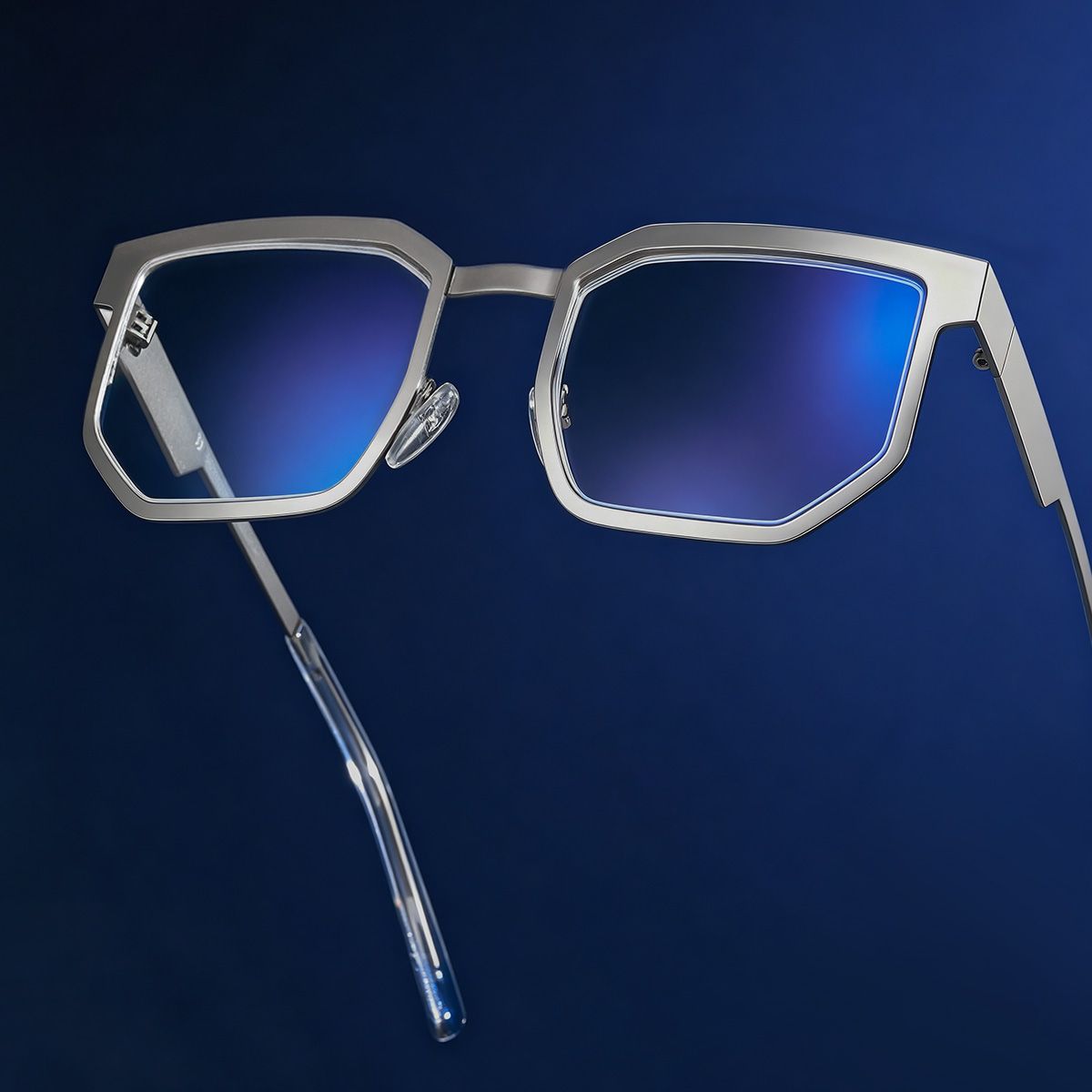
Gray eyes are rare enough to deserve frames that work with their cool, shifting tones rather than competing with them. Silver and gunmetal metal frames enhance the silvery quality; clear acetate lets the color show without distraction, and navy or deep green frames draw out the blue and green undertones gray eyes can carry.
Use ZEELOOL Optical's AR try-on to preview frame colors against your actual eye color in real time—because gray eyes look different in every frame, and seeing is believing.