








Summary
Over glasses sunglasses — also called OTG or fitover sunglasses — are designed to wear directly over prescription glasses, providing UV protection without requiring a separate prescription pair. They come in several formats including wrap-around fitovers, clip-on lenses, and magnetic clip-on systems, each with different trade-offs in coverage, convenience, and optical clarity. For occasional outdoor use, OTG sunglasses are a practical and cost-effective solution. For anyone who spends significant time outdoors or driving, prescription sunglasses offer better optical performance and a more comfortable long-term fit.
Introduction
You wear prescription glasses every day, and every time you step outside into bright sunlight, you face the same choice: squint or put on a pair of sunglasses that sit awkwardly over your frames. Regular sunglasses worn over glasses create pressure points, reduce peripheral vision, and look exactly as uncomfortable as they feel. Over-glasses sunglasses were designed to solve this problem—but not all OTG options are equal, and choosing the wrong style can create more problems than it solves. This guide covers every format of over glasses sunglasses, how to choose the right one, and when it makes more sense to invest in prescription sunglasses instead.
What Are Over-Glasses Sunglasses?
OTG (Over-the-Glasses Sunglasses) OTG sunglasses are made to fit over your regular prescription glasses. They provide UV protection and glare reduction without needing a separate prescription.
Within this category there are a number of different product types that work differently and have different applications. Knowing the differences is key to making the right choice.
Types of Over-Glasses Sunglasses
Fitover or Wrap-Around OTG Sunglasses
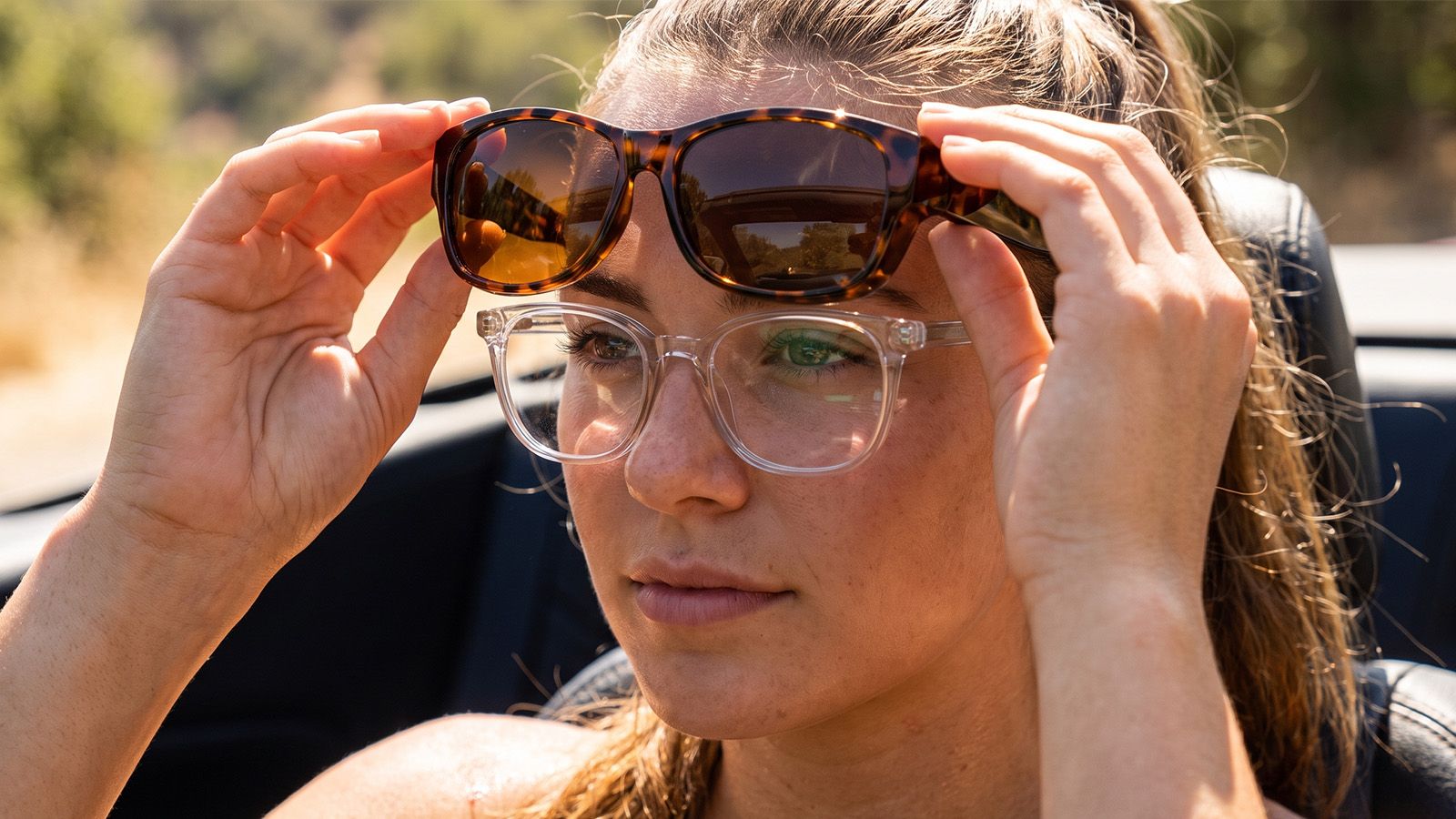
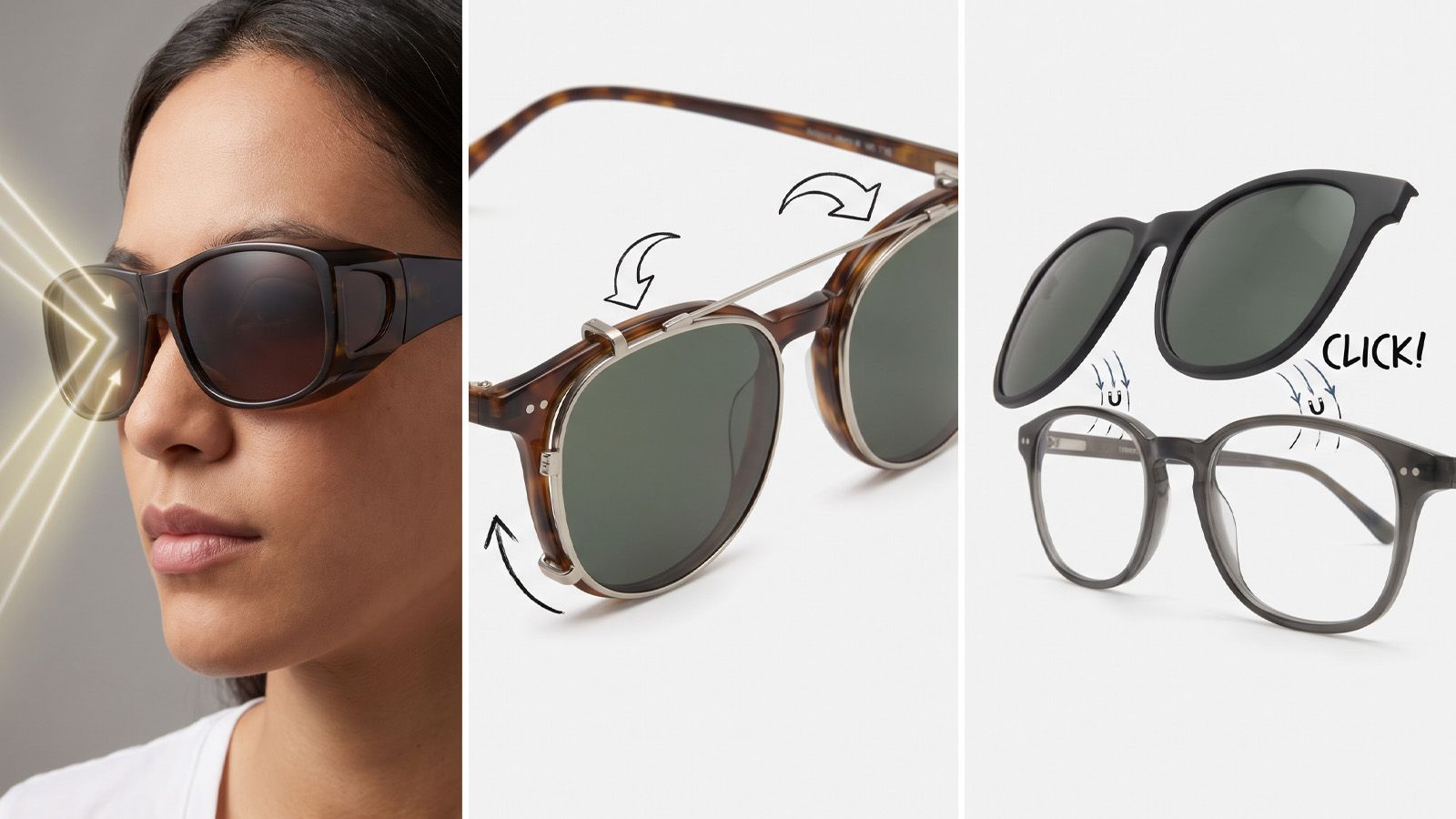
This is the most complete option available. Fitover sunglasses have an oversized frame that is designed to fit over your existing glasses, enclosing them fully. Side shields help cut down on glare and wind from the periphery, which is especially helpful for driving and outdoor activities.
Best for: Driving, fishing, hiking, anyone who needs side coverage Trade-off: Bulky look, heavier than the other options Clip-On Sunglasses
A separate lens attachment that clips directly to the front of your glasses frame with small spring clips or prong fittings. The most compact option, clip-ons, folds flat and can be stashed away in a pocket or glasses case.
Best for: Casual outdoor use, easy to put on and take off
Downside: Clips can scratch frames over time; only covers lens area
Magnetic Clip-On Sunglasses
A better alternative to regular clip-ons that use embedded magnets to attach the sunglass lens to the frame. The attachment is faster, more secure, and less likely to damage the frame than traditional spring clips.
Best for: Frequent change between indoors and outdoors
Trade-off: Works only with frames that have dedicated magnetic attachment points
Polarized Fitover Sunglasses
A kind of fitover with polarized lenses that block reflected glare from roads, water, and other flat surfaces. Very useful for driving and water sports when standard tint just isn’t enough.
Best for: Driving, fishing, boating, any activity in which you’re near reflective surfaces
Trade-off: Slightly more expensive than traditional tinted fit-overs.
How to Choose the Right OTG Sunglasses
The most important factor in choosing OTG sunglasses is frame compatibility—the fitover needs to be large enough to fully clear your existing glasses without pressing against the lenses or temples.
Measuring for Fitover Compatibility
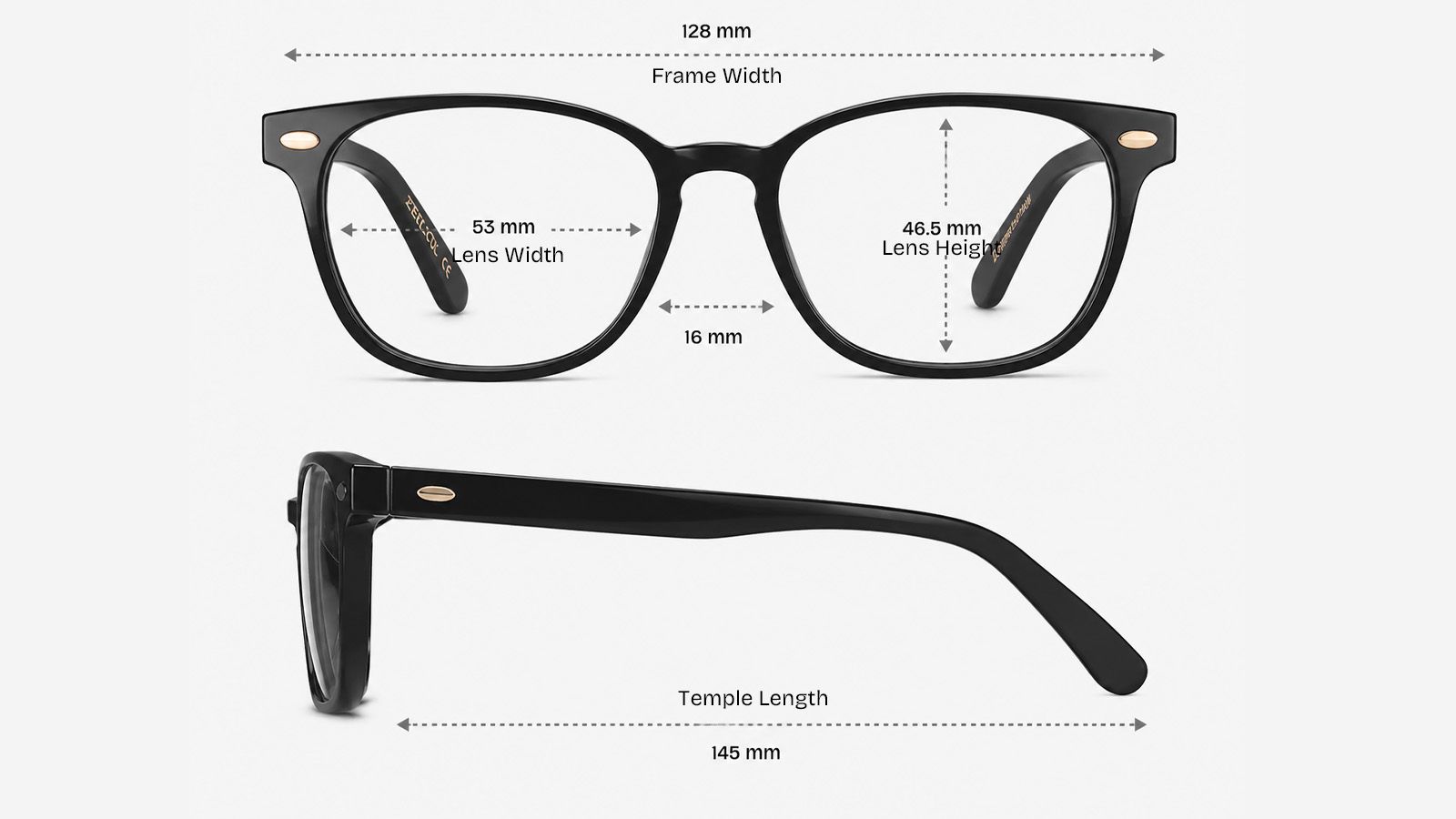
Before buying OTG sunglasses, measure your existing glasses:
| Measurement | How to Take It | Why It Matters |
| Frame width | Measure across the widest point of the front | OTG frame must be wider |
| Frame height | Measure from top to bottom of the lens | OTG frame must be taller |
| Temple depth | Measure how far the temples protrude at the sides | OTG must clear temple thickness |
Most fitover manufacturers list compatible frame-size ranges. Match your measurements to the recommended range rather than guessing by general size category.
UV Protection Requirements
All OTG sunglasses should provide UV400 protection—blocking 100% of UVA and UVB rays. Check the product specifications before purchasing. A dark tint does not automatically indicate UV protection—inexpensive OTG options sometimes offer tint without meaningful UV filtering.
Lens Tint Selection
| Tint Type | Best Conditions |
| Gray | Bright sunlight maintains true color perception |
| Brown / Amber | Variable light enhances contrast |
| Polarized gray or brown | Driving and water eliminate reflected glare |
| Yellow | Low light and overcast improve contrast |
| Mirrored | High-glare environments like snow or open water |
Best Uses For OTG Sunglasses
Driving: Polarized OTG sunglasses are great for driving. They reduce glare from the windshield and road and go around the sides of your glasses to block light from the sides. Look for styles with side shields to maximize coverage.
Fishing and watersports: Polarized lenses are key to cutting the glare off water surfaces, making it much easier to see below the waterline. A fit-over with lower lens coverage prevents light from entering below the frame.
Hiking & Outdoor Activities: Wrap-around fitovers offer protection from wind & debris with UV coverage Lightweight TR90 fitover frames are light and add minimal weight to your current glasses.
Casual day-to-day use: The most practical solution for moving between indoor and outdoor environments through the course of a day without having to carry a second case is a magnetic clip-on or a small folding clip-on.
OTG vs. Prescription Sunglasses: Which Is Better?
This is the most practical question for anyone who wears glasses regularly. The honest answer depends on how much time you spend outdoors and how much optical performance matters to you.
| Factor | OTG Sunglasses | Prescription Sunglasses |
| Cost | Lower — $15–$60 typical range | Higher — from $25.95 at ZEELOOL |
| Optical clarity | Reduced — two lens surfaces instead of one | Full clarity — single optical path |
| Convenience | On-and-off over existing glasses | Requires switching between pairs |
| Fit comfort | Heavier, more pressure on nose and ears | Normal glasses' weight and fit |
| UV protection | Good with UV400-rated options | Excellent with any prescription sunglass |
| Best for | Occasional outdoor use, travel, backup option | Regular outdoor use, driving, sports |
OTG sunglasses are a practical and inexpensive solution for occasional outdoor use, like a beach trip, weekend hike, or running errands that doesn’t require a second pair of prescription glasses. If you drive every day, spend a lot of time outdoors, or find OTG sunglasses to be uncomfortable, prescription sunglasses are a good investment.
ZEELOOL’s prescription sunglasses come in polarized, tinted, and photochromic lens options, with frames starting at $7. All styles can be fitted with single-vision and progressive prescriptions, and the free virtual try-on lets you see how each sunglass frame will look before you order.
Conclusion
Over-glasses sunglasses are a real solution to a prescription eyeglass wearer’s need for UV protection and glare reduction without the hassle of a separate prescription pair. Fitover styles provide the most coverage and are best for driving and outdoor activities. Clip-ons and magnetic options are best for convenience and quick changes. The best choice depends on how frequently you need sun protection and the importance of optical performance in that situation. For infrequent use, a good quality fitover or clip-on is a sensible solution. For frequent outdoor use, prescription sunglasses are worth the investment.
FAQs
What are the best sunglasses for a glasses wearer?
When it comes to UV protection, glare reduction, and frame coverage, polarized fitover sunglasses are the best choice for most activities. Magnetic clip-ons are the most convenient for casual everyday use. What’s best for you depends on your main use case—fit-overs are ideal for driving and outdoor activities, and clip-ons are for frequent indoor-outdoor transitions.
How do I know the size of fit-over sunglasses to get?
Take a measurement of the width, height, and temple depth of your existing eyeglass frame. Verify that these measurements fall within the compatible frame size range of the fitover manufacturer. The fitover has to be larger than your glasses in each dimension to sit over them without contact.
Do over-glasses sunglasses affect vision quality?
OTG sunglasses add a second lens surface between your eyes and the world, which can reduce optical clarity slightly compared to a single prescription sunglass lens. For casual use, this is rarely noticeable. For driving or precision activities, prescription sunglasses provide cleaner optical performance.
Are magnetic clip-on sunglasses worth it?
Yes, if your glasses frame is designed with magnetic attachment points. Magnetic clip-ons snap on and off in seconds, don’t risk scratching the frame the way spring clips can, and sit flatter against the lens. The catch is compatibility – they only work with frames built to accept magnetic attachments.
When should I get prescription sunglasses instead of OTG?
If you drive frequently and need polarized lenses If you spend several hours per day out in the sun most days of the week If you find OTG sunglasses heavy or uncomfortable to wear for extended periods of time If you need optical clarity for your activity Consider prescription sunglasses. Prescription sunglasses provide better visual performance and a more natural wearing experience for regular outdoor use.