









Summary
While glasses nose pads and eyewear accessories are small, they can have a big impact on how comfortable and stable your glasses feel when you wear them every day. Silicone nose pads distribute pressure more evenly than hard plastic, reduce skin irritation, and are the most popular upgrade for glasses that leave marks or slide. Beyond nose pads, temple tips, anti-slip retainer straps, cleaning tools, and repair kits make up the core accessories category — each solving a specific fit or maintenance problem. Most accessories are inexpensive, widely available, and easy to install at home, making them one of the most practical investments for anyone who wears glasses regularly.
Introduction
A pair of glasses that fits perfectly in the store can become increasingly uncomfortable over weeks of daily wear. The nose pads press too hard. The temples slide behind the ears. The frames slip down throughout the day. Most people assume these problems mean the glasses are wrong for them, but in many cases, a small accessory or adjustment is all that's needed. Glasses accessories are one of the most underrated categories in eyewear—simple, inexpensive, and genuinely effective at transforming how a pair of glasses feels. This guide covers everything from nose pad types and replacement to the full range of accessories that improve fit, comfort, and longevity.
Types of Glasses Nose Pads
Nose pads are the small cushions that rest against the sides of your nose, supporting the weight of the frame and determining how the glasses sit on your face.
Not all glasses have replaceable nose pads — plastic and acetate frames typically have a fixed nose bridge integrated into the frame material. Metal frames and most adjustable prescription frames use separate nose pads that attach to small metal arms and can be replaced.
Silicone Nose Pads
Made from soft, hypoallergenic silicone, these nose pads distribute pressure more evenly than rigid plastics. They remain comfortable on the nose and do not slip, which helps to keep your glasses in place all day long. Silicone nose pads come in different shapes and sizes to fit the individual shape of different nose bridges.
Best for: All-day wear, sensitive skin, frames that leave marks or pressure points.
Hard Plastic Nose Pads
Standard on many metal frames. Long wear can be less comfortable than silicone and can leave pressure marks on the nose over time, especially with heavier frames.
Best for: Occasional wear, frames where a tight grip is suggested.
Air Cushion Nose Pads
A variation of the silicone pad, with a hollow interior that slightly compresses under pressure. Provide exceptional cushioning for heavy frames or sensitive nose bridges. Noticeably more comfortable than standard solid silicone for extended wear.
Best for: Heavy frames, people with sensitive nose bridges, and all-day professional wear.
Adhesive Stick-On Nose Pads
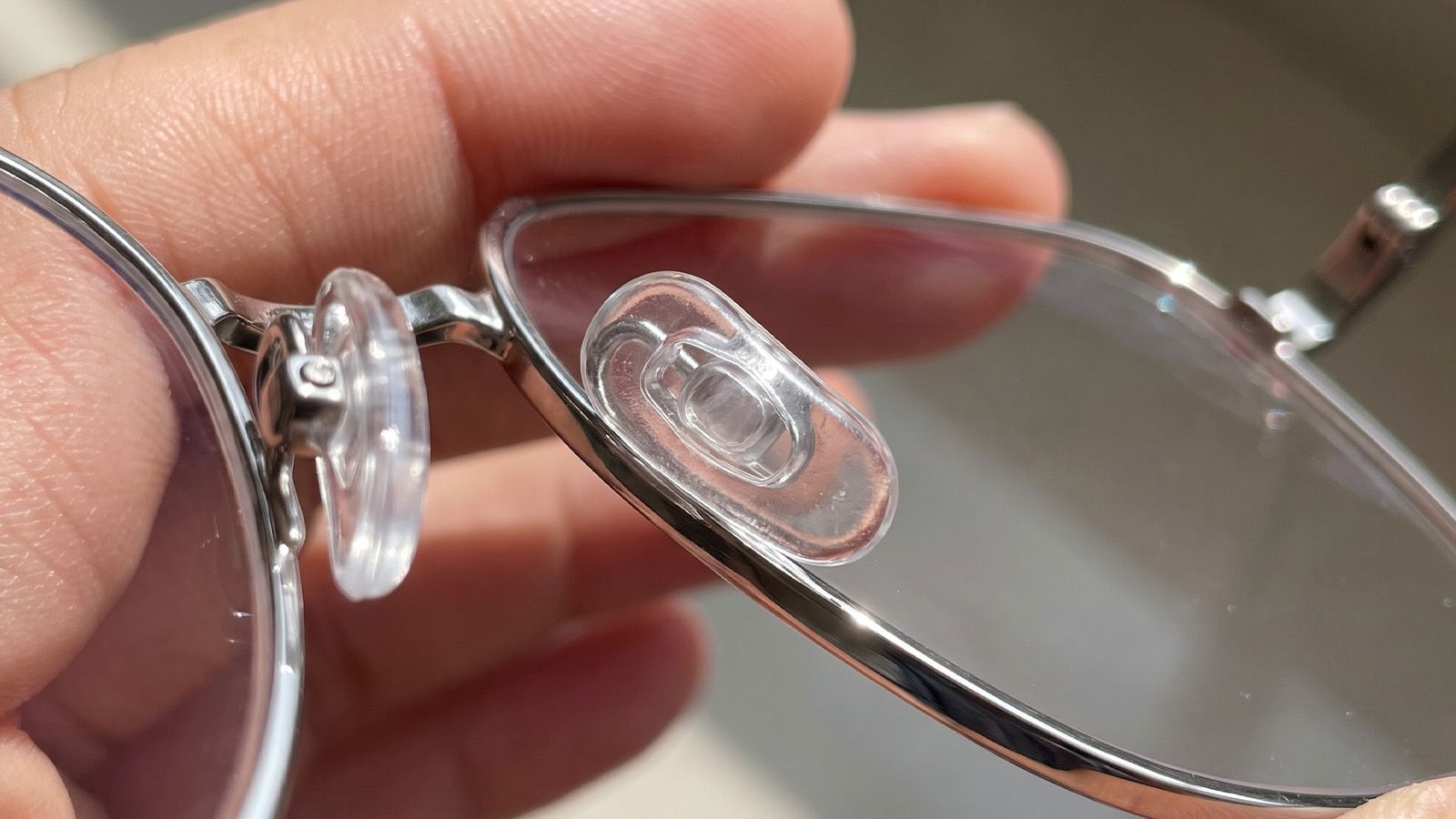
Self-adhesive silicone pads that attach directly to the inside of frames without screw fittings. Designed for frames that don't have a nose pad arm — including many plastic and acetate frames where a standard keyhole bridge creates pressure. Available in multiple thicknesses to adjust how the frame sits on the face.
Best for: Plastic and acetate frames, frames that sit too low or too high on the nose.
How to Choose the Right Nose Pads
The right nose pad depends on your frame type, nose bridge shape, skin sensitivity, and how many hours per day you wear your glasses.
| Factor | Recommendation |
| Sensitive or easily irritated skin | Silicone or air cushion—hypoallergenic materials |
| Frames that leave marks | Air cushion or wider silicone pads for better pressure distribution |
| Frames that slide down | Silicone — better grip than hard plastic |
| Heavy frames | Air cushion pads for maximum cushioning |
| Plastic frames without pad arms | Adhesive stick-on silicone pads |
| Standard daily wear | Standard silicone — reliable balance of comfort and grip |
Nose pad size also matters. Pads that are too small concentrate pressure on a small area; pads that are too large may not fit within the frame's pad arm spacing. Most replacement pads come in sizes measured in millimeters—12 mm, 14 mm, and 16 mm are the most common. Check your current pad size before ordering replacements.
How to Replace Nose Pads at Home
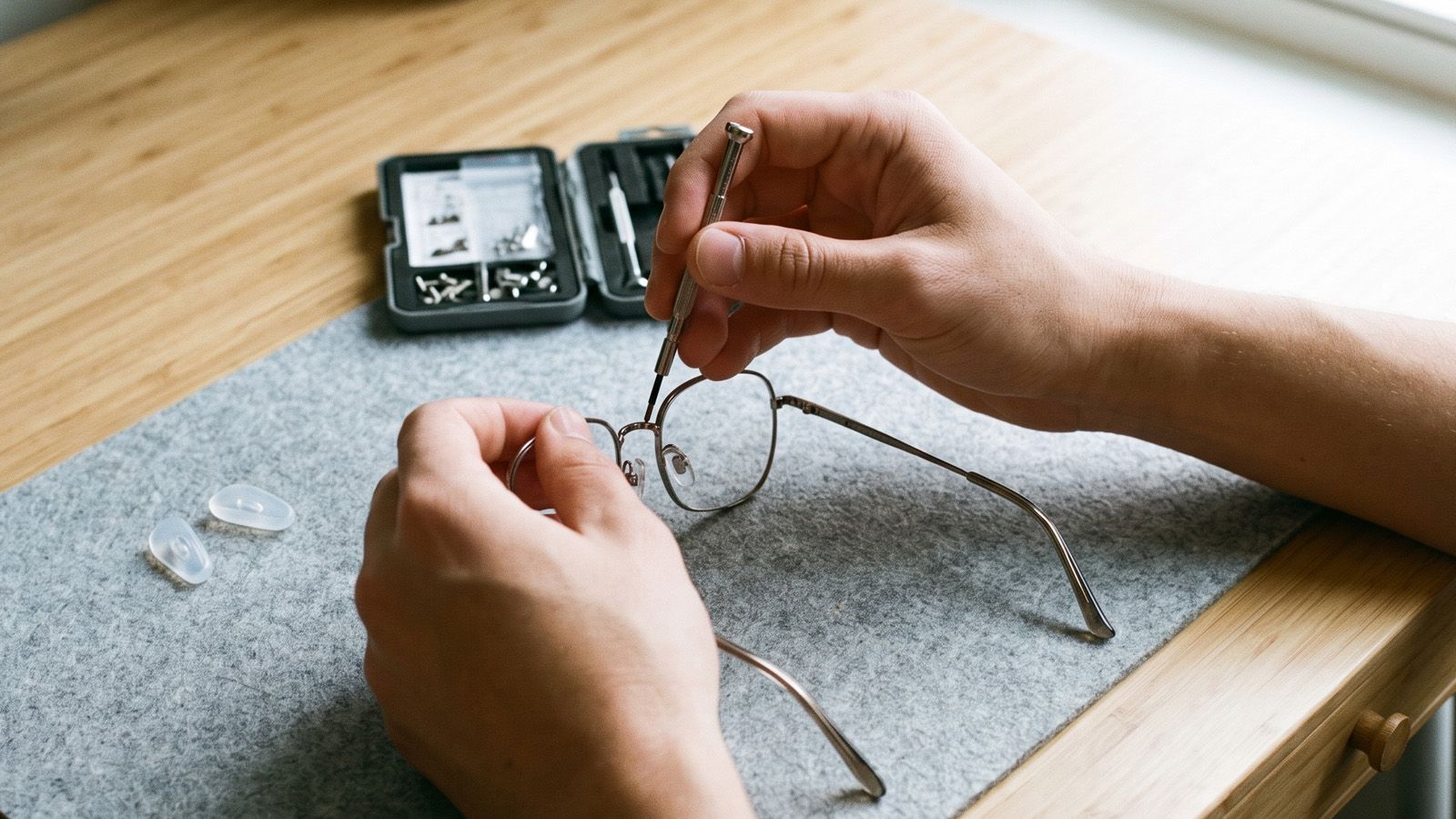
Replacing screw-in nose pads takes about two minutes with the right tools and no technical skill.
What You’ll Need:
• Small precision screwdriver (usually included in eyeglass repair kits).
• Nose pads (make sure you get the right size).
• Soft work surface (to avoid scratching the lenses).
How to Do It:
- Place the glasses face down on a soft cloth.
- Find the small screw on the nose pad arm (there is only one screw on the entire arm assembly).
- Loosen the screw by turning it counter-clockwise (use your finger to hold the nose pad arm to prevent bending or warping).
- Once the screw has been fully removed, slide the old nose pad off the arm.
- Slide the new nose piece on to the arm, lining up the screw hole 6. Insert the screw and turn clockwise until snug—do not over-tighten, which can strip the thread or crack the nose piece Repeat for the second pad.
For push-in nose pads (no screw, snaps into place): grip the pad with your fingers and pull firmly outward. The replacement snaps back into the arm socket. No tools required.
Other Essential Glass Accessories
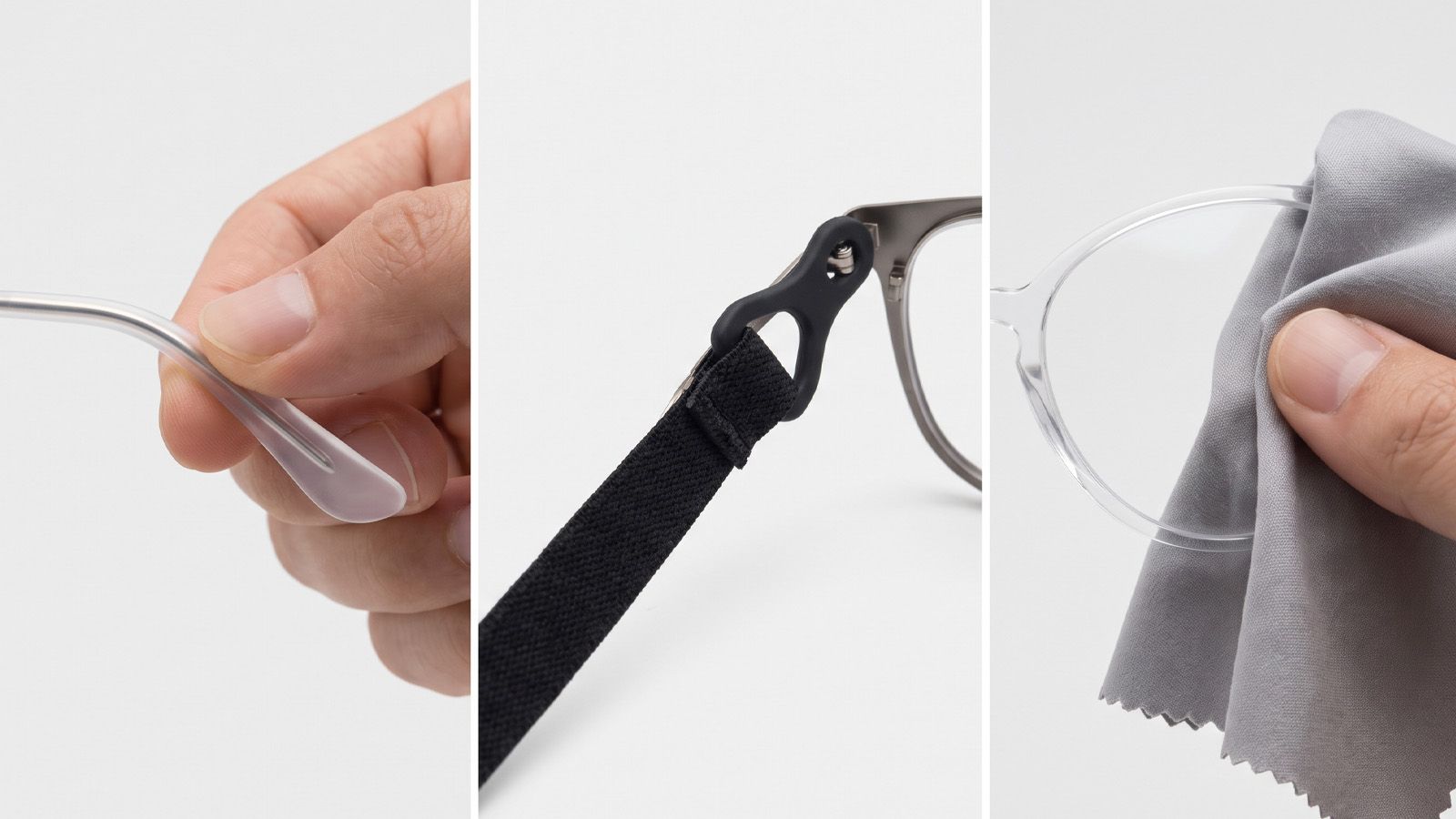
Temple Tips and Ear Cushions
Temple tips are the small caps at the end of the temple arms that rest on and behind the ears. Standard tips are hard plastic; silicone replacements provide cushioning that reduces the pressure marks and irritation that develop with extended wear. They slip over the existing temple end and require no tools.
Best for: Anyone who wears glasses for 8+ hours a day and gets ear pain
Anti-Slip Retainer Straps
Elastic or silicone cords that hook on to the temple ends and loop behind the head to prevent glasses from falling forward while moving around. Essential for active use — running, cycling, sports — and useful for anyone whose glasses regularly slip down during the day.
Types:
● Standard elastic cords — minimal, fold flat, suit casual use
● Silicone sport straps — wider, more secure, designed for high-intensity activity
● Adjustable neoprene straps — padded, suited for prolonged outdoor wear
Glasses Cases
Glasses cases protect frames and lenses from scratches, pressure, and accidental damage when not being worn. The choice between hard and soft cases depends on use context:
| Case Type | Protection Level | Best For |
| Hard shell case | High — protects from crushing | Travel, bag or pocket carry |
| Soft pouch | Low — protects from scratches only | Home storage, gentle conditions |
| Semi-rigid case | Medium | Everyday carry with moderate protection |
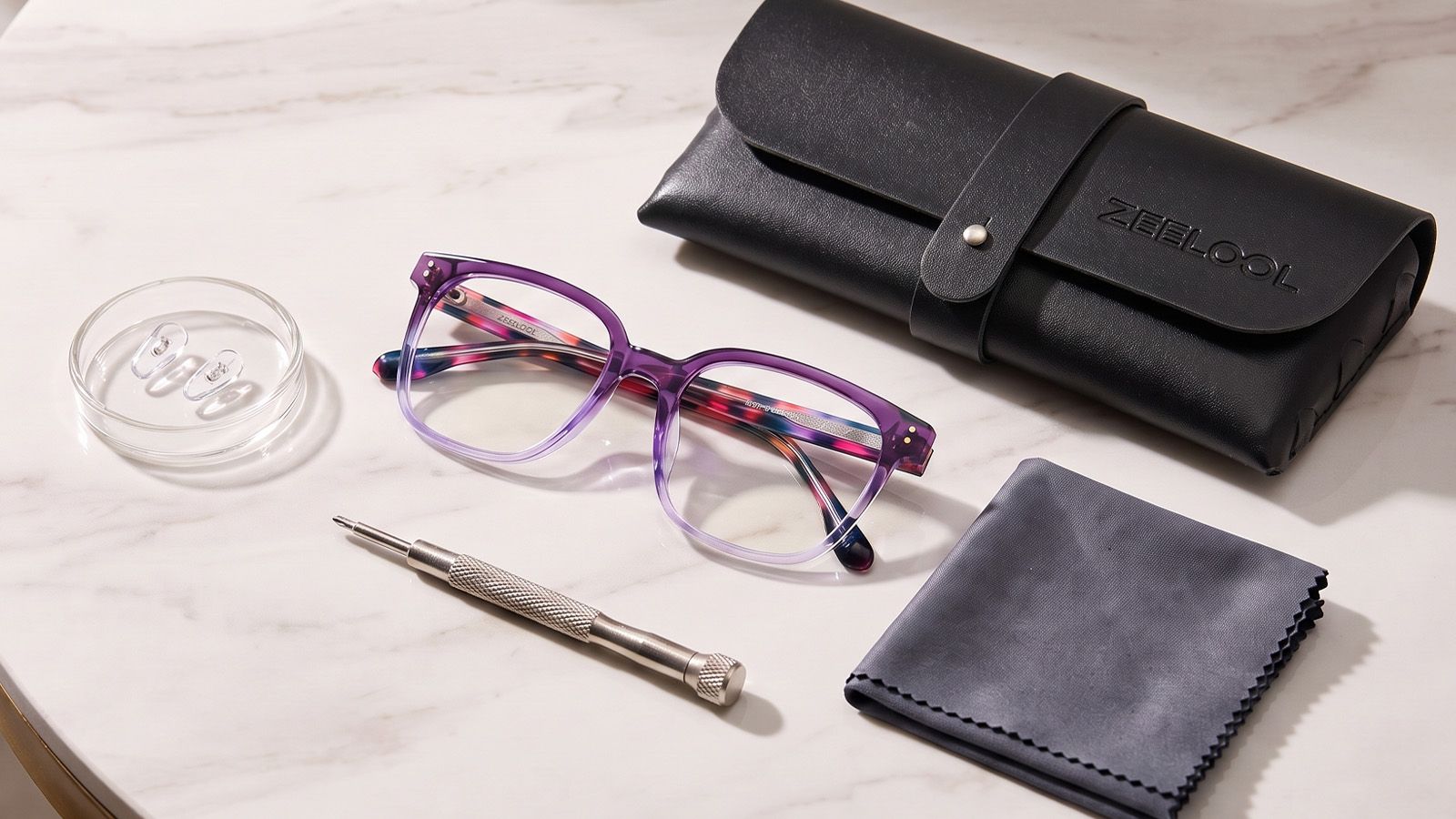
Most glasses from ZEELOOL ship with a protective case included—keeping it with the glasses rather than leaving frames on surfaces is the single most effective way to extend frame life.
Microfiber Cloths and Lens Cleaning Solution
The only safe materials for cleaning prescription lenses. Paper towels, clothing, and tissues contain fibers that scratch lens coatings over time—even anti-reflective coatings that appear durable are susceptible to micro-scratching from inappropriate cleaning materials.
Cleaning Routine:
- Rinse lenses in warm water to remove dust and grit.
- Add a drop of lens cleaning solution or mild dish soap.
- Gently rub with your fingers in a circular motion.
- Dry with a clean microfiber cloth using light pressure
Dry-wiping lenses without rinsing first is the most common cause of preventable lens scratches—the dust particles present on any worn lens act as an abrasive when dragged across the surface.
Glasses Repair Kits
A basic glasses repair kit contains a set of small precision screwdrivers, assorted replacement screws in common sizes, and sometimes spare nose pads. They are inexpensive, widely available, and solve the most common mechanical glasses problems—loose hinges, lost screws, and wobbly temple arms—at home in minutes.
What a repair kit handles:
● Tightening loose hinge screws
● Replacing lost screws
● Replacing nose pads (with screwdriver included)
● Adjusting temple arm angle on metal frames
Accessories for Specific Use Cases
Active and outdoor use: Anti-slip retainer strap plus silicone temple tips and nose pads. The strap prevents forward slip during movement; silicone components maintain grip during perspiration when standard pads tend to slide.
All-day office and professional wear: Air cushion nose pads for all-day comfort, silicone temple tips to reduce ear pressure, and a hard case for commuting protection.
Travel: Hard shell case, spare repair kit, and a pack of microfiber cloths. Travel conditions — bag compression, temperature changes, and unfamiliar environments — increase the risk of frame damage and the inconvenience of being without tools for minor repairs.
Prescription glasses worn over extended periods: Silicone nose pads and temple tips both become more important as daily wear hours increase. Small discomforts that are ignorable for two hours become significant over eight.
Where to Buy Glasses Accessories Online?
Most glasses accessories are available through general online retailers, optical supply stores, and directly through eyewear brands. When ordering replacement nose pads, make sure the size and screw type are compatible with your existing frames — measure the current pad in millimeters before placing your order to prevent compatibility issues.
ZEELOOL has an accessories section that offers replacement nose pieces, cleaning kits, and protective cases that work with the range of frames the brand sells. If a customer has bought frames from ZEELOOL and needs replacement parts, the customer service team can advise on whether they will be suitable for the specific model.
Conclusion
Glasses accessories address the gap between how glasses fit when they are new and how they feel after months of daily wear. Silicone nose pads and temple tips are the most impactful upgrades for comfort — small changes that make a significant difference over the course of a full wearing day. A proper hard case, microfiber cloths, and a basic repair kit round out the essentials that extend frame life and keep glasses functional without professional intervention. Most of these accessories cost very little and take minutes to install—making them one of the most practical investments for anyone who depends on their glasses every day.
FAQ
How do I stop my glasses from sliding down my nose?
The most effective solutions are silicone nose pads—they grip the nose better than hard plastic—and temple tip cushions that increase friction behind the ears. Anti-slip retainer straps are the most reliable option for active use. If the glasses consistently slide despite these adjustments, the frame may need professional adjustment of the temple arm angle.
How frequently should you change glasses' nose pads?
Silicone nose pads last 6-12 months with daily use until they begin to yellow, harden, or lose their grip. Replace them sooner if you feel discomfort, see obvious yellowing, or they start to slide. Hard plastic pads last longer but are less comfortable and worth upgrading to silicone at first replacement.
Can I add nose pads to glasses that don't have them?
Yes—adhesive stick-on silicone nose pads attach directly to the inside bridge of plastic and acetate frames without any screw fittings. They come in different thicknesses, which also lets you adjust how the frame sits on your nose. They are particularly useful for frames that sit too low or create pressure on the nose bridge.
What's the best way to clean prescription glasses?
Rinse with tepid water to remove dust and grit. Add a drop of lens cleaning solution or mild dish soap and gently rub. Rinse clean and dry with a clean microfiber cloth. Never dry-wipe lenses without rinsing first—dust particles scratch lens coatings. Avoid paper towels, clothing, and tissues.
Are glasses repair kits worth buying?
Yes—a basic repair kit costs very little and handles the most common glasses problems at home: loose screws, lost hinge screws, and nose pad replacements. For anyone who wears glasses daily, having a kit available eliminates the inconvenience of a minor mechanical issue making glasses unwearable until an optician visit.