









You may need low-bridge-fit glasses if frames repeatedly slide, leave a gap at the bridge, sit too low, touch your cheeks or eyelashes, or place your eyes unusually high in the lenses. One sign does not settle the question. Compare the bridge design, nose pads, total width and lens height with a pair that already fits you.
Key Takeaways
- Judge bridge contact and stability on your face, not the label alone.
- A smaller bridge-width number does not automatically mean a better low-bridge fit.
- Cheek or eyelash contact can also reflect lens height, frame curve or overall size.
- Adjustable nose pads may offer useful positioning, but they still need the right frame width.
- Virtual Try-On can compare appearance; product measurements are still required.
Five Signs You May Need Low Bridge Fit Glasses
Low-bridge-fit glasses may help when several problems point to poor support at the nose. Treat the following signs as clues, not a diagnosis. A frame that is too wide, poorly adjusted or unusually heavy can create similar problems.
| What you notice | Another possible cause | What to check |
|---|---|---|
| 1. Frames slide although the temples are not loose | Bridge too wide, weight toward the front | Bridge contact and frame balance |
| 2. A visible gap appears under the bridge | Bridge shape or vertical position does not match | Where the bridge actually rests |
| 3. Rims touch the cheeks, especially when smiling | Lens area is too deep or frame sits too low | Lens height and cheek clearance |
| 4. Eyelashes touch the lenses | Frame sits too close to the eyes | Nose-pad or bridge position |
| 5. Eyes sit very high in the lens openings | Frame rests lower than intended | Bridge support and overall frame size |
Frames Keep Sliding
Frequent sliding is the clearest sign to investigate, especially when the temples already feel secure. The bridge may not create enough stable contact, or the frame may carry too much weight forward. Tightening the temples is not a reliable substitute for a suitable bridge.
The Bridge Does Not Make Even Contact
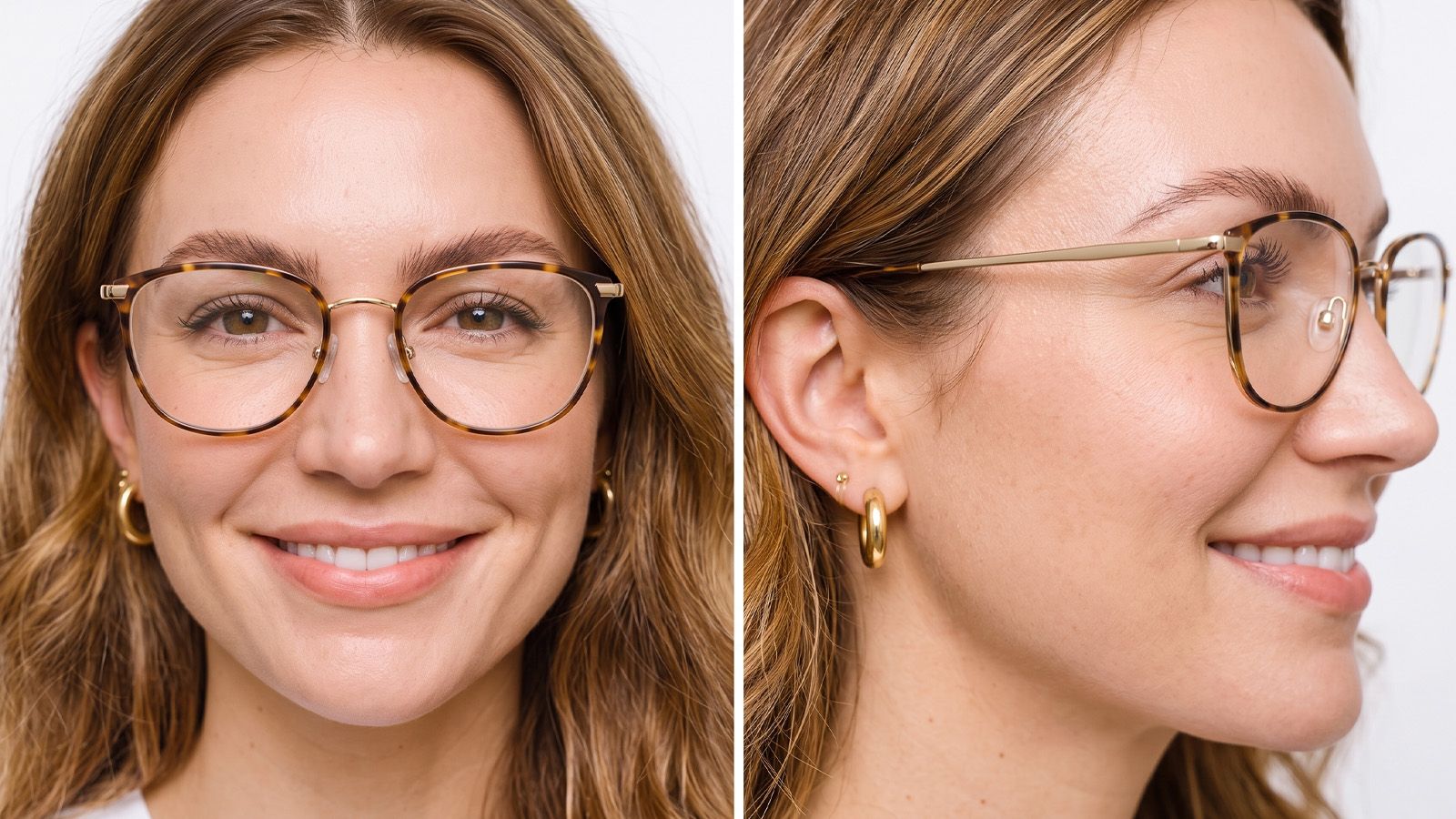
Look from the front and side. A bridge that touches only at a small point, leaves a large gap or forces the frame downward may not match your nose. Concentrated pressure is also a poor fit, even when the frame does not slide.
The Frame Touches Your Cheeks or Eyelashes
Cheek and eyelash contact often appears when the frame sits too low or close. Lens height, front curvature and nose-pad position can contribute, so do not choose a narrower bridge without checking the rest of the geometry.
Low Bridge Fit Is More Than a Smaller Bridge Number
The bridge-width number describes the distance between the lenses at a defined point. It does not show the bridge's contour, height, contact area or angle. Two frames with the same printed bridge width can sit differently because one bridge rests higher or spreads pressure across a different area.
For the basic distinction between bridge types, read High Bridge vs Low Bridge Glasses. Use that explanation together with your actual fit rather than treating facial features as a rigid category.
What to Check on a Product Page
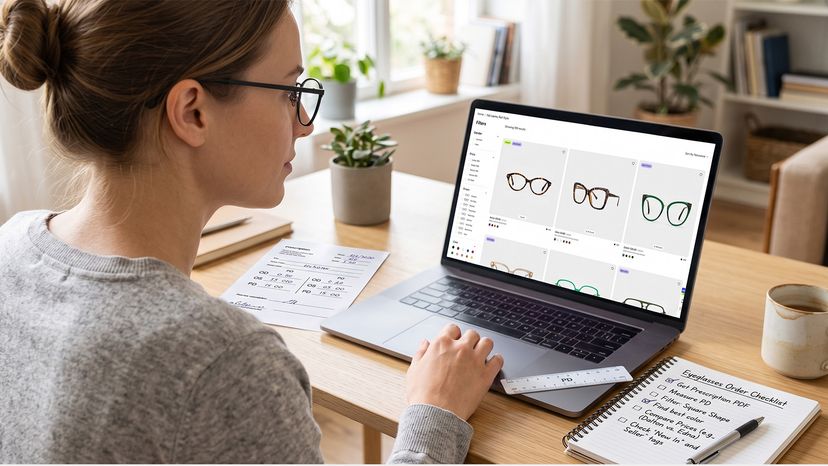
Start with a comfortable pair you already own. Record its total width, lens width and height, bridge width and temple length. Then compare those values with the candidate frame and review its front and side images.
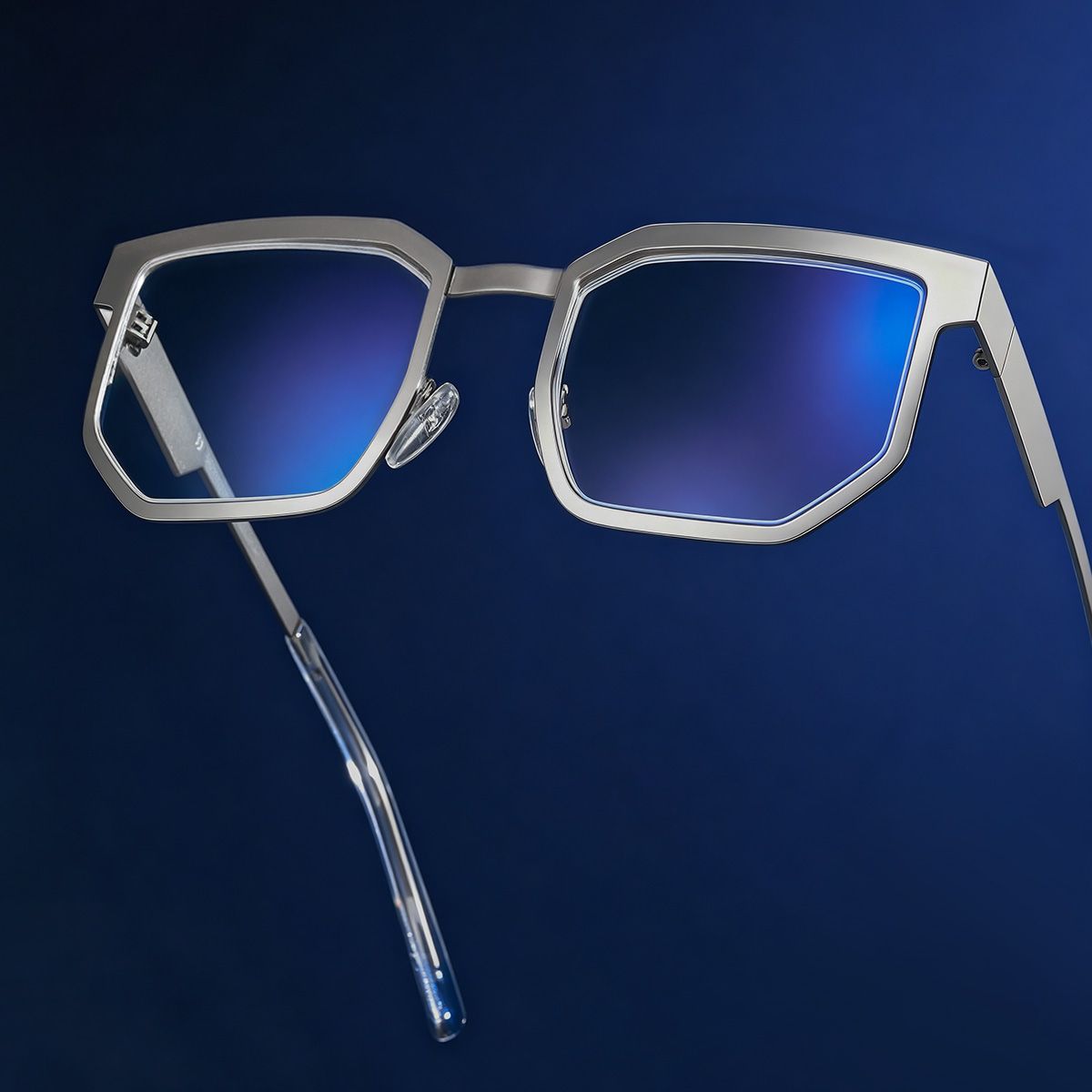
- Bridge design: Look at its position and shape, not only the printed width.
- Nose pads: Adjustable pads can change support and distance from the face within limits.
- Total frame width: A good bridge cannot compensate for a frame that pinches the temples.
- Lens height: Deeper shapes may be more likely to meet the cheeks on some faces.
- Temple length: The bend should support the frame without creating pressure behind the ears.
The seven-point glasses fit checklist explains how these contact points work together.
Can Virtual Try-On Confirm Low-Bridge Fit?
No. ZEELOOL Virtual Try-On can help you compare frame shape, color and overall proportions, but it does not measure exact bridge contact, temple pressure or cheek clearance. Use it to narrow your style choices, then verify product dimensions against a well-fitting pair.
A Five Minute Fit Check at Home
- Face a mirror and check whether the frame is level and your eyes sit reasonably within the lenses.
- Turn sideways and inspect where the bridge or nose pads make contact.
- Look down and move your head normally to see whether the frame repeatedly slides.
- Smile and talk to check whether your cheeks push the frame upward.
- Check eyelash clearance and pressure at the temples and behind the ears.
Small adjustments may help some frames, but do not make aggressive bends at home. If the frame causes persistent pain, or if your vision changes with the frame position, ask an optician or eye care professional to check it.
Find a More Stable Starting Point
Browse ZEELOOL low-bridge-fit glasses or frames with adjustable nose pads. Compare the bridge, total width and lens height before deciding; the collection label is a useful filter, not a personal fit guarantee.
FAQs
Is low bridge fit the same as a narrow bridge?
No. Bridge width is one printed measurement. Low-bridge fit also depends on bridge height, contour, contact area, nose pads and how the entire frame rests on the face.
Are adjustable nose pads better for low bridges?
They can provide more control over frame height and distance from the face, but they are not automatically better. The total frame width, pad shape and professional adjustment still matter.
Why do my glasses touch my cheeks?
The frame may sit too low, have a deep lens shape, curve toward the face or be too large overall. Check several measurements and contact points instead of assuming the bridge is the only cause.