










If your pupillary distance is wrong, the optics of your lenses might not be in the right place for your eyes. This can affect clarity or comfort and may be a factor in blur, eye strain, headache or difficulty adapting. Symptoms alone cannot prove that PD is the cause, as the effect is different depending on prescription strength, lens design, differences between the eyes and how the frame sits.
Key Takeaways
- PD helps align the optical areas of prescription lenses horizontally.
- Single PD, dual PD, distance PD and near PD are not synonymous labels.
- There is no “universal” error rate that is safe for all wearers.
- Stronger prescriptions and progressive lenses usually require more exact measurement.
- If visual symptoms persist, they should be examined by a qualified eye care professional.
What Does Pupillary Distance Control
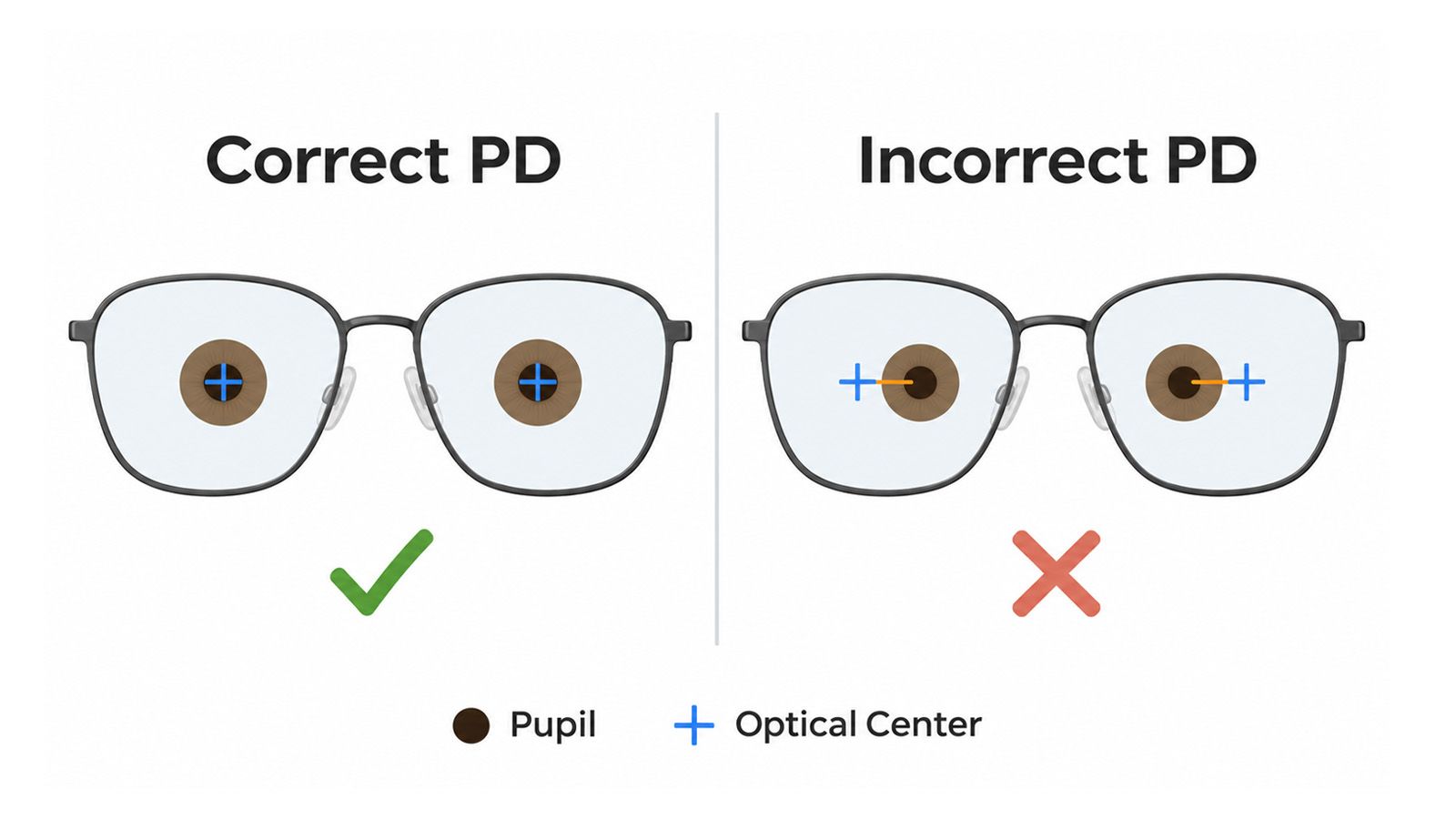
Pupillary distance is the distance between the centers of the pupils (or between each pupil and the center of the nose if measured individually). It is measured in millimetres and helps to locate the optical areas in relation to your eyes. PD is a measurement of dispensing, not sphere, cylinder, axis or ADD.
| PD type | How it is written | Typical use |
|---|---|---|
| Single PD | One number | Used when the order form requests one combined value |
| Dual or monocular PD | One value for each eye | Used when right and left PD fields are requested |
| Distance PD | Measured for distance viewing | Common for distance or multifocal ordering workflows |
| Near PD | Measured for near viewing | Used only when the lens or order process specifically requires it |
Follow the fields shown during checkout. ZEELOOL's PD measurement guide explains that a single value belongs in a single PD field, while separate right and left values belong in dual fields.
What Can Happen If the PD Is Wrong
An incorrect PD can shift the intended optical position relative to the pupils. Some people may experience visual disturbance or difficulty in adjustment, eye strain, blurred vision or headaches. But these same experiences may have different causes.
| Possible experience | Other factors to check |
|---|---|
| Blur or inconsistent clarity | Prescription entry, lens type, frame position |
| Eye strain or headache | Screen use, adaptation, prescription, lens centering |
| Difficulty finding a clear area | Progressive design, fitting height, frame movement |
| One eye feels different | Right and left values, monocular PD, frame alignment |
This is why you should not diagnose a PD error from symptoms alone. Compare the prescription, order record, measurements and physical fit together.
How Much Does a Wrong PD Matter
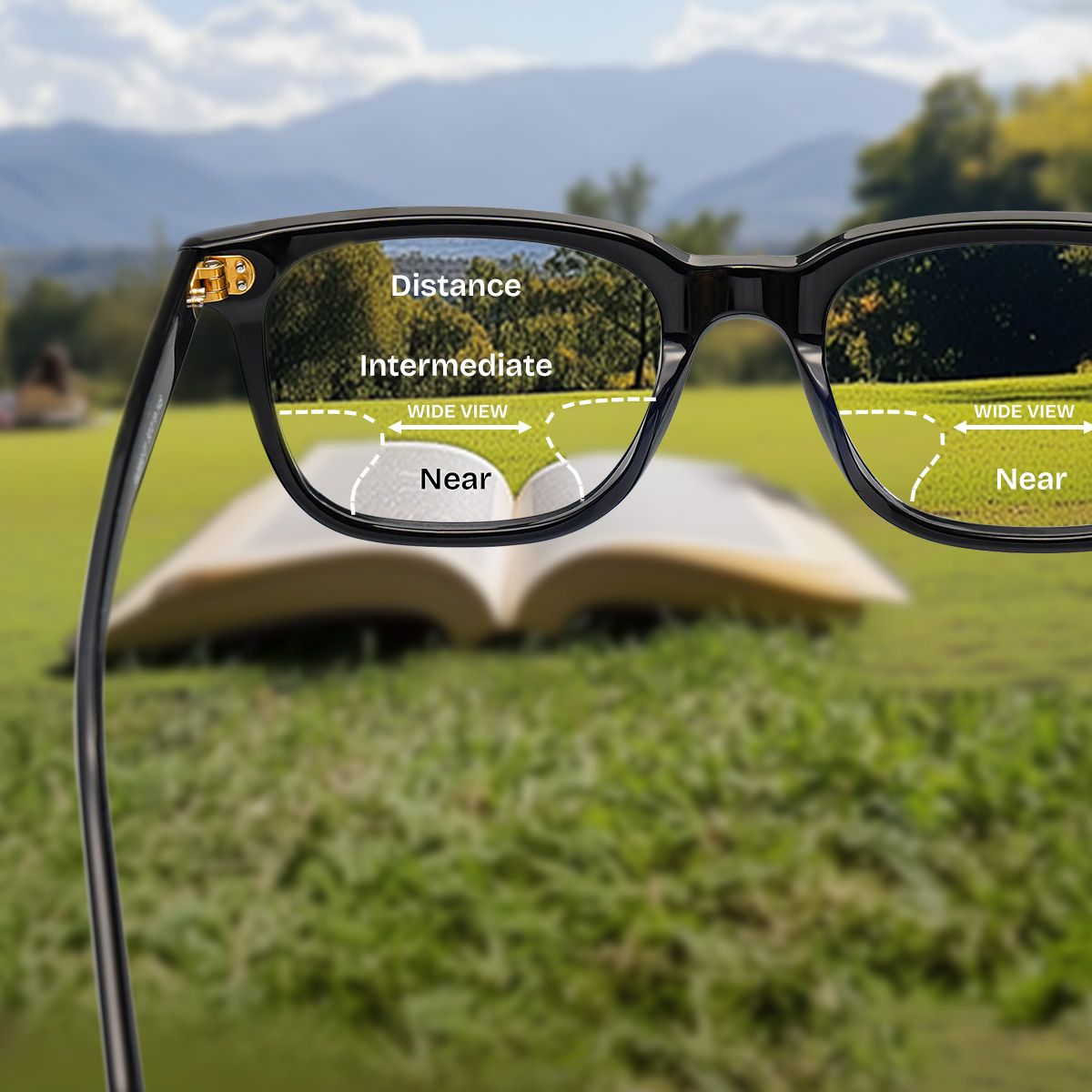
There is no single tolerance for every prescription and lens. The difference may be less noticeable with a low powered single vision order and more pronounced with a stronger prescription or progressive design. The result also depends on the lens geometry and the position of the frame .
Don’t believe advice that says a certain number of millimetres is always safe. One measurement that is good for one person or one lens design may not be good for another. If you aren't sure of the number, check it before you order instead of assuming what the standard number is.
Check PD Before You Submit the Order
First, check to see if the form asks for a single PD or right and left separately. Verify that the measurement is for far or near use. Take more than one measurement in the same posture, with your face straight and the measuring tool scaled correctly. If you get different results repeatedly, do not average out wildly different numbers without professional advice.
Use Virtual Try On to compare frame shape, color and overall proportions. It does not measure exact face size, PD or physical fit, so it cannot validate the number you enter. For a strong prescription, progressive lenses or uncertainty between the eyes, ask an optician or other qualified eye care professional to measure PD.
What Should You Do If You Ordered With the Wrong PD
If the order has not yet entered production, contact ZEELOOL immediately and ask if the entry can still be reviewed. But don't make a second order or change the number a second time until you know which is right.
If the glasses have arrived, compare the original prescription, the order entry and your record of PD . Also check for OD and OS being reversed, SPH signs entered correctly, CYL, AXIS, ADD and lens type matching the order. Review the fields without guessing by using the guide to filling out a prescription.
If the blurring does not disappear or you have pain in the eyes, a bad headache, double vision, dizziness or other worrisome symptoms, stop forcing the adaptation and go to a professional.
A PD Error Is Not the Only Possible Cause
Prescription-entry errors, a frame that sits crooked, an unsuitable lens design, lens placement or a normal adaptation period can also affect the experience. The article on online prescription glasses accuracy provides a broader checklist for reviewing a new pair.
Frequently Asked Questions
Is PD part of my eyeglass prescription?
Not always. The College of Optometrists describes PD as a dispensing measurement rather than part of the prescription itself. Ask your provider how your PD is recorded or measured.
Can Virtual Try On measure my PD?
No. It previews appearance and proportions. Use a proper PD measurement method or obtain a professional measurement.
Is dual PD more accurate than single PD?
Dual PD gives separate right and left measurements, but it is useful only when the ordering workflow requests those values and they were measured correctly.
Can I tell from symptoms that my PD is wrong?
No. Symptoms overlap with prescription, lens-design, frame-position and adaptation issues. A professional examination is the reliable way to investigate persistent symptoms.
Before ordering, repeat the measurement, save the result and compare it with the checkout fields. For progressives, strong prescriptions or inconsistent measurements, professional confirmation is the safer choice.