




Key Factors & Conclusion
Glasses and contact lens prescriptions differ due to vertex distance; direct substitution causes blurry vision.
Contact prescriptions require BC, DIA, and brand specifics absent from glasses prescriptions.
Professional fitting is essential to ensure comfort, safety, and prevent serious eye health risks.
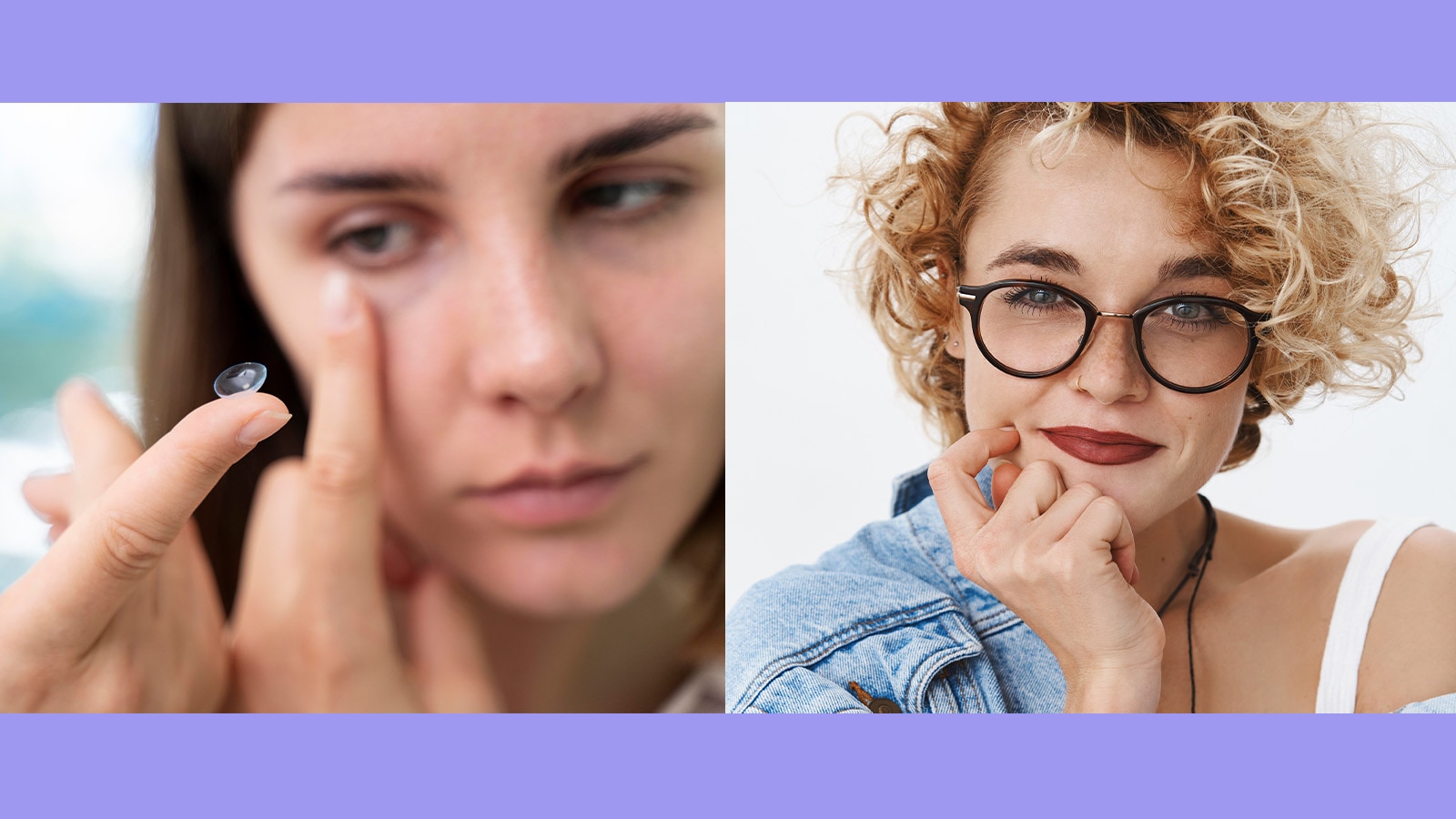
Consider setting yourself free from prescription glasses. You're definitely not the only one. And yeah, you've probably wondered if you can just use your glasses prescription for contacts. That makes sense. They both fix your vision, so why not?
Here's the truth: you can't. Eye glass prescriptions and contact lens prescriptions are two different things.
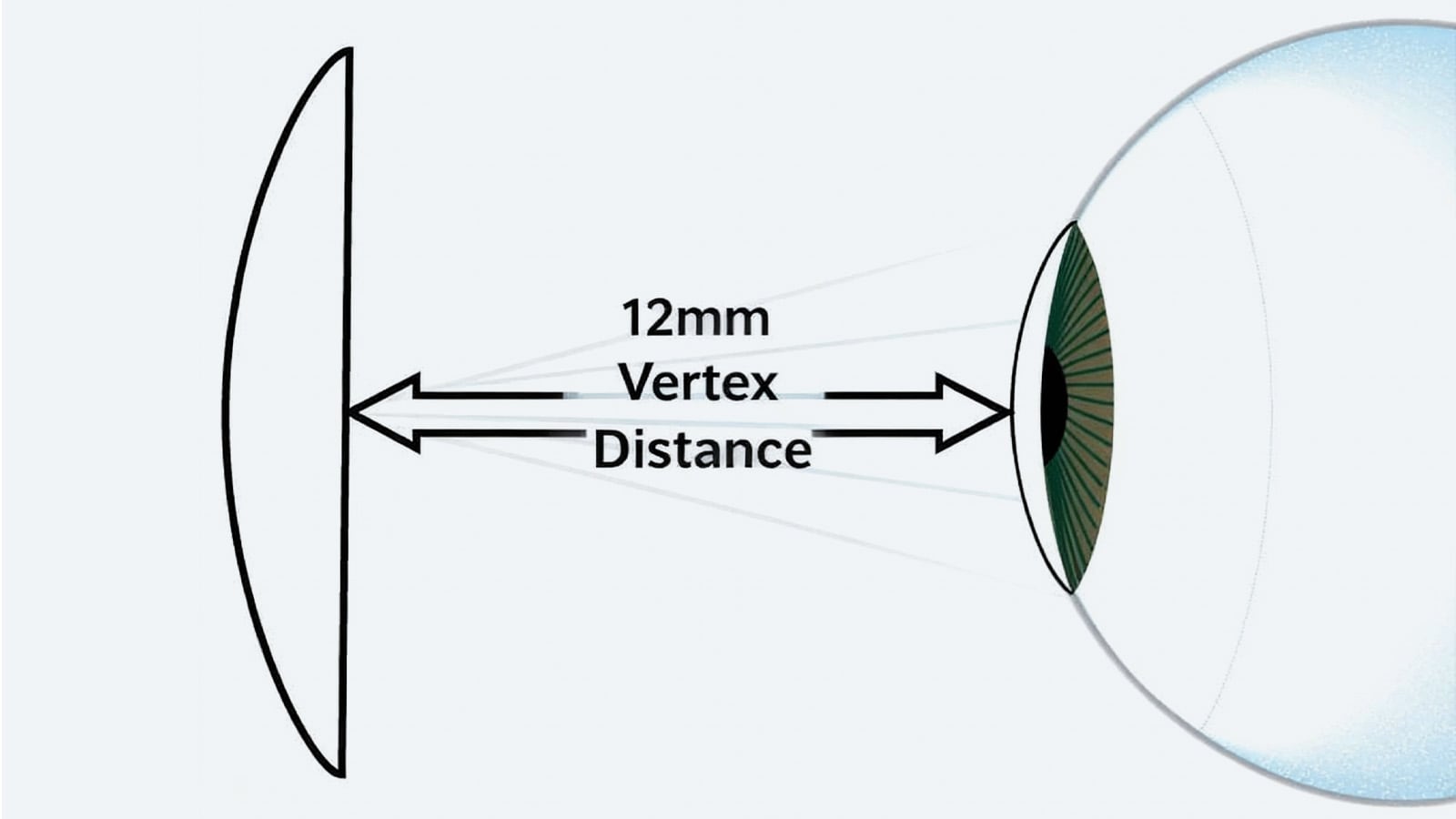
One is not a substitute for the other. Both are meant to improve vision, but the latter requires a different type of assessment. The main reason? Contacts sit right on your eye, while glasses hover about a dozen millimeters away. That little distance actually makes a big difference in how your prescription is calculated.
Let's break it down. Before using your prescription, it's important to understand pupillary distance (PD) in an eye prescription.
The Core Difference: Understanding Vertex Distance
Before using your prescription, it's important to understand pupillary distance (PD) in an eye prescription.
First, there's something called vertex distance. To put it bluntly, it is the average distance of 12-14 mm between your eyeglass frame lens and your eye. Doesn't sound like a lot, but it makes a difference as to how the light is refracted and directed to your eye.
Hence, the importance of including that particular value in your prescription when it is written. The prescription power is tuned for that whole trip.
Contacts don't have that gap. They sit right on your cornea, so the light doesn't travel through any extra space. That changes the prescription you need.
For people whose prescription is on the lower end, the difference is negligible, but with a stronger prescription, the difference is larger.
The higher the prescription on your glasses, the bigger the difference will be. For example, someone with a -6.00 glasses prescription might only need about -5.50 for contacts. Otherwise, you'll have contacts that are too strong, leading to headaches and blurry vision.
The Missing Information: What's Not on Your Glasses Prescription
Even if you were to adjust for vertex distance magically, the contact lens prescription vs. glasses prescription phenomenon still needs to be addressed. That said, your glasses prescription still wouldn't cut it for contacts and lacks key information.
- BC (Base Curve): This shows how rounded the contact lens is. Since your eye is not a perfect sphere, your contact lens needs to match that curve. Otherwise, the lens will feel either too loose or too tight, and it will be uncomfortable.
- DIA (Diameter): This indicates the width of the contact lens. Too big or too small, and you're in for discomfort or even problems with your eye.
- Brand and Material: Not every contact lens is the same. Some let in more oxygen, some hold more water, and some are meant to be worn longer. Your eye doctor chooses the right one based on your eyes and your lifestyle.
You don't get any of these details from a standard glasses prescription. That's why you need a contact lens fitting. The eye doctor checks your corneal shape, your tear film, and even your daily habits and then recommends what'll actually fit your eyes.
The Mandatory Step: Why Professional Fitting Isn't Optional
Some people can skip the fitting and order contacts online if they know their glasses prescription. Don't do that. Seriously.
A fitting is about much more than just numbers; it's about checking whether your eyes can even handle contacts and which type is safest for you.
Your eye care professional has some fundamental eye-related activities during their professional and preliminary lens fitting, such as measuring your cornea shape, checking your eye health and tear production, and having you try on different lens types to assess the right one for you in terms of comfort and movement in your eyelids during blinking.
In about 30 minutes to 1 hour, you will receive instructions for insertion and removal, as well as lens care. This experience is fundamental.
Your eyes are unique, and you have to keep this in mind whenever someone shares their experience.
Safety and Health: Why Proper Prescriptions Matter
Let's get real for a second: your eye health matters here. Using your glasses prescription for contacts, or wearing lenses that don't fit right, isn't just a little annoying. It's risky, plain and simple.
Why People Do It
- We know why people do it. It's easy to talk yourself out of going to the eye doctor.
- Maybe you find an old box of contacts and think, "Eh, my eyes are about the same."
- Or you decide to order lenses online because it feels faster and cheaper than scheduling an appointment.
- But what feels like a harmless shortcut can actually lead to a lot of trouble—not just for your comfort, but for your vision down the road.
Immediate Effects
- Let's cover the immediate things that happen first. Your eyes are likely to pick up on it right away.
- You will first notice that your vision isn't as sharp as it should be.
- You might notice some vision blurriness here and there.
- It can be hard to focus when you switch between your phone and something across the room.
- You might experience eye fatigue that worsens with increased eye strain.
- You may also experience headache pain behind the eyes and at the temples.
- You might see halos around lights, like when you are driving at night.
- Your brain is trying to solve an issue that is more of a problem, which further strains your eyes.
- It's a really tiring cycle of vision strain that ends up convincing you to get used to the situation.
Discomfort and Poor Fit Symptoms
- However, it's more than just your vision. Poorly fitted contacts have been known to make eyes miserable.
- You will feel it when your lenses are the wrong size or the curve is incorrect.
- You get that constant scratchy feeling that something is in your eye—it's because there is. Your eyes are trying to self-hydrate to flush out the lens.
- Redness and swelling occur when a lens is either too loose or too tight on the eye.
- Additionally, the lens can cause dry eye symptoms by disrupting the typical tear film on the eye.
Long-Term Risks
- Things get serious and concerning when the wrong lens is worn for too long.
- Over time, a lens that is too tight or is the wrong shape and curvature for the eye can cause a lack of oxygen to the cornea.
- The cornea is the transparent front window of the eye that must remain oxygenated.
- Tight or misshapen contacts can deprive the cornea of oxygen, leading to swelling over time.
- Additionally, the body tries to compensate by growing extra blood vessels.
- In severe cases, this can even cause lasting vision problems as new blood vessels grow across the cornea.
Infections and Injury Risks
- Fitting contacts can also cause infections and vision-threatening eye injuries.
- Minor cuts or abrasions to the eye can occur from poorly fitting contact lenses.
- This can create a nasty, painful, and vision-threatening corneal ulcer.
- Corneal ulcers can be complicated to treat, and scars are a common side effect.
- Irritation of the upper eyelid from poorly fitting contacts can lead to giant papillary conjunctivitis.
- In this condition, the upper eyelid becomes inflamed and develops cysts, leading to excessive mucus production.
- This condition can make it difficult or impossible to wear contacts.
Final Reminder
- Bottom line? Your eyes aren't built for guesswork.
- They need lenses that fit perfectly—and that only happens when you get a proper exam and fitting from a professional.
- Don't cut corners with your sight.
Finding the Perfect Frames for Your Lifestyle
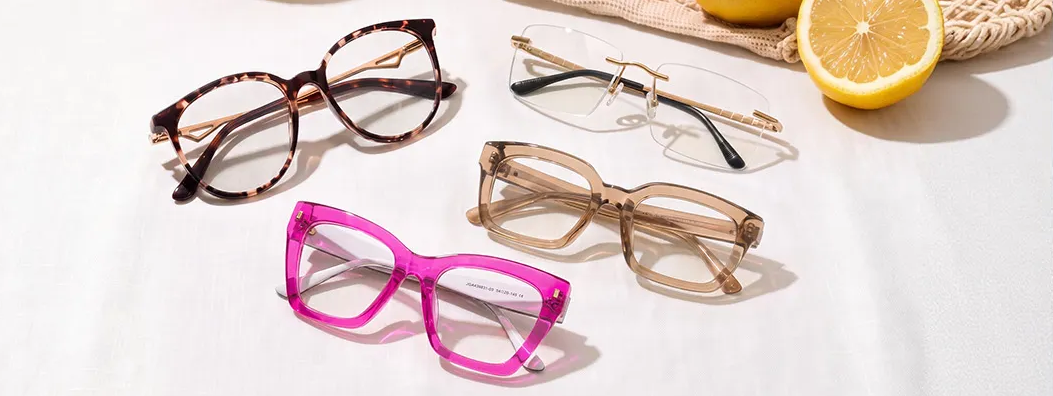
When booking a fitting with your eye care professional, do not forget your eyeglasses. You will be wearing contacts most of the time, but backup eyeglasses for the mornings and evenings, and for the days your eyes need a vacation, will still come in handy.
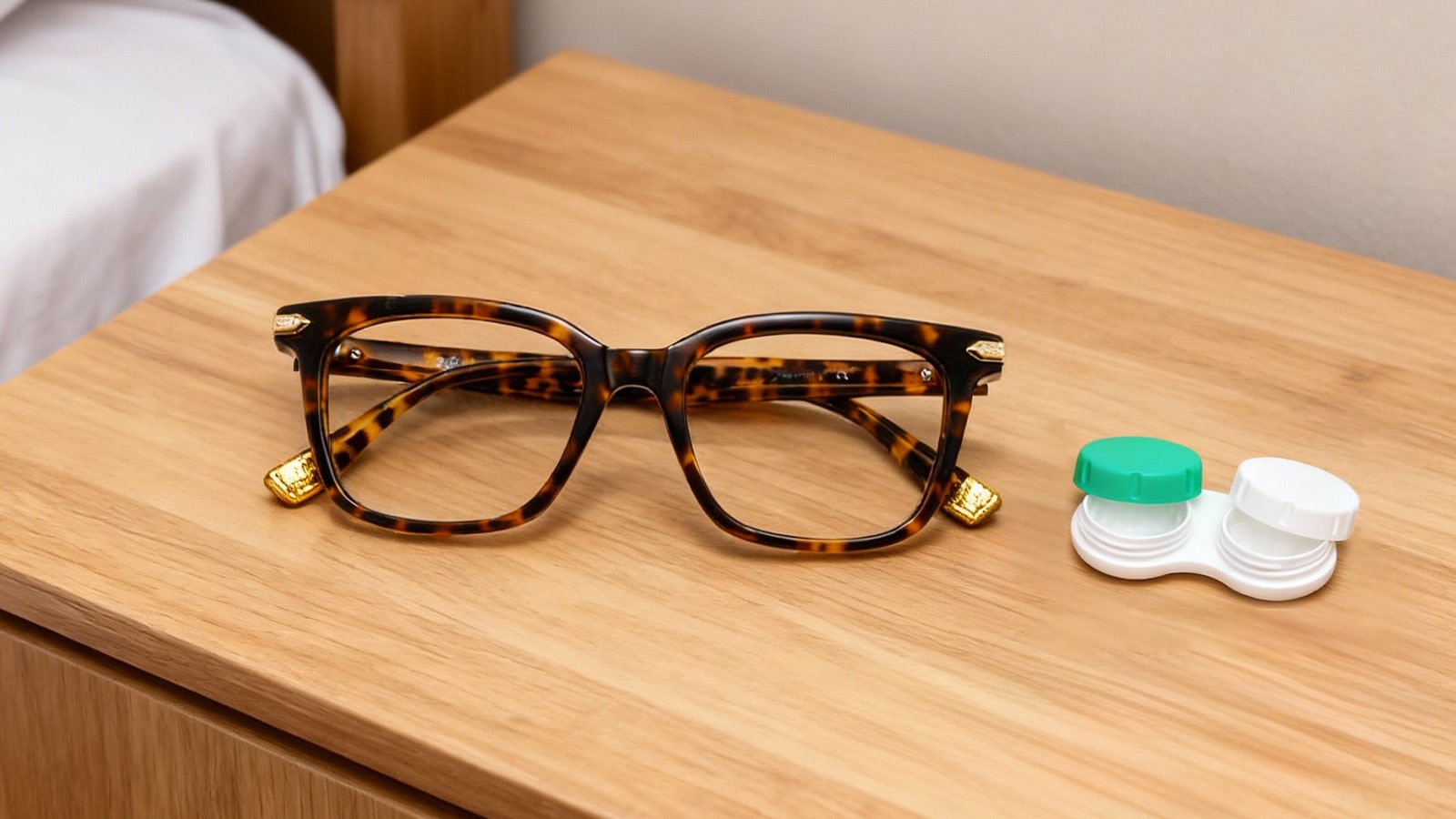
That's where eyeglasses ZEELOOL comes in. With a wide range of stylish, affordable frames, you'll easily find a pair that fits your style—whether you prefer classic elegance, bold statement styles, or lightweight everyday comfort.
Visit ZEELOOL today to browse their latest designs and see why so many shoppers choose ZEELOOL for stylish, affordable eyewear.
Conclusion
Can I use my eyeglass prescription for contacts? Nope, it just doesn't work that way. Glasses and contacts need different measurements—like the distance from your eye—and you can't just swap one prescription for the other. You really need a professional to get it right.
Your eyes deserve genuine care. Schedule an appointment with your optometrist for a contact lens fitting to obtain prescriptions that suit your needs. It's worth the trouble. And keep your glasses handy, just in case. Your eyes will enjoy the differing options. Strong eyesight starts with wise choices. Take the first step now.
FAQ
Can I use my glasses prescription to order contact lenses?
No. A glasses prescription does not contain all the information needed for safe contact lenses. Contacts sit directly on the eye and require a fitting plus lens-specific parameters such as base curve, diameter, material or brand, and sometimes different cylinder and axis values.
Why is a contact lens prescription different from a glasses prescription?
Glasses sit several millimeters in front of the eye, while contacts rest on the tear film. That vertex-distance difference can change the effective power in stronger prescriptions. Contact fit, movement, oxygen transmission, and lens design also affect comfort and vision.
Can an online calculator convert a glasses prescription to contacts?
A calculator may estimate optical power, but it cannot assess corneal shape, tear film, lens movement, health, or brand-specific fit. It therefore cannot replace a contact lens examination and trial fitting by a licensed eye care professional.
Why do my contact lens cylinder and axis differ from my glasses prescription?
Toric contact lenses are manufactured in set steps and can rotate on the eye, so the prescribed cylinder and axis may be adjusted during fitting. Use the final contact lens prescription exactly as issued rather than copying or rounding values from your glasses prescription.