



Key Factors & Conclusion
Toy sunglasses dilate pupils, allowing more UV rays to harm eyes.
Children's eyes are more vulnerable to cumulative UV damage.
Choose certified sunglasses with real UV protection for safety.
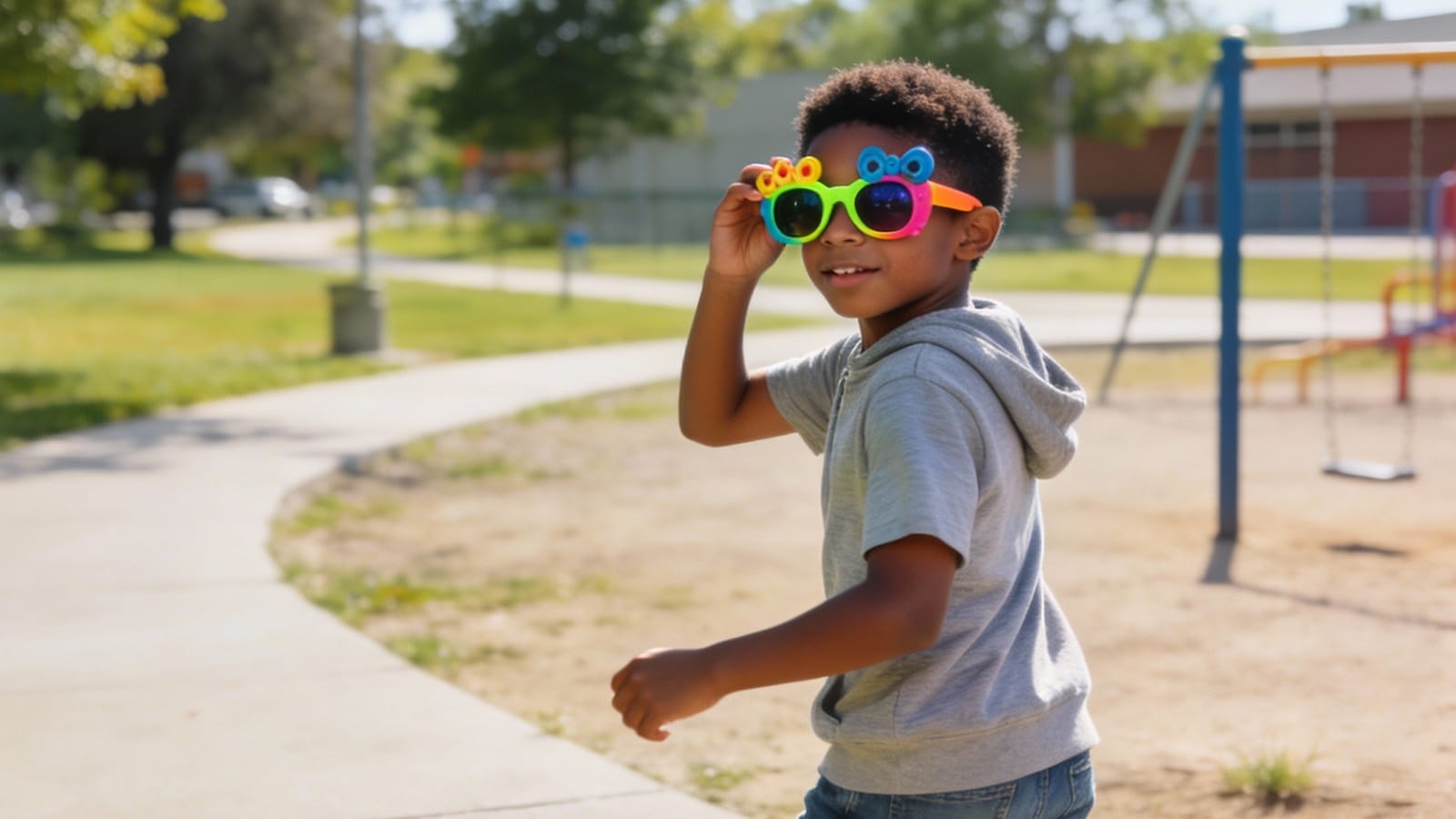
We've all seen it before: a quick stop at the grocery store, a walk through a carnival, or a visit to a party shop. Near the checkout, there is almost always a rack of small, colorful sunglasses made just for kids. They look cute, they are cheap, and kids love them. Parents often toss them in the basket as a harmless add-on—just something fun for a sunny day. 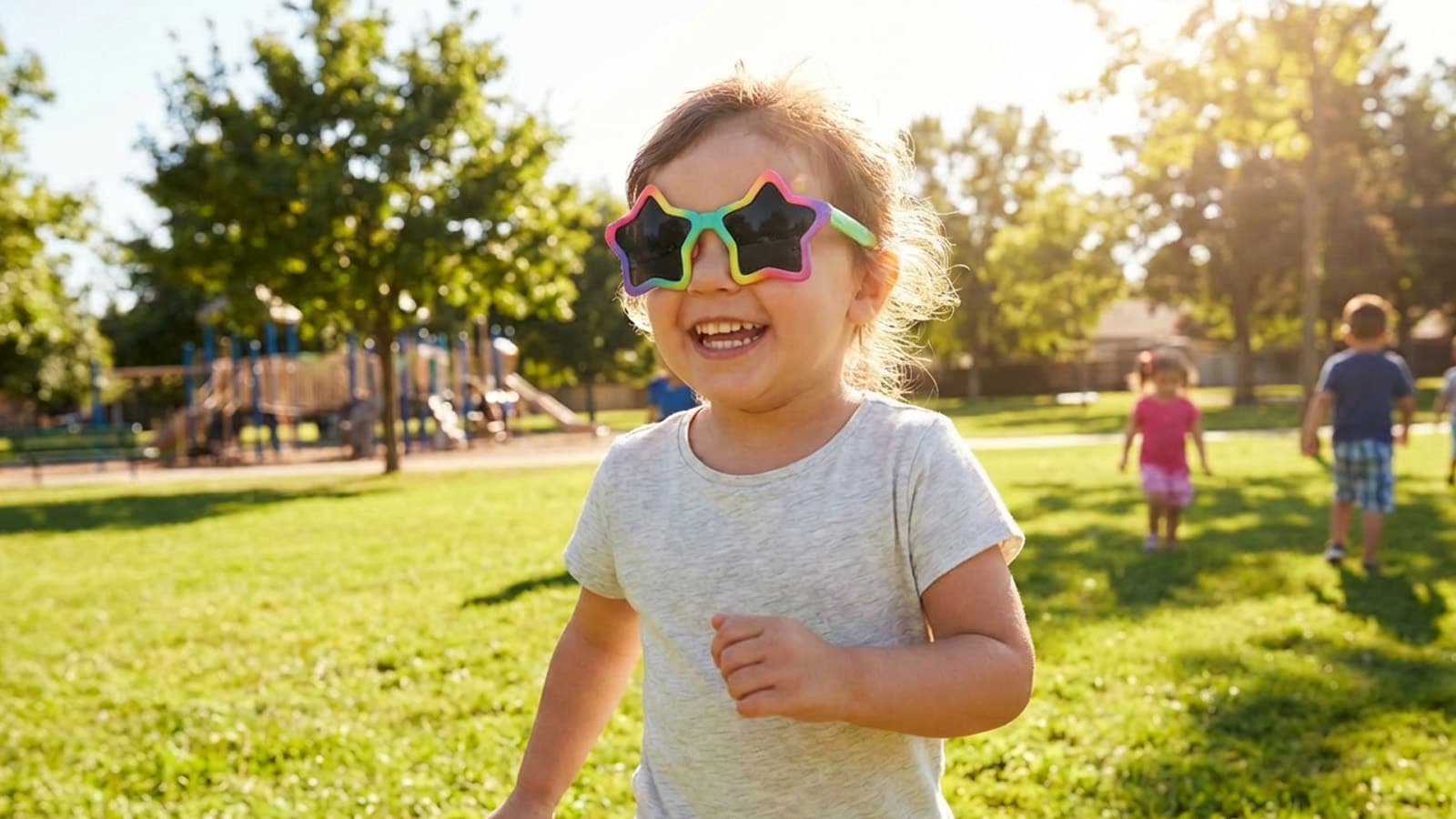
The problem is that not all sunglasses protect the eyes. Some are just for fun and fashion. These are often called "toy" or "fashion" sunglasses, and they are very different from protective eyewear. In fact, wearing dark lenses without proper UV protection can actually harm a child’s eyes more than wearing no sunglasses at all.
That sounds backward, but the science explains why. This guide breaks down what happens inside the eye, why children are more at risk, and how to choose safe sunglasses that truly protect vision, like the certified options from ZEELOOL.
The Science: The "Pupil Dilation" Trap
The human eye has a built-in defense system. In bright sunlight, the pupil automatically shrinks (constricts). This limits how much light enters the eye to protect the retina.
When a child puts on dark sunglasses, the brain reacts to the dimness by signaling the pupil to open wider (dilate) to let more light in. This is where the hidden danger lies.
If the sunglasses are just tinted plastic with no UV filter, the eye is tricked. The pupil is wide open because it thinks it is dark, but the invisible ultraviolet rays pass straight through the lens. Since tint does not block UV rays—only specific UV coatings do—the pupil acts like an open door.
This means that more UV rays actually reach the retina than if your child weren't wearing any sunglasses at all. The naked eye would at least squint and shrink the pupil, providing a natural shield. Toy sunglasses remove that natural warning signal, allowing damage to happen quietly.
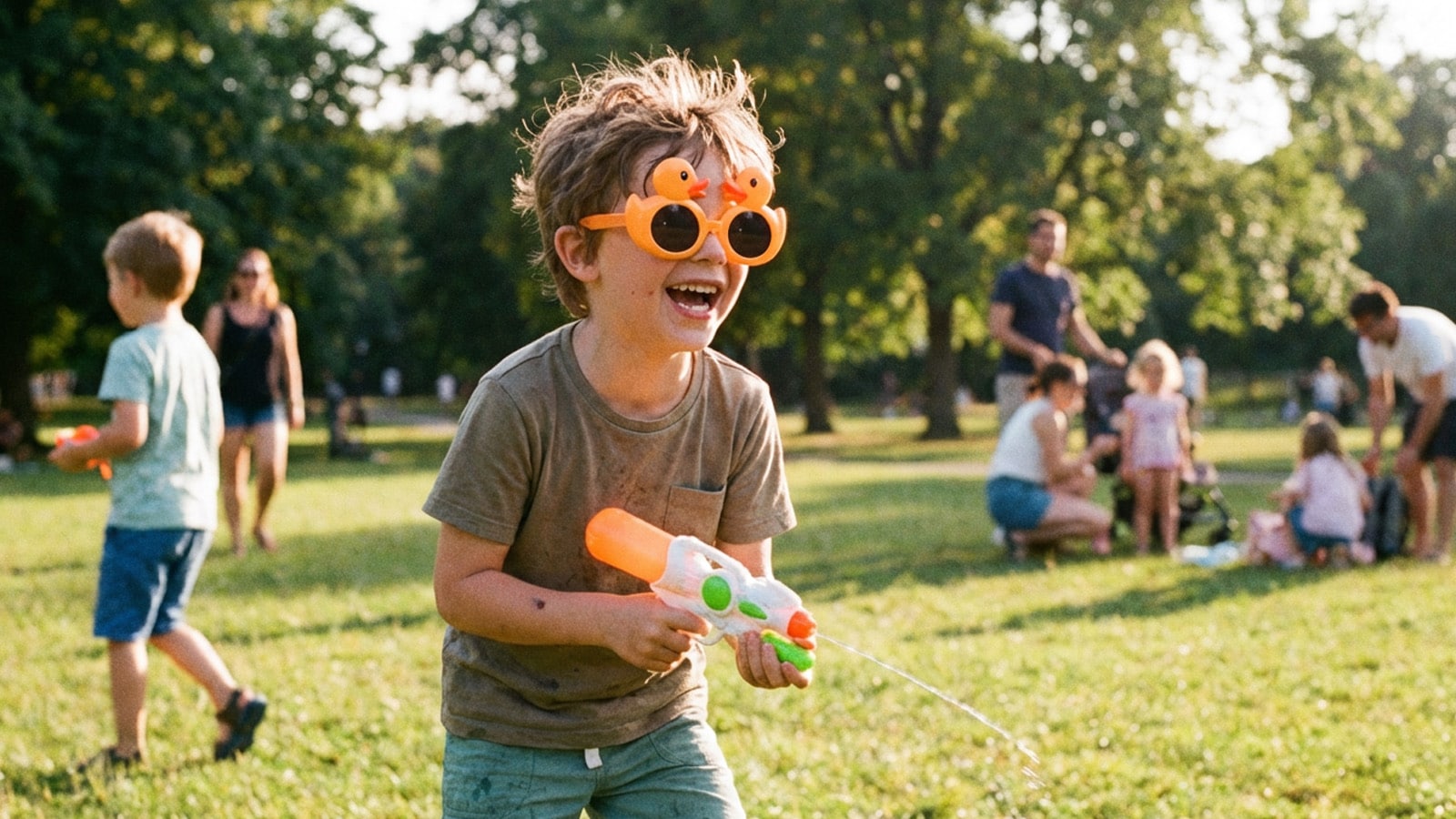
Why Children Are More Vulnerable Than Adults
Children’s eyes are physically different from adult eyes. Their ocular lenses are clearer and more transparent. While an adult lens naturally filters out some UV light as it ages, a child’s lens allows significantly more UV radiation to penetrate deep into the eye.
Combine this biological vulnerability with lifestyle factors—children spend much more time outdoors playing sports, hitting the beaches, and hanging out at the playground—and the exposure adds up quickly.
UV damage accumulates over time, so early exposure can affect vision for years to come. Risks linked to early UV exposure include:
- Photokeratitis: Often described as a "sunburn of the eye." It is painful, though usually temporary.
- Cataracts: While usually associated with seniors, the damage that causes cataracts often begins in childhood.
- Pterygium: Also known as "Surfer’s Eye," a growth on the eye surface linked to UV and wind exposure.
- Macular Degeneration: Long-term damage that can eventually interfere with central vision.
Busting Myths: Darker Does Not Mean Safer
Many parents think darker lenses mean better protection, but that's not true. It feels logical: less light must mean safer eyes. However, that belief is wrong.
Lens tint only changes how bright things look (visible light); it does nothing to stop ultraviolet radiation unless a UV coating is present. A clear lens with 100% UV protection is infinitely safer than a pitch-black lens without it.
Check the label: Toy sunglasses are often labeled "Cosmetic Use Only" or "Novelty." They're probably not safe for your kids. If sunglasses are sold in toy sections or party aisles, they should generally not be trusted to protect a child’s vision.
The Solution: ZEELOOL Real Protection.
Look for lenses labeled UV400 or 100% UV protection to ensure your kid's safety. This implies that the lens absorbs any light of up to 400 nanometers (both the UVA and UVB light).
When purchasing the most suitable pair of sunglasses for children, one must purchase them from a professional eyewear retailer, as opposed to buying them in a toy store. ZEELOOL kids' eyewear is designed with safety and durability in mind, giving you peace of mind:
- Shatterproof Lenses: ZEELOOL will adopt polycarbonate lenses. They will not crack and burst into the eye like the brittle plastic found in the toy glasses.
- Durable Materials: TR90 frames are lightweight, hypoallergenic, and flexible. They are tough enough to take the running about that is childhood without breaking.
- Prescription Ready: ZEELOOL also offers prescription sunglasses, rather than novelty glasses, which have no prescription, and thus the child cannot see clearly, yet their eyes are still covered.
Most importantly, safety need not be dull. ZEELOOL offers stylish designs that children want to wear while staying safe.
Conclusion
Toy sunglasses are not harmless accessories; they present a real risk to children’s developing eyes. We should treat sunglasses just like sunscreen: as essential protection, not just decoration.
By avoiding the "toy" rack and choosing proper, certified eyewear, parents can safeguard their children's vision for the future. With options from ZEELOOL, you never have to choose between safety, durability, and style.
FAQ
Are toy sunglasses bad for kids' eyes?
Yes, and the reason is counterintuitive. When a child puts on dark lenses, the pupil dilates to compensate for the reduced light—but if those lenses don't have a real UV filter, that wide-open pupil allows more ultraviolet radiation to reach the retina than if the child weren't wearing sunglasses at all. The natural squinting reflex that would otherwise offer some protection gets bypassed. Toy sunglasses create the appearance of eye protection without actually providing it.
Why are children's eyes more vulnerable to UV damage than adults?
A child’s lens is clearer and more transparent than an adult’s, which means it filters out significantly less UV radiation before it reaches the retina. Adults develop a natural filtering effect as the lens ages, but children don’t have that yet. Add in the fact that kids typically spend much more time outdoors than adults, and UV exposure accumulates faster during childhood. UV damage accumulates over a lifetime so early exposure can set the stage for such things as cataracts and macular degeneration decades later.
Do darker sunglasses lenses mean better UV protection?
No, this is one of the biggest misconceptions about eyewear. Lens tint only affects how much visible light reaches the eye—it has no effect on ultraviolet radiation unless a specific UV-blocking coating is present. A completely clear lens with 100% UV protection is far safer than a very dark lens without it. When shopping for kids' sunglasses, always look for a UV400 or 100% UVA/UVB protection label rather than judging by how dark the tint appears.
How do I know if the sunglasses are safe for my child?
Look for lenses that indicate UV400 or 100% UV protection. This means the lenses block all ultraviolet light up to 400 nanometers, including UVA and UVB rays. Avoid sunglasses sold in toy aisles, party shops or carnival stands, which are often labeled “cosmetic use only” or “novelty” and don’t offer any real UV protection. Buying from a dedicated eyewear retailer rather than a general merchandise store is the simplest way to ensure the sunglasses are genuinely protective.
What should I look for when buying sunglasses for toddlers and young children?
UV400 or 100% UV protection is the non-negotiable starting point. Beyond that, polycarbonate lenses are worth prioritizing because they're shatterproof—toy sunglasses often use brittle plastic that can crack into sharp pieces near a child's face. Lightweight, flexible frame materials like TR90 hold up to the rough handling that comes with childhood without breaking, and they're hypoallergenic, which matters for kids with sensitive skin. Fit also matters: the frames should stay in place during active play without being so tight they're uncomfortable.