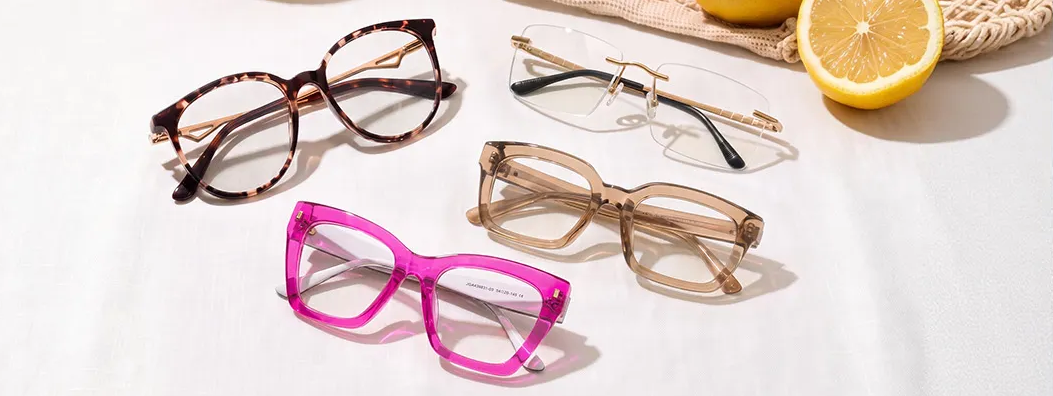


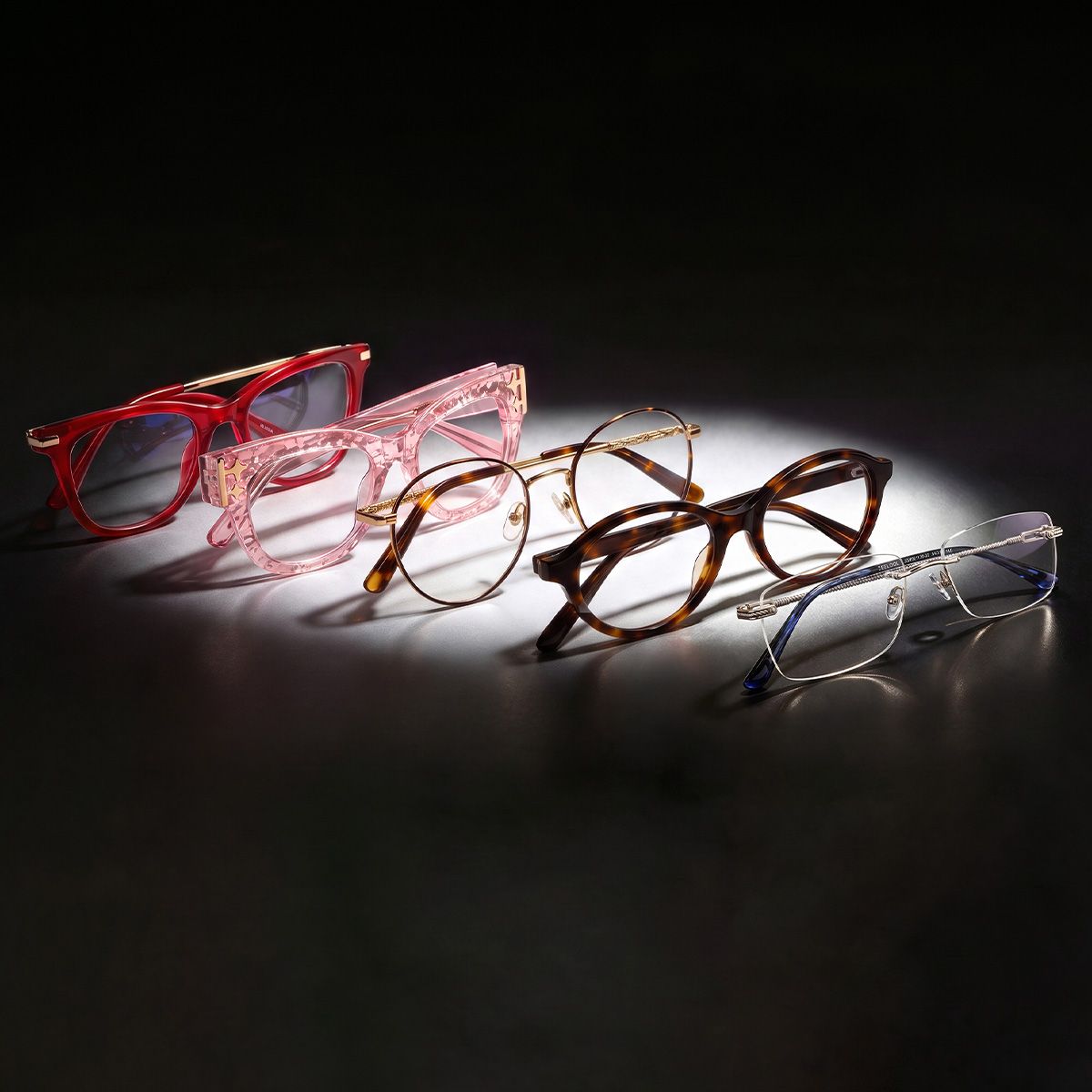

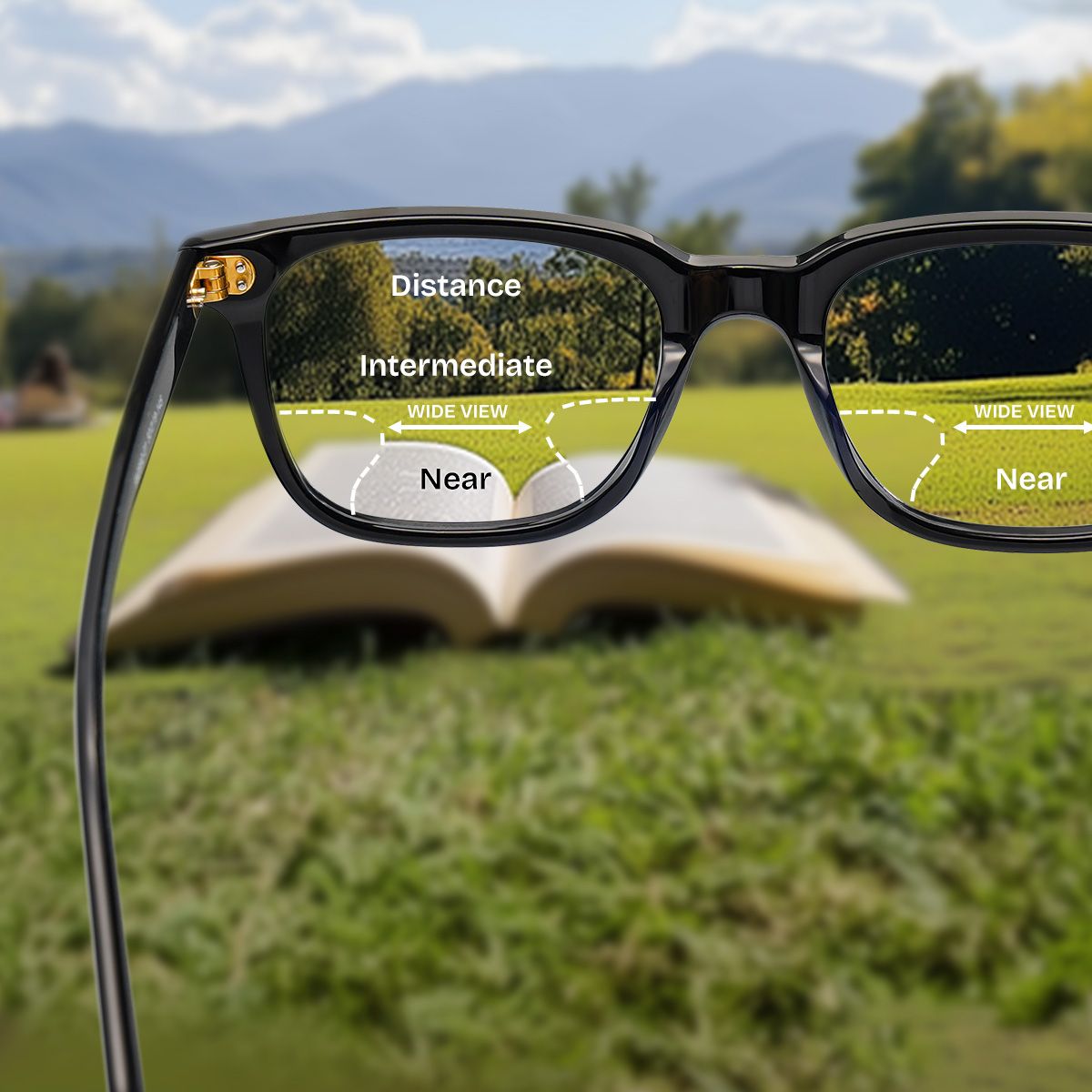
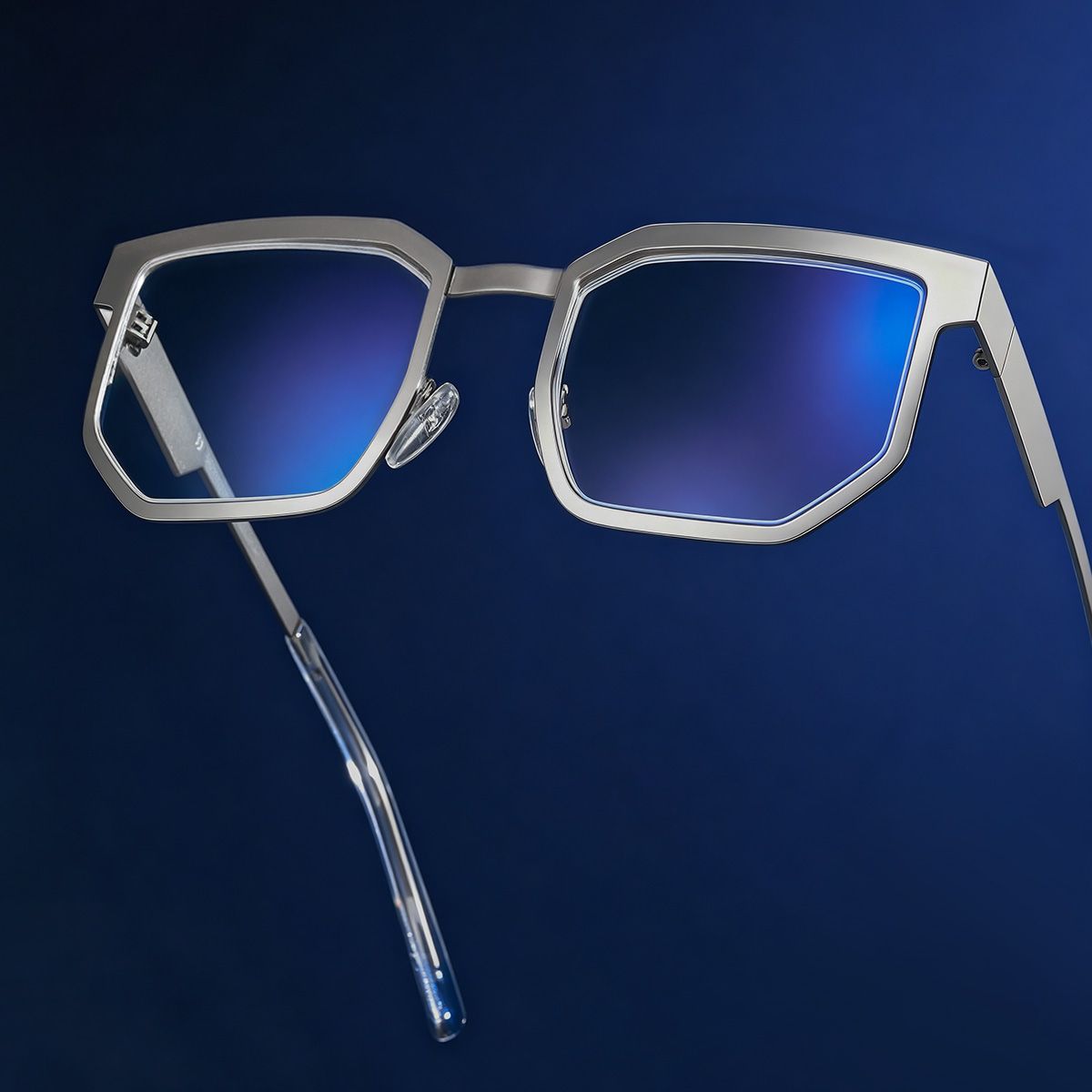







Glasses with the same printed measurements can fit differently because lens width, bridge width and temple length do not describe the whole frame. Bridge contour, total width, hinge placement, lens height, front curvature, material, weight and temple angle all change how a frame sits. Use the numbers for screening, then compare construction and real wearing position.
Key Takeaways
- The familiar three-number code is useful, but it is not a three-dimensional model of the frame.
- Identical bridge widths can create different contact because the bridge shape and height differ.
- Total width and hinge placement affect temple pressure more directly than lens width alone.
- Lens height, curve and weight can change cheek clearance and stability.
- Virtual Try-On previews appearance but cannot confirm physical pressure or exact fit.
What Standard Frame Measurements Tell You
Most frames display three numbers such as 52-18-140. They usually represent lens width, bridge width and temple length in millimeters. Those measurements provide a useful baseline, especially when compared with a pair that fits well. They do not capture every curve, angle or contact point.
| Printed measurement | Useful for estimating | Does not show |
|---|---|---|
| Lens width | The horizontal size of each lens | Total front width, lens height or hinge position |
| Bridge width | The measured space between lenses | Bridge contour, height or contact area |
| Temple length | The overall length of each arm | Outward angle, flexibility or bend position |
See how to measure glasses frame size for the measurement basics. Once those numbers are understood, the next task is to examine what they leave out.
Six Hidden Factors That Change the Fit
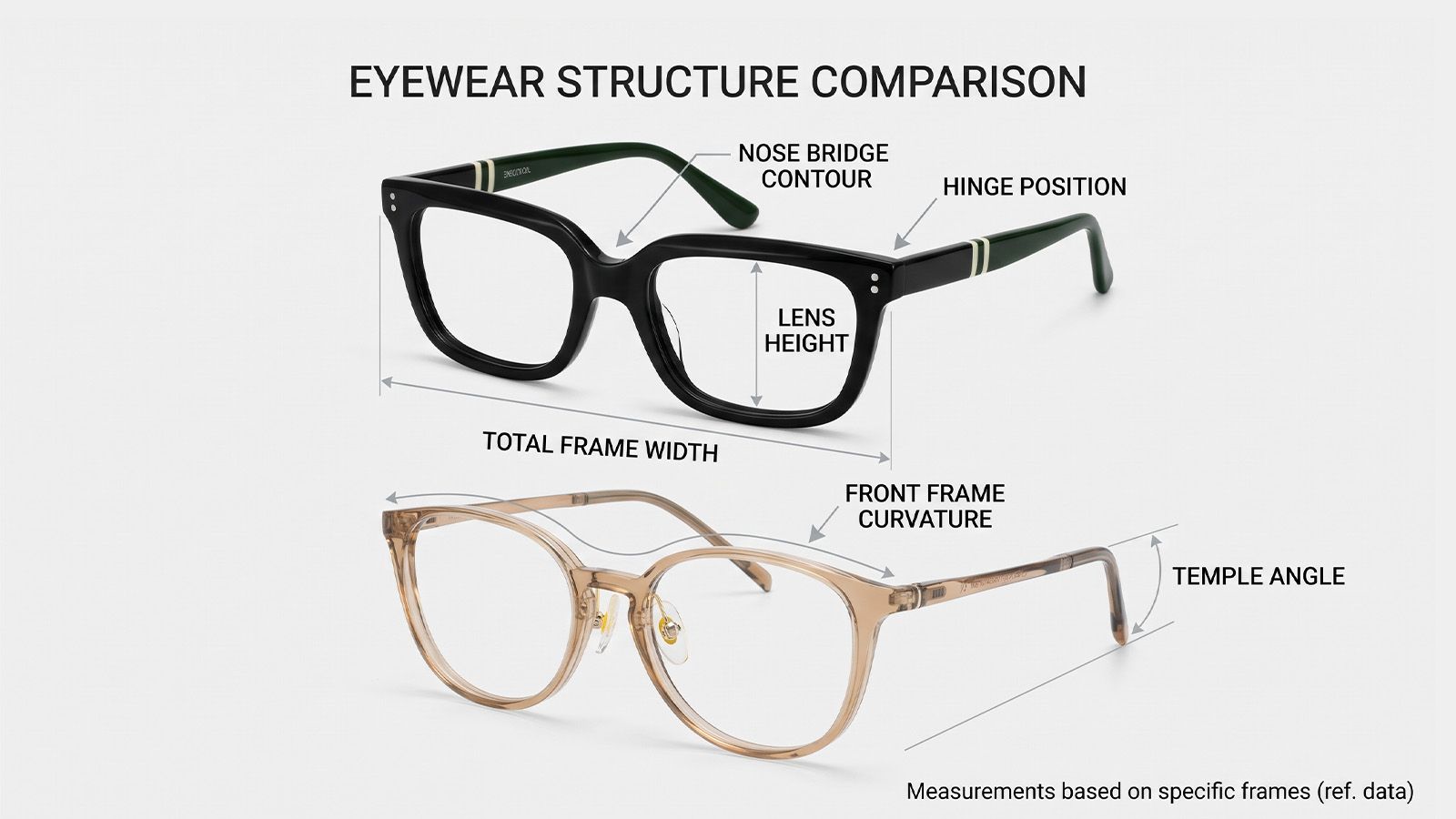
Bridge Shape and Vertical Position
Two 18 mm bridges can contact the nose in different places. A keyhole, saddle bridge and adjustable nose-pad system distribute support differently, changing how high and close the lenses sit.
Total Frame Width and Hinge Placement
Lens width does not equal total frame width. Rim thickness, end pieces and hinge placement can add or remove several millimeters across the front. That difference affects whether temples run straight or flare outward.
Lens Height and Frame Outline
A deep square frame and a shallow rectangle may share the same lens width. Their vertical area changes cheek and brow clearance, visual weight and the amount of lens material used.
Front Curvature Wrap and Tilt
Some frames lie relatively flat while others curve around the face. The angle of the front and the tilt of the lenses affect distance from the eyes, side clearance and how the bridge bears weight.
Material Weight and Center of Gravity
A thick acetate frame may feel different from a slim metal frame with the same numbers. Weight distribution matters as much as total weight; front-heavy glasses may slide even when their width seems correct.
Temple Angle and Flexibility
Temples can leave the hinges straight, angle outward or flex under tension. Their bend may also begin at a different location. These details change stability and pressure at the sides and behind the ears.
A Practical Same Size Example
Imagine two frames labeled 52-18-140. Frame A has a high, narrow-contact bridge, shallow lenses and straight temples. Frame B uses a lower, broader bridge, deeper lenses and temples that angle outward. Although the printed numbers match, Frame A may sit higher and feel tighter, while Frame B may sit lower and create more cheek contact. This hypothetical example shows why measurements alone cannot predict the final result.
How to Compare Frames Online More Accurately
- Record all available measurements from a comfortable current pair.
- Compare total frame width when the product page provides it.
- Review front, side and angled images for bridge position, curve and hinge placement.
- Check lens height, material and any listed weight information.
- Use ZEELOOL Virtual Try-On to compare shape and visual proportions.
- Read the glasses fit checklist and the current Return and Refund Policy before ordering.
What Virtual Try On Can Add
Virtual Try-On is useful for seeing whether a frame looks broad, narrow, deep or visually heavy on your face. It cannot measure PD, bridge contact, temple pressure, lens-to-eye distance or physical clearance. Treat the preview as one comparison layer, not a fit guarantee.
Adjust the Frame or Choose Another Size
An optician may be able to adjust nose-pad position, temple bend or slight tilt, depending on the material. Structural mismatches such as a much-too-narrow total width, unsuitable bridge contour or excessive lens depth usually call for a different frame. Avoid aggressive bending or heat at home.
Use Measurements as a Starting Point
Browse ZEELOOL eyeglasses with your current pair's measurements nearby. Shortlist frames with similar key dimensions, then compare their bridge, outline, material and side view before making a choice.
FAQs
Do identical bridge measurements fit the same?
No. The number does not describe bridge contour, height, angle or contact area. Two bridges with the same width can support the frame at different positions.
Is total frame width more useful than lens width?
For overall head width, total frame width is often more informative. Lens width still matters for lens size and eye position, so use both when the information is available.
Can Virtual Try-On tell whether glasses are too tight?
No. A preview can show apparent scale and shape, but it cannot measure pressure at the temples, nose or ears. Product dimensions and an actual fitting are needed for that judgment.