










Key Points & Conclusion
Normal Anatomy Eyeglasses are made of three basic systems: frame front (rims, bridge), temples (arms), and hardware (hinges, screws).
Fit & Comfort: The bridge and customizable nose piece play a significant role in how the glasses sit on your face. Temple tips (earpieces) help keep the glasses in place behind the ears.
Why It Matters: Being familiar with eyeglass lingo allows you to discuss repairs, understand what size you need (temple length, for example), and select a frame style that works with your prescription.
So, imagine this. You’re at the optician because your glasses broke. You try to explain, but all you can say is, “the arm thing came off” or “that little pad fell out.” The person kind of understands, but you feel silly. We have all been there, right? That’s why it helps to know the real parts of eyeglasses.
This post is not fancy. It’s just here to show you the names of glasses parts in simple words. You’ll learn what each piece does and how knowing them helps when you buy new glasses, fix them, or even just clean them better.
Eyeglasses are made up of frames, lenses, and small parts that ensure fit, function, and style.
Okay, let’s jump in and see why it actually matters to know these parts of glasses.
Quick Guide: Eyeglass Anatomy & Terms
| Part Name | Also Called | Function |
| Temples | Arms / Legs / Sides | The long pieces that rest over your ears. |
| Bridge | Nose Bridge | The center piece that connects the lenses across your nose. |
| Hinges | Joints | The folding parts that connect temples to the frame front. |
| Nose Pads | Nose pieces | Small cushions that support the glasses on your nose. |
| End Pieces | Lugs | The outer corners of the frame that connect to the temples. |
| Rims | Eye wires | The part of the frame that holds the lenses in place. |
Why Understanding Eyeglass Parts Matters
Glasses aren't just an accessory. They’re kind of your daily tool. And when you know the right words, it makes life way easier.
- Buying: No more guessing; now you'll know what fits your face. Like if your nose is wide, a wide bridge works better.
- Repairs: You can tell if it’s just a loose screw or a broken hinge. Big difference.
- Maintenance: Nose pads get gross and slippery fast. If you know they’re a weak spot, you’ll clean them before they bug you.
- Comfort: Wrong parts cause headaches, red marks, and even sore ears.
Basically, it saves you time and stress. You don’t have to point and say, “This thing here.” You can say it straight.
The Most Searched Eyeglass Parts
- What are the arms of glasses called? Officially, they are called temples. They provide the necessary grip to keep your glasses from falling forward.
- What is the part that sits on your ears? This is the temple tip or earpiece. Usually covered in acetate or silicone, it's designed for comfort and slip-resistance.
- What do you call the part that rests on your nose? That’s the bridge. If your frames have small, separate cushions, those are nose pads.
What are the parts of glasses called?
The anatomy of a standard pair of glasses includes three main sections: the frame front (which houses the lenses), the temples (the arms that go over your ears), and the hardware (the tiny screws and hinges that hold everything together).
The key individual parts are bridge, temple tips, and nose pads.
- Frames: the body
- Lenses: the clear part that fixes your sight
- Hardware: the small stuff, screws, and hinges
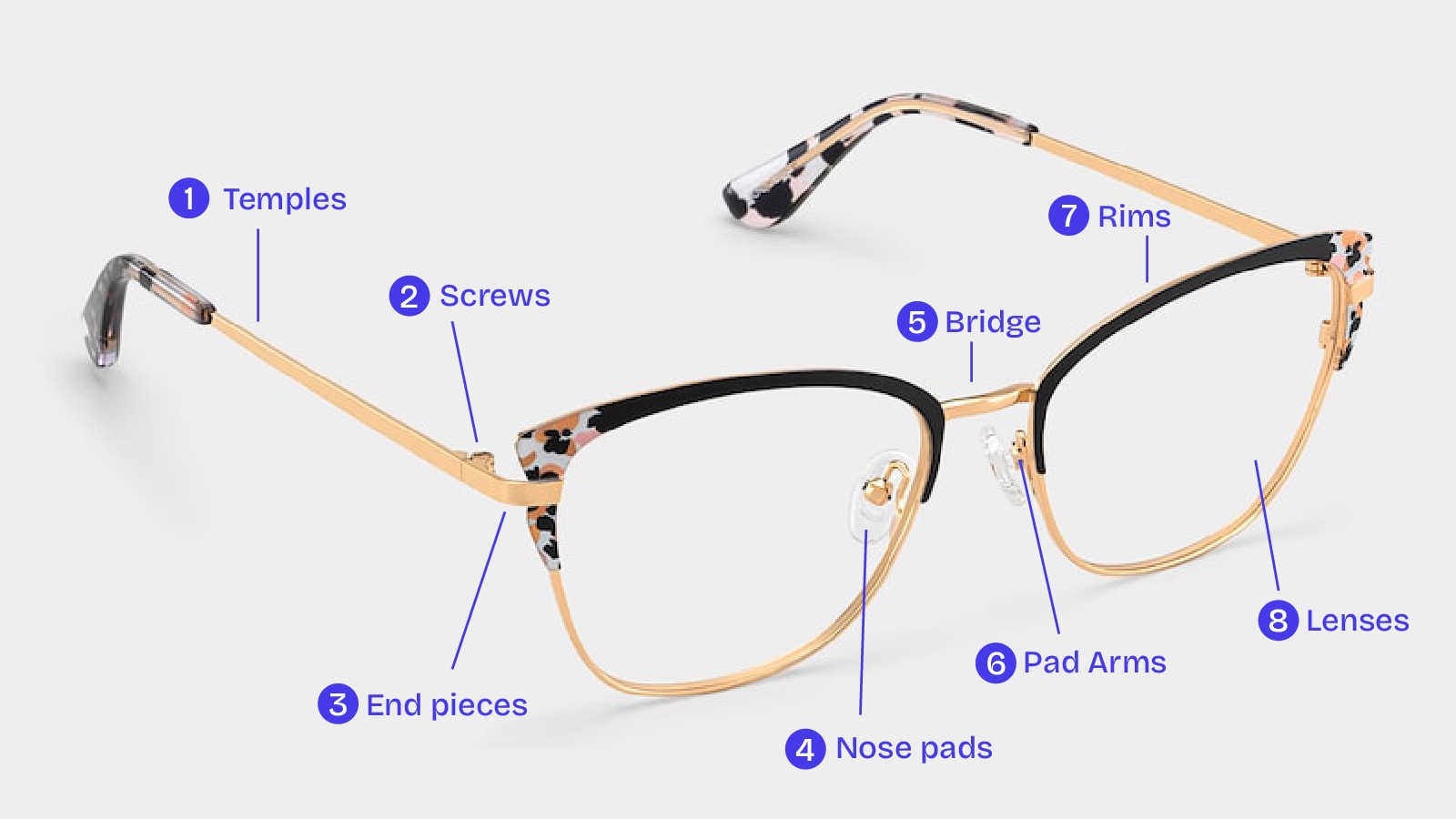
The main parts of eyeglasses include the following:
- Temples are the arms of the glasses that extend back over your ears.
- Screws are the small fasteners that hold the different parts of the frame together.
- End pieces are the small outer parts on the frame that connect to the temples.
- Nose pads are the small cushions that rest on your nose to support the glasses.
- The bridge is the central part that connects the two lenses and rests on the top of your nose.
- Pad arms are the thin metal arms that hold the nose pads and connect them to the frame.
- Rims are the parts of the frame that surround and hold the lenses.
- Lenses are the main part of the glasses that provides vision correction or eye protection.
Direct Answer: The eyeglass anatomy includes the bridge, rims, hinges, temples, and nose pads.
Detailed Breakdown of Eyeglass Frame Parts
Now let’s get into the details. Once you know what each part does, you’ll spot problems faster and pick frames that don’t annoy you.
What Is the Bridge on Eyeglasses?
The bridge is the part across your nose. Some look like keyholes, light and airy. Others are saddle-shaped and spread the weight. If the bridge doesn’t fit, the glasses keep sliding all the time.

What Are Nose Pads and Pad Arms?
Nose pads are tiny cushions that sit on your nose. Pad arms hold them. They can be silicone, rubber, or even metal. They keep glasses comfy, but dirt builds up quickly. A little soap and water fixes that. Adjustable pads are nice if you need a more personalized fit.
What Are Rims (Eye Wires)?
Rims are what surround the lenses. Full rims? Strong and durable. Semi-rimless? Light, held with a nylon cord. But tight rims can crack over time. Thick lenses need thicker rims.
What Are End Pieces (Lugs)?
End pieces are tiny parts on the outer sides of the rims. They link to the hinges. They’re small, but if they loosen, your temples wobble. A pro can tighten them if needed.
What Are Hinges on Glasses?
Hinges are joints. Barrel hinges are simple. Spring hinges flex out a bit and feel more comfortable. Screws come loose a lot. Keep a mini screwdriver handy. Honestly, it saves the day more than once.
What Are Temples (Arms)?
Temples are just the arms. They go back over your ears. Temple arms typically range in size from 135mm to 150mm. Materials? Acetate feels nice, and titanium lasts a long time. Sit on your glasses, and they bend. Curved temples stay put if you move a lot.
What Are Temple Tips (Earpieces)?
Temple tips cover the ends of the arms. They give grip. Usually silicone or acetate. Over time, they wear smooth, and then the glasses slip more. Swapping them out is easy.

Pro Tip: Choosing Parts Based on Your Face Shape
- High Bridge: If your nose bridge is above your pupils, look for frames with a high bridge or keyhole bridge.
- Low Bridge: If glasses often slide down or hit your cheeks, choose frames with adjustable pad arms or a "universal fit" (low bridge fit) to ensure the glasses sit correctly.
- Temple Length: Most temples are between 135mm and 150mm. If you have a larger head, prioritize 145mm+ temples with spring hinges for a pinch-free fit.
Lens-Related Parts and Terminology
The lenses do the real work. They fix your vision. Or they protect your eyes.
Types:
- Single vision—one prescription.
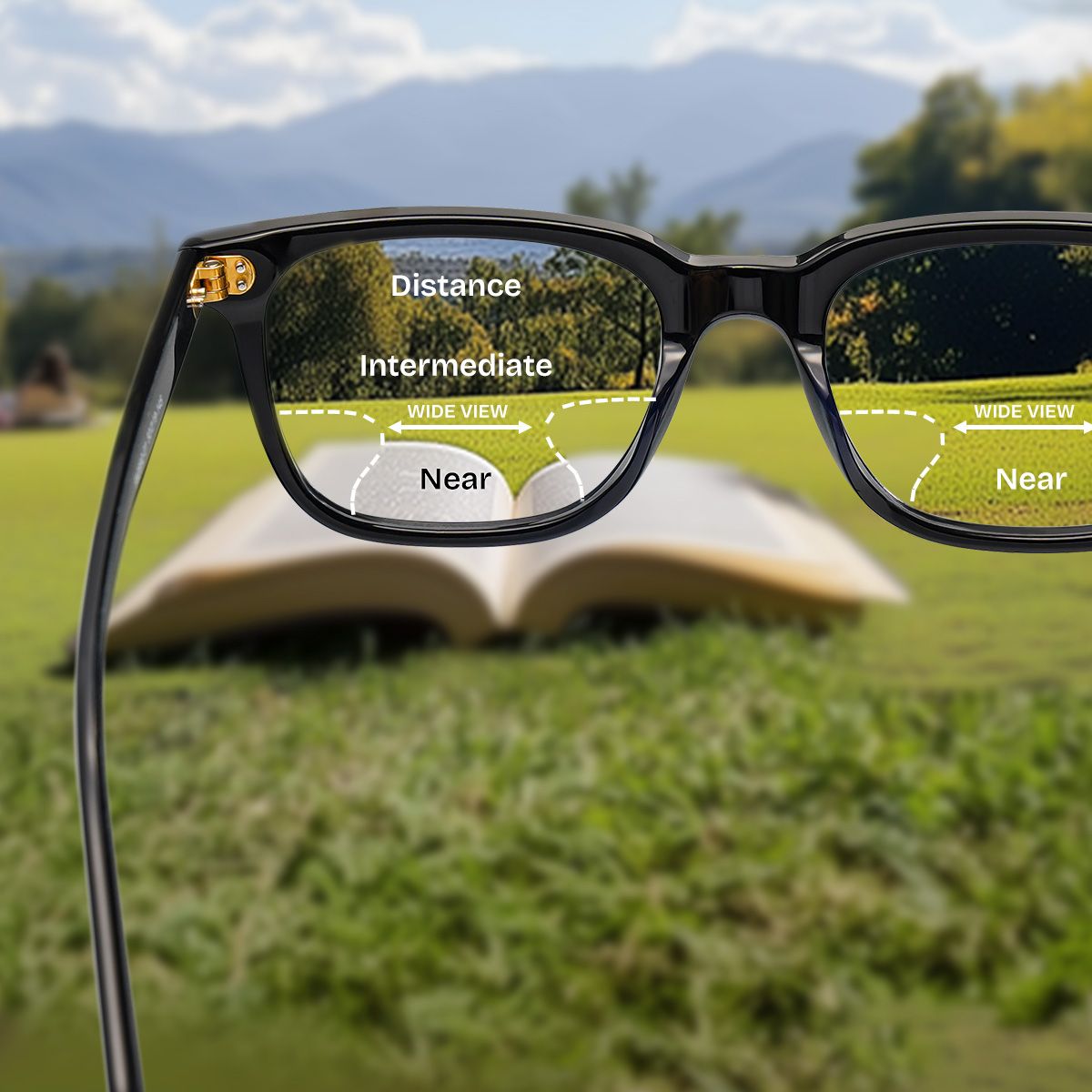
- Bifocal—near and far in one.
Extras:
- Anti-reflective coating cuts glare.
- A blue-light filter helps with screens.
- Tints turn them into sunglasses.
Frames hold lenses in different ways. Full-rim frames use a bevel edge. Semi-rimless frames use a groove with nylon cord. Rimless frames drill holes and use screws. If you choose thin frames, high-index lenses are lighter and look better.
Types of Eyeglass Frames and Their Unique Parts
Frames change how the parts work. Here’s the quick breakdown.
Full-Rim Frames
All around the lens. Sturdy. Good for strong prescriptions. But yeah, a bit heavy.
Semi-Rimless (Half-Rim) Frames
Rim on top, cord on bottom. Light and sharp. Cord wears out, though.
Rimless Frames
No rim at all. Lenses are drilled right into the temples and bridge. Very light. But fragile.
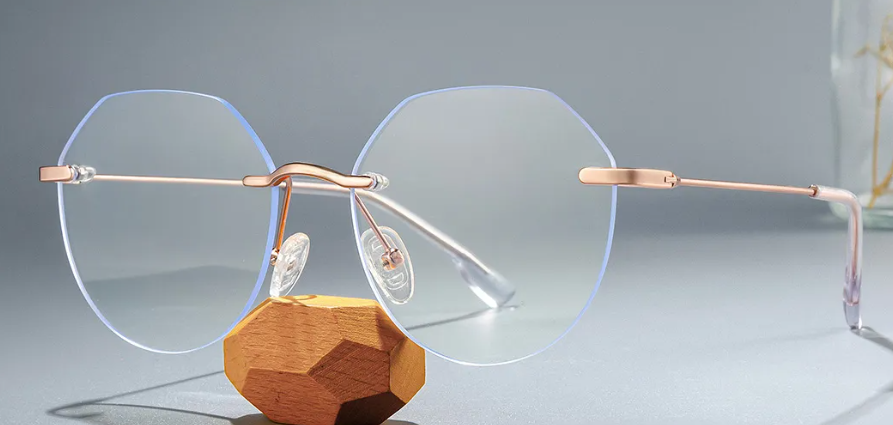
Material Impact
Material matters. Titanium? It's lightweight and gentle on your skin. Acetate? Smooth, colorful, stylish. Each has pros and cons.
FAQ
Can you replace the arms (temples) of glasses?
Yes, most temples can be replaced if they are bent or broken, provided you find a matching hinge size. At eyeglasses ZEELOOL, many frames use standard screw-in hinges for easier maintenance.
What are the plastic things on glasses called?
This usually refers to nose pads (the cushions on the nose) or temple tips (the covers on the ends of the arms).
What is the middle part of glasses called?
The part that connects the two lenses is called the bridge.
What is the difference between “arms” and “temples”?
In the eyewear industry, “temples” is the professional term; “arms” is the common everyday term. Both refer to the same part.
Conclusion
So now you know the basics of eyeglass parts. The bridge, the temples, the hinges, the nose pads, the lenses, and all the small parts that make glasses work. They’re not just random pieces. Each one does a job.
Knowing the right terms means you won't feel lost. You can say, "The spring hinge is loose," instead of "The arm feels weird.” It makes buying, fixing, and even wearing glasses way easier.
If you’re ready to explore more tips or maybe get your next pair, check out ZEELOOL. They’ve got guides, styles, and plenty of frames to match what you need.
Found the name, but need a fix?
Knowing the parts is the first step. If your spring hinges are worn out or your nose pads have yellowed, it might be time for a fresh pair.
Use ZEELOOL's Virtual Try-On to see how different bridge styles and rim shapes flatter your face before you buy.
Shop Full-Rim Frames | Explore Rimless Collection
ZEELOOL Rodz full frames with lightweight
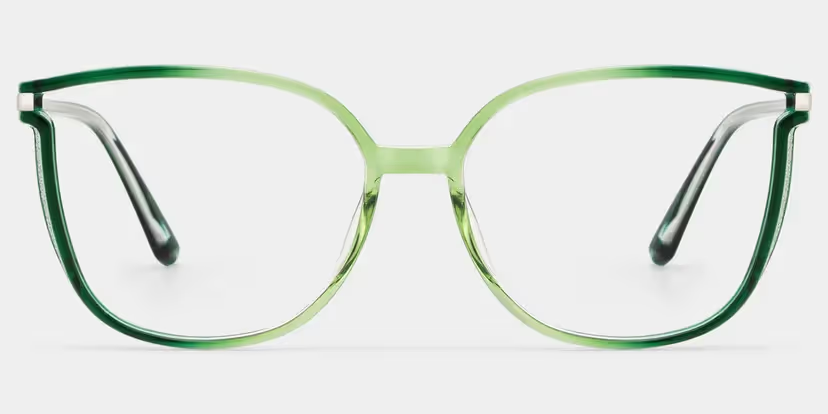
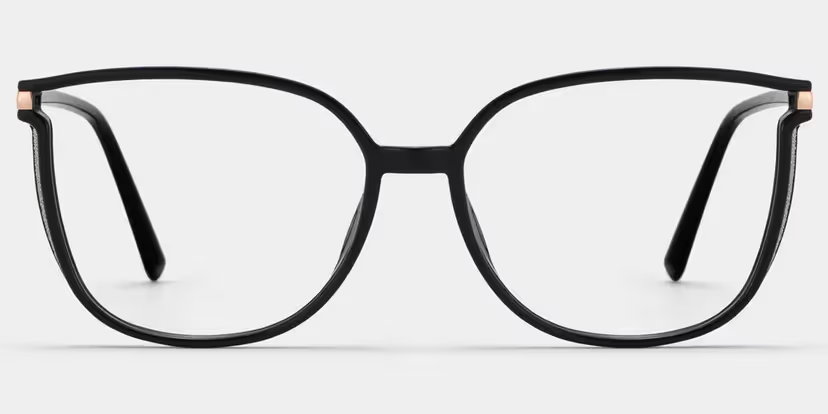
Rodz Square Black Frame Glasses
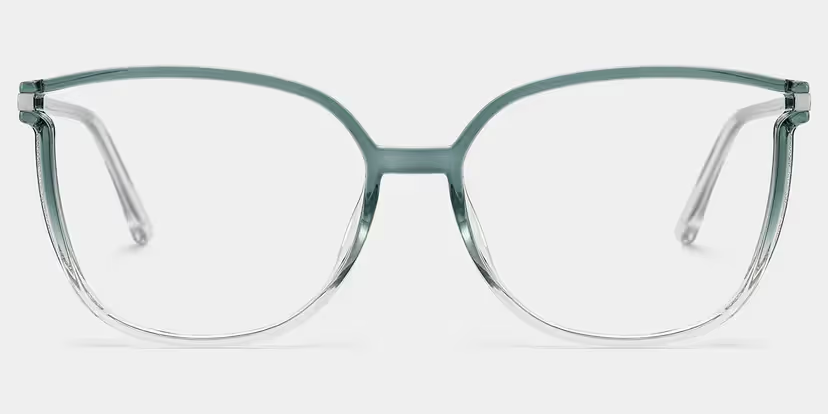
Rodz Sage Green Square Glasses
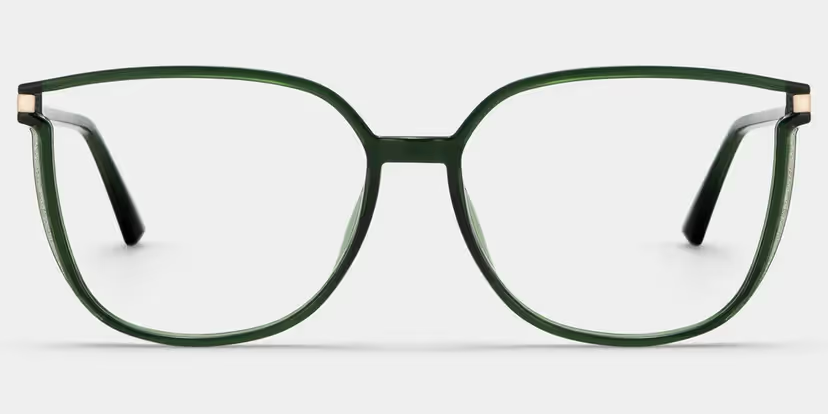
Rodz Square Dark-Green Frame Glasses