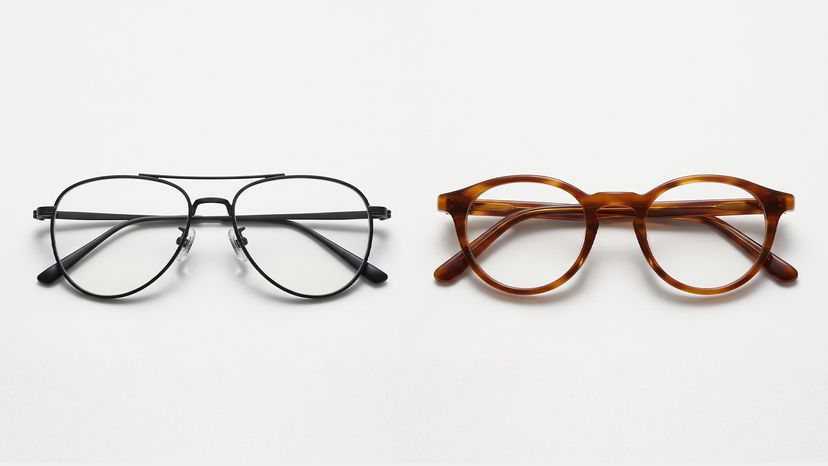




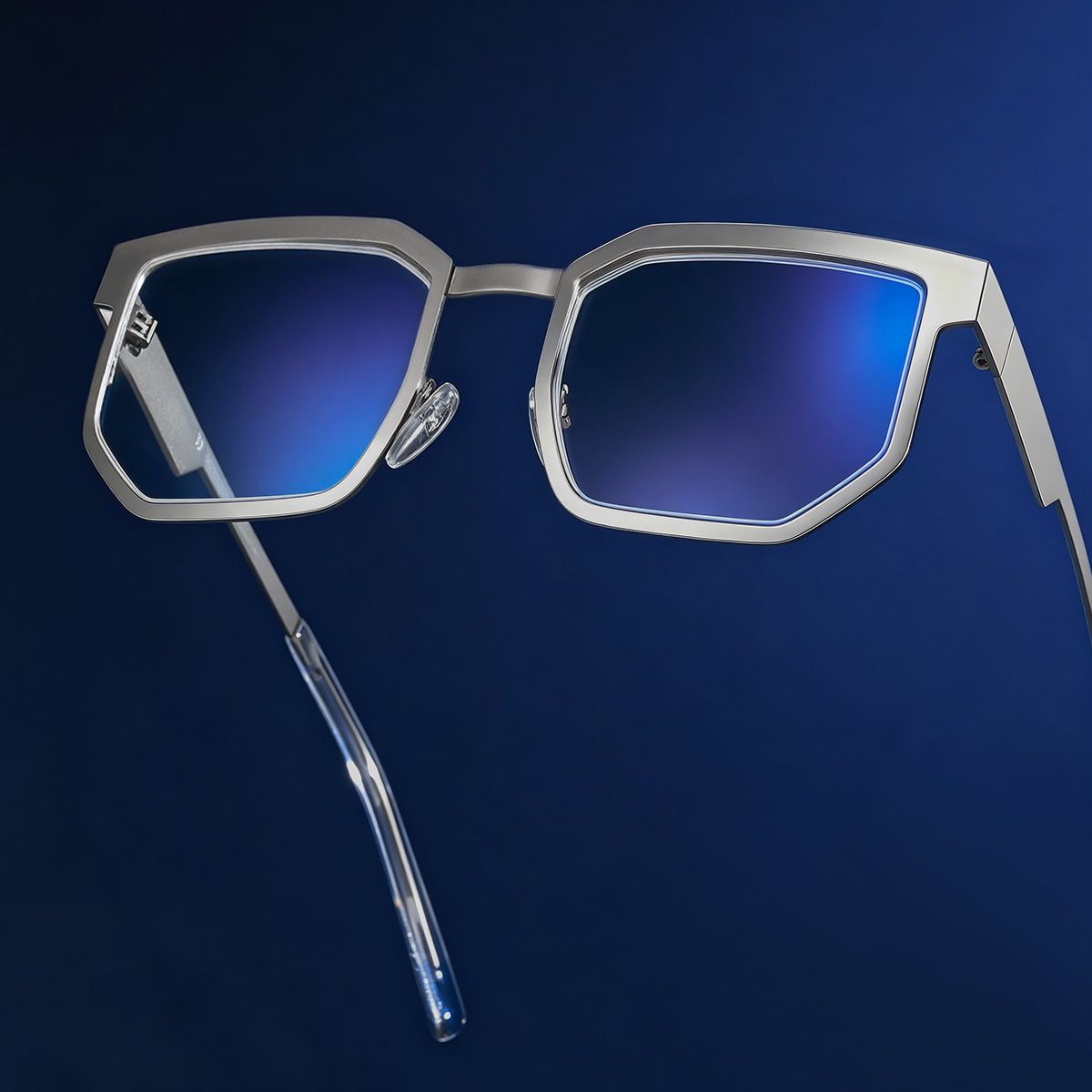







There is no single best eyeglass frame material for every wearer, in terms of comfort, weight, durability, adjustment, appearance and price. Titanium and certain styles of TR90 are often chosen for their lightness; acetate allows for layered color and heavier profiles; metal suits many slender structures; and plastic covers a wide range of designs. The material label is not as important as the finished frame, size, components and lenses.
Key Takeaways
- Don’t choose based on the material name alone, compare the specifications of the actual frame.
- The weight overall is determined by the material, frame size, construction and lenses.
- Durability also depends on hinges, assembly, handling and care.
- Frame adjustability is influenced by nose pads, temple construction and connection points.
- If you have had a reaction to a material in the past, look at the full composition of the product and talk to a professional rather than a general category.
Eyeglass Frame Materials at a Glance
Material is a useful filter, but there are many structures and finishes within each category. Use this table to help narrow the field, and then confirm the product page details.
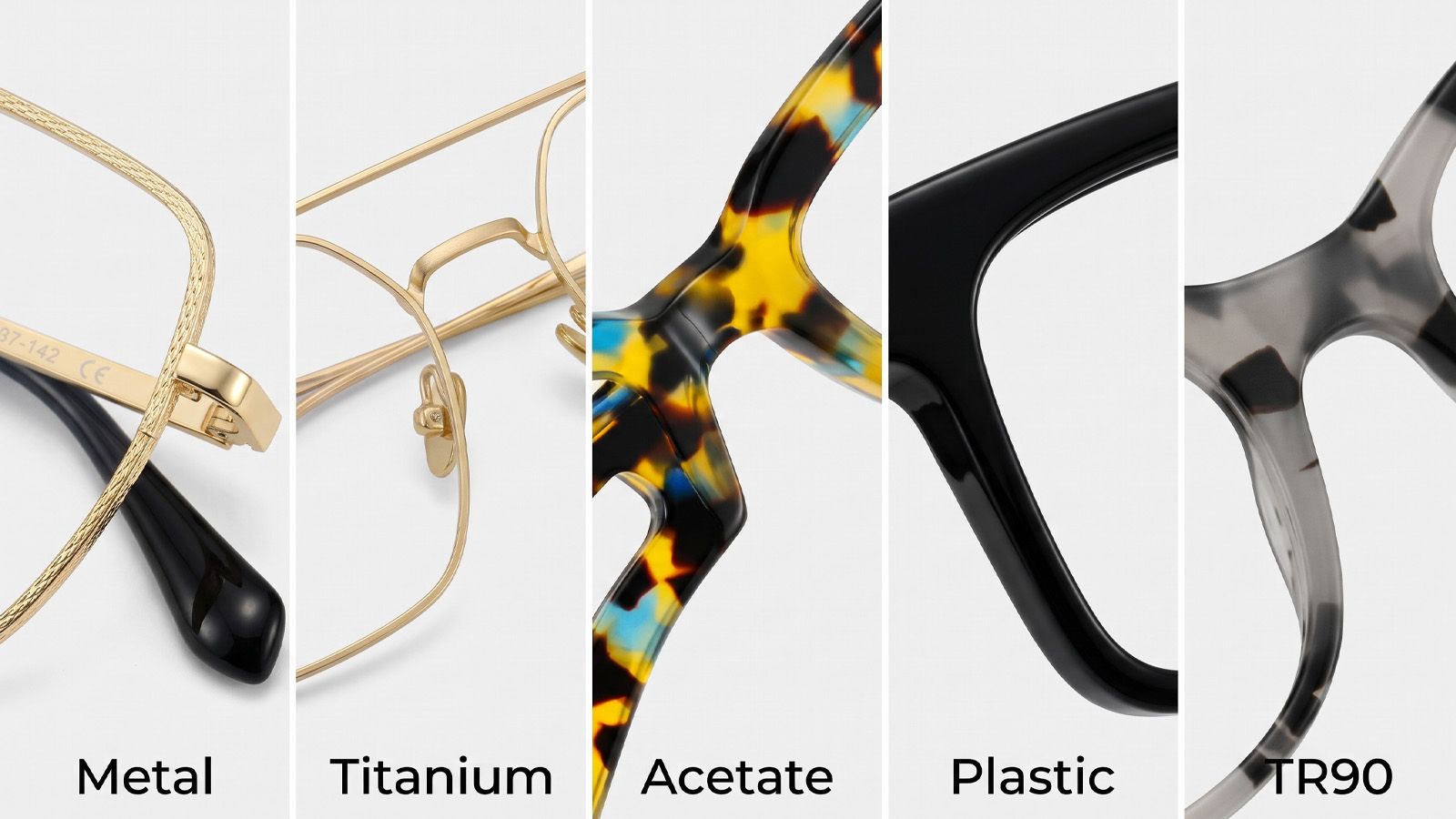
| Material | Typical design range | Weight tendency | Adjustment considerations | Style options | What to verify |
|---|---|---|---|---|---|
| Metal | Slim rims, wire profiles, adjustable nose pads | Varies by alloy and construction | Nose pads and some temples may allow adjustment | Minimal, classic, geometric | Alloy, coating, nose pads, hinges |
| Titanium | Fine profiles and lightweight constructions | Often light, but not always the lightest finished pair | Depends on alloy, components and mounting | Refined, minimal, technical | Exact titanium description and total design |
| Acetate | Full rims and more substantial profiles | Varies with thickness and size | Usually needs skilled adjustment | Layered color, pattern, polish | Material label, frame thickness, hinges |
| Plastic | Broad range of molded and full-rim styles | Highly variable | Depends on the polymer and construction | Wide color and shape range | Specific material if listed, heat guidance |
| TR90 | Lightweight, casual and flexible-looking designs | Often light | Flexibility does not mean every part is adjustable | Sporty, casual, everyday | Hinges, temple design, exact product specifications |
Metal Frames
Metal is a broad category. Alloys, coatings, rim profiles and hardware can change weight, flexibility and skin contact. Many metal frame glasses use slim rims or adjustable nose pads. Don't assume all metal frames feel or adjust the same way, check the exact product.
Titanium Frames
Titanium is often used in lightweight frames with fine lines, but pure titanium, alloys and mixed-material assemblies can differ. Rim thickness, hinges and temples still affect the finished pair. Browse titanium glasses, then compare dimensions and components. The label does not guarantee the lightest choice or suitability for every material sensitivity.
Acetate and Plastic Frames
Acetate is a type of plastic, but eyewear stores commonly present it as a separate material category because its manufacturing methods, layered color effects and surface finish may differ from other plastics. Acetate glasses often use full-rim profiles with visible color depth or pattern, while plastic glasses can include several polymers and a wider range of molded structures.
There is no label that defines a definite weight or durability. A slim plastic frame may be outweighed by a thick acetate frame. If it is not specified on a product page, do not guess the polymer based on appearance. Check the listed material, size & hinges.
TR90 Frames
TR90 is commonly used in light frames with some flexibility. Performance still depends on geometry, thickness, hinges and handling. A flexible front does not make the lenses or hardware indestructible. When reviewing TR90 glasses, check which parts have the stated feature.
Are Titanium or TR90 Glasses Lighter
Both titanium and TR90 can support lightweight designs, but the material name alone will not tell you which finished pair is lighter. Compare any published frame weight along with overall width, lens width and height, rim thickness, nose-pad hardware and temple structure. The prescription lenses can also make a huge difference in the balance. A small frame made from one material can feel lighter than a large frame made from another material, even if the other material is usually considered light.
Which Material Is Easier to Adjust and Care For
Adjustment is construction dependent. Frames made of metal and titanium with nose pads can permit bridge changes, while acetate, plastic and TR90 frequently require tools specific to the material. Just because a frame is said to be flexible doesn’t mean you should bend it at home.
To take care of your glasses on a daily basis, always use both hands to take them off and put them in their case. Don’t leave them in places with a lot of heat and always clean the lenses with the right cloth and solution. Follow the eyeglasses care guide and ask an optician to do any changes that involve heating, reshaping or hinge work.
Choose by Use Case and Budget
Start with the wearing experience you want. For a light everyday pair, compare finished dimensions and lens area rather than selecting a material automatically. For bold color or pattern, acetate and other plastics provide many options. If bridge adjustment is important, look for a compatible nose-pad structure. If budget is the first filter, compare the complete configured price and the features you will actually use.
After material, verify size and prescription compatibility. The Frame Size Guide explains the measurements, while current ZEELOOL Reviews may contain model-specific comments about weight and fit. The guide to choosing glasses connects material with bridge fit and daily use.
FAQs
Is acetate the same as plastic
Acetate belongs to the plastic family, but eyewear retailers usually identify it separately. Other frames labeled plastic may use different polymers or manufacturing methods, so check the individual product description.
Are titanium frames always hypoallergenic
No material category guarantees that every wearer will avoid a reaction. Alloys, coatings, nose pads and other components may contact the skin. Verify the full composition if you have a known sensitivity.
Can TR90 frames be adjusted
Some TR90 designs permit limited professional adjustment, while others rely on their original molded shape. The safe approach depends on the exact frame and components.
Which material is best for strong prescriptions
Material is only one factor. Lens size, full-rim support, bridge stability, prescription, lens index and eye position may be more important. Confirm the exact frame and lens combination before ordering.