How To Measure Your Pupillary Distance (PD) | ZEELOOL

What is Pupillary Distance (PD)?

Pupillary distance (PD) is the distance between the centers of your pupils, measured in millimeters (mm). A correct PD measurement helps align the optical center of your lenses for clearer, more comfortable vision.

Why It Matters

Accurate PD distance improves lens centering and helps reduce visual discomfort.

Single vs. Dual PD

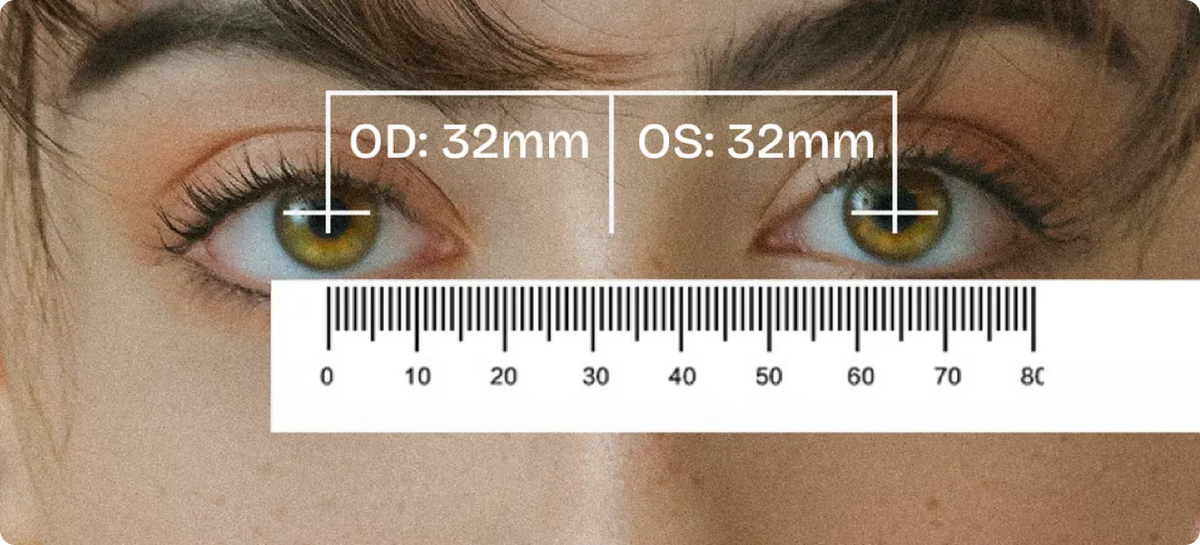
Some orders use one number, others use two (OD/OS) for right and left eye.

How to Measure Your PD

Prefer a visual walkthrough? This short video shows how to measure pupillary distance with a PD ruler, plus tips to keep your PD measurement consistent.

Printable PD Ruler

Print this page at 100% / Actual size on A4 paper or US letter paper. For the most accurate results, measure 2–3 times and use the average.

Download PD Ruler

Note: Please print at 100% size on A4 / US letter paper.

How to Measure Your PD at Home

The average adult PD is usually between about 54 mm and 78 mm. For the most accurate result, measure 2–3 times and use the average.

  • Step 1

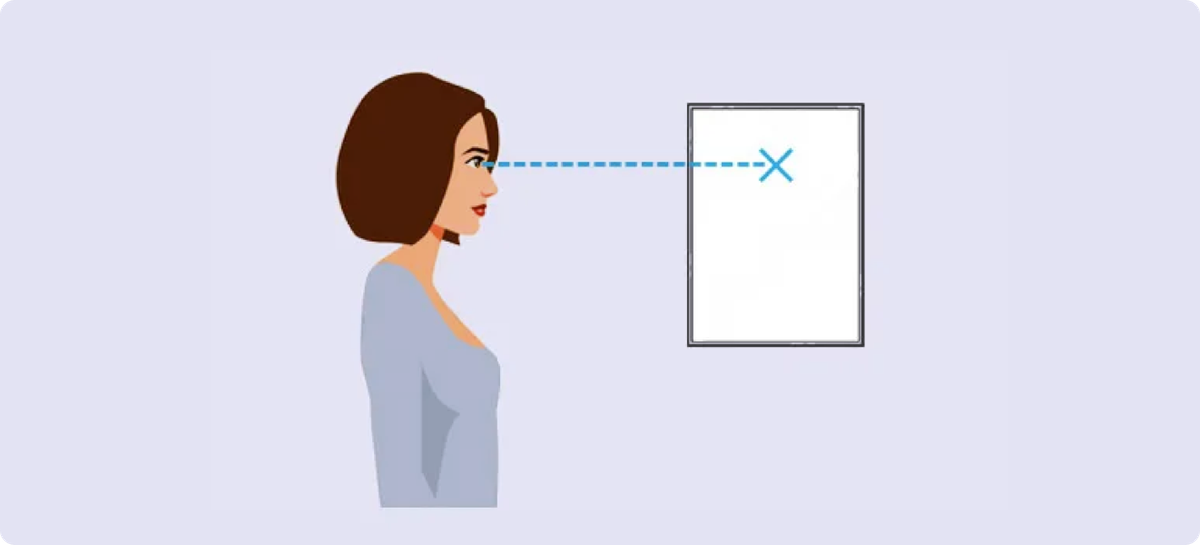
    Stand about 8 inches (20 cm) from a mirror. Keep your head level and look straight ahead.

    Step 1
  • Step 2

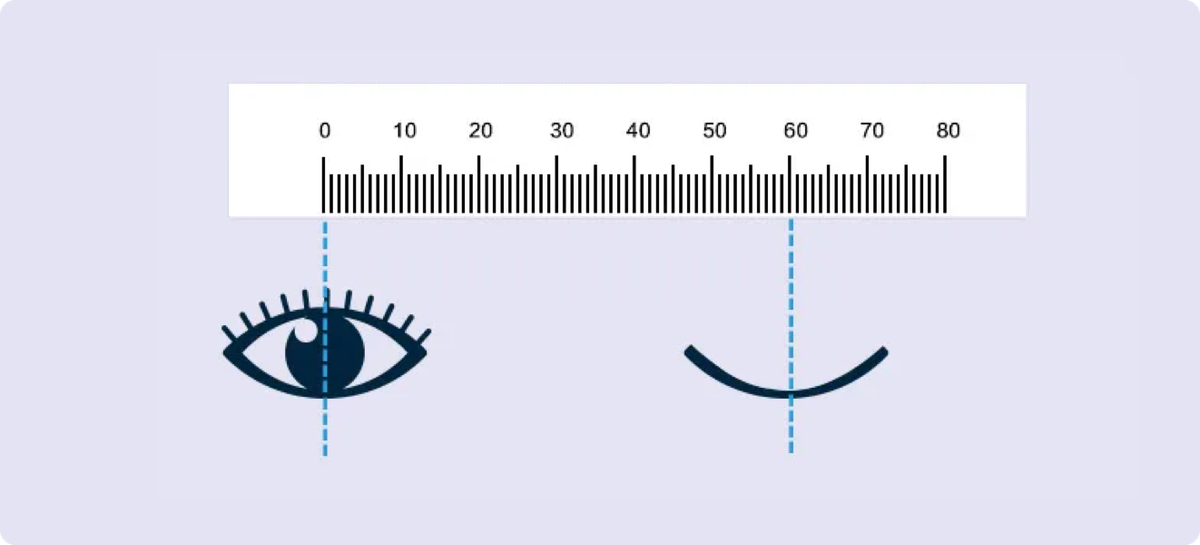
    Close your right eye. Align the “0” mark on the ruler with the center of your left pupil.

    Step 2
  • Step 3

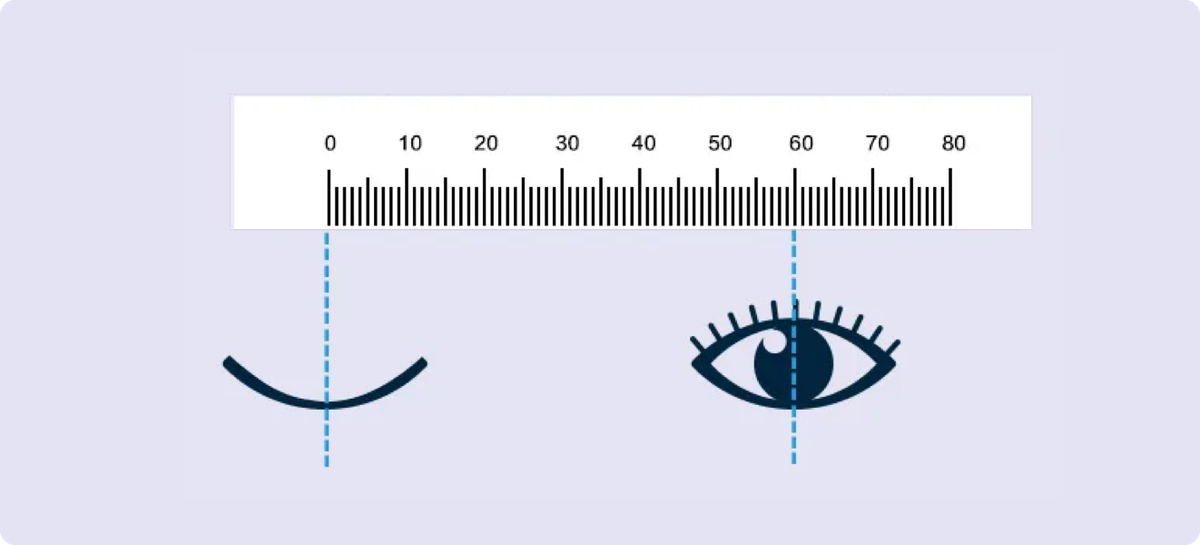
    Close your left eye. Read the millimeter number that lines up with the center of your right pupil.

    Step 3
  • Step 4

    If you need dual PD, measure each eye separately (OD/OS) and enter both numbers.

    Step 4

Single vs. Dual PD (OD/OS)

Use single PD when checkout shows one PD field. Use dual PD when checkout asks for two PD fields (right/left).

TypeWhat It Looks LikeWhen To Use
Single PDOne number (e.g., 63mm)When checkout shows one PD field
Dual PDTwo numbers (e.g., OD 31mm / OS 32mm)When checkout asks for two PD fields (right/left)

Can You Measure PD Online?

Yes. Online tools can help you estimate your pupillary distance. For the best accuracy, especially with a stronger prescription, consider getting PD measured by an eye care professional.

Option 1

Use a photo tool (phone or webcam)

Use a standard card for scale. Keep your face centered, look straight ahead, and use good lighting.

Option 2

Use a printable PD ruler (recommended)

Print at 100% / actual size, then follow the step-by-step guide above for a more reliable PD distance.

Option 3

Ask a friend to measure for you

A helper can improve accuracy because you can keep both eyes open and your head steady.

FAQ

  • Measure 2–3 times, keep your head level, and use the average. If the range is large, ask a friend or an optician.

  • It can be. Some prescriptions include a separate near PD. If your order only asks for one PD, use the one provided for that purpose.

  • You can measure pupillary distance at home using the steps above or request PD from your eye care provider.

  • It's very common for PD measurements to include a decimal (e.g., 62.2, 62.7) or to be slightly different between your left and right eyes. If your PD is not a whole number, please round it to the nearest option available:

    • If your PD is 62.2, please select 62
    • If your PD is 62.7, please select 62.5
    • If your monocular PD is 31.1, please select 31

    If you have a significant difference between your left and right eye PD (more than 2–3mm), or if you’re unsure about your measurement, we recommend visiting a local optician for a professional PD check. This ensures your glasses are made to fit you correctly.

Need Help?

Business Cooperation

market@zeelool.com

Call: +1 (302) 990-0619 & Live chat

7:00 AM - 1:00 AM next day (PT) Every Day

Track Order
FOLLOW US
Region:

Shop All

Shop by Category

Shop by Frame Shape

Deals

About ZEELOOL

Shop by Color

Shop by Face Shape

Shop by Material

How To

Our Programs

Shop by Frame Shape

Shop by Color

Shop by Type

© 2026 NEXTMARVEL INC All rights reserved

Service Experience Consultant