











Key Facts & Conclusions
Green Residue Cause: Oxidation of copper/nickel in metal frames from sweat, oils, moisture, or humidity – not mold or dirt.
Effective Cleaning: Use white vinegar or baking soda solution with soft cloth/cotton swab; gently scrub stubborn spots with toothpick.
Prevention Tactics: Store glasses in cases daily, use approved cleaners (avoid harsh chemicals), and reduce sweat/cosmetic contact.
Risk Factors: Coating wear, humid environments, oily skincare products, and frequent sweating accelerate oxidation.
Ever take a closer look at your eyeglasses and find that they look a bit discolored? It's relatively common after time to find an oily, greenish residue around metal frames and on nose pads. Before you panic, it's not mold or fungus! It's not even actual dirt. Keep reading to learn more about green on eyeglasses, how to remove it, and how to prevent it.
This guide explains what causes green buildup on metal frames and nose pads, how to clean it safely at home, how to prevent it from coming back—and why some glasses show a green tint or green reflection that has nothing to do with oxidation at all.

Why Does Green Residue Appear on Eyeglasses?
Green residue on eyeglasses is usually caused by the oxidation of metal components, such as the frame, screws, or hinges. In short, this means that a chemical reaction takes place, rather like rusting, and causes discoloration.
Many eyeglass frames contain metals, such as copper or nickel. Exposure to moisture, naturally occurring skin oils, sweat, and even air can cause this metal to oxidize. When this happens, it leads to a greenish-blue residue.

People who frequently use skin lotions or cosmetics, live in a humid environment, or sweat a lot may experience green on their eyeglasses. Additionally, eyeglasses sometimes have protective coatings to reduce the likelihood of reactions and discoloration. Over time, the coating can wear off, leaving metal exposed and more vulnerable to greening.
Why Nose Pads Turn Green Faster Than the Rest of the Frame
Nose pads develop a greenish hue more rapidly than the rest of your eyewear. The reason? They're in constant contact with your skin. They pick up sweat, oils, and whatever else is on your face. The screws and arms that attach the nose pads to the frame are usually made of a copper alloy, which doesn't take kindly to these substances.
To clean nose pads specifically, apply white vinegar to a cotton swab and hold it against the affected area for 30–60 seconds before wiping. For buildup in the crevices around the pad arm, a soft toothbrush works better than a cloth.
Detailed Steps to Clean Green from Eyeglass Frames
Although green residue on eyeglass frames may appear to be in hard-to-reach spots, it's pretty easy to clean your eyeglasses and make them look fresh again.
First, use a clean and soft cloth to dry-wipe your eyeglasses. Making sure you're gentle to avoid damaging them. It removes fine dirt particles.

Next, dab a small amount of white vinegar on a cotton swab and lightly rub the patches of green. The acid in the vinegar should dissolve most of the green buildup. Alternatively, instead of vinegar, you can use a homemade solution made by mixing a tablespoon of baking soda and a few drops of dish soap in a bowl of water.
For stubborn marks, carefully use a toothpick to gently scrub the metal. Be careful not to scratch the lenses during this step. Once you've removed or loosened all the residue around your eyeglass frames and screws, use a slightly moist cloth to wipe all dirt away. Then, dry them with a different cloth.
Avoid acetone and nail polish remover—they strip frame coatings the same way they can damage lens coatings when people attempt to remove super glue from their lenses without proper guidance.

If you want, you can also use an approved eyeglass cleaner to wipe down the frames and polish the lenses. Making sure you only use suitable cleaning products, though, because incorrect cleaners can damage your glasses and maybe actually cause green residue. Once finished, your eyeglasses will have their stylish look back.
The green oxidation tends to concentrate in the tightest spots—the rim channel and hinge area—which is exactly why you should also read our guide on how to clean the gap between lens and frame for tools and techniques that reach those recesses.
For stubborn stains, you may also consider having your glasses professionally cleaned.
Why do my glasses appear green in photographs, or why do they seem to reflect green light?
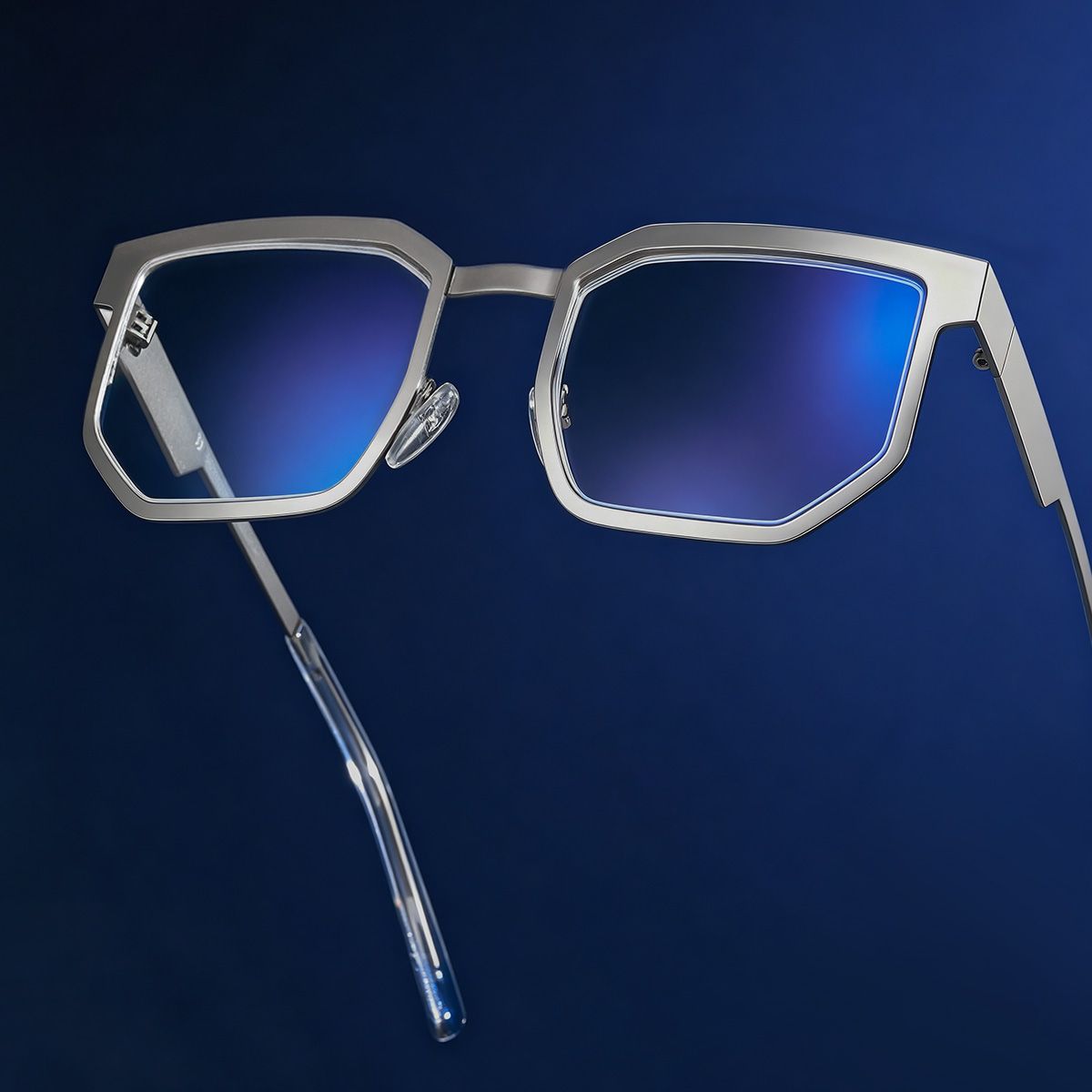
If your glasses seem to have a green tint in photos, or if they reflect green light, it's probably not because of oxidation or some kind of green buildup. It's something else entirely: the anti-reflective (AR) coating.
Most prescription lenses these days have an anti-reflective coating. This coating is there to cut down on glare and make things look clearer.
This coating works by using thin-film interference—a physics principle where light waves cancel each other out. The lens surface's slight reflectivity results in a subtle color, usually green, though it can also manifest as blue, purple, or gold, depending on the coating's specific makeup.
This green flash is perfectly normal and by design. It means your lenses have a functional anti-reflective coating. A more pronounced green reflection usually indicates a design choice aimed at minimizing glare over a broader range of visible light.
| Reflection Color | What It Indicates |
| Green | Standard anti-reflective coating (most common) |
| Blue / Purple | Premium multi-layer AR coating or blue-light filter |
| Gold / Yellow | Specific coating formulas; common in some European brands |
| No reflection (clear) | No AR coating, or coating has worn off |
Daily Maintenance: How to Prevent Green Residue on Eyeglasses
To keep your eyeglasses in tip-top condition, always store them in their case when not being worn. This reduces their exposure to moisture and humidity and also lowers the chances of them being damaged or broken.

Always use approved cleaning products for eyeglasses and clean them regularly. Try to make it a habit to wipe your glasses daily. This removes buildup from throughout the day, reducing the risk of chemical reactions with the metal.

Depending on your lifestyle and daily routines, you may also consider switching your cosmetics for brands with less oil, for example. You could also consider taking off your glasses when you hit the gym to reduce contact with sweat.
After removing the oxidation, wipe down the lenses thoroughly—green residue and cleaning solutions can transfer onto the lens surface and leave a filmy coating on your lenses that causes blurry vision.
How often should you clean your glasses?
| Cleaning Type | Recommended Frequency | Method |
| Quick daily wipe | Every day | Microfiber cloth, dry or with lens spray |
| Full-frame cleaning | 2–3 times per week | Warm water, mild dish soap, soft cloth |
| Nose pad-focused cleaning | Weekly | Cotton swab with vinegar or lens cleaner |
| Deep clean | Monthly | Full soak method or professional ultrasonic |
| Professional cleaning | Every 6–12 months | Optical shop ultrasonic cleaning |
For people who sweat heavily, exercise with glasses on, or use significant amounts of skincare products, daily full cleaning is recommended rather than just a quick wipe.
FAQ
What is the green stuff on my glasses?
That's copper or nickel oxidation at work. It's a chemical dance really between the metals in your frames and the moisture, sweat, and oils from your skin. Think of it as the same slow transformation that turns copper pennies dull green. It is not mold, fungus, or dirt, and it is not harmful in normal circumstances. It appears most commonly on nose pads, hinges, and screw areas where metal is exposed and skin contact is frequent.
Why do my glasses' nose pads turn green?
It turns out that the nose pads develop those signature green rust spots much faster than other parts of the glasses. Because they're in constant, direct contact with skin, picking up sweat, oils, and whatever else your face might be wearing. The metal screws and arms that attach the nose pads to the frame are usually made from a copper alloy, a material that doesn't take kindly to this kind of environment. It oxidizes, plain and simple. Given all this, it's often easier to just swap out the nose pads every six to twelve months, rather than trying to clean the ones that have turned a nasty shade of green.
How do I remove oxidation from eyeglass frames?
Soak a cotton swab in white vinegar and apply directly to oxidized areas for 30–60 seconds, then wipe clean with a microfiber cloth. For stubborn oxidation in crevices around screws and hinges, use a toothpick or soft toothbrush to dislodge the buildup after softening with vinegar. For severe oxidation, professional ultrasonic cleaning at an optical shop is more effective than home methods.
How do I prevent glasses' nose pads from turning green?
Wipe nose pads with a dry microfiber cloth daily. Apply sunscreen, moisturizer, and makeup before putting on glasses rather than after. Remove glasses before exercise or any activity that causes significant sweating. Replace silicone nose pads every 6–12 months as preventive maintenance—most optical shops replace them for free or at minimal cost.
Why do my glasses reflect green in photos?
Camera flashes and ring lights hit lenses at angles that make AR coating reflections more visible than they appear in person. This is normal. If the green reflection in photos bothers you, tilting the frame slightly or adjusting the lighting angle will reduce it.
When is a green tint a problem?
If the green tint appears when you are looking through the lenses rather than at them—affecting your actual vision—this may indicate a coating defect, coating delamination, or a manufacturing issue. In this case, contact your optician or the retailer for an assessment.
How often should I clean my glasses?
A quick daily wipe with a microfiber cloth removes surface oils and prevents buildup. A full frame cleaning with mild soap and warm water two to three times per week is sufficient for most people. People who sweat heavily or use significant skincare products should do a full clean daily. A deep clean focusing on hinges, screws, and nose pad areas should be done monthly.
Can I use rubbing alcohol or hand sanitizer to clean my glasses?
Avoid alcohol-based cleaners on a regular basis. Though a little isopropyl alcohol (under 70%) might be fine for a quick disinfecting job, using it often will eventually damage anti-reflective and UV coatings. Hand sanitizers, with their added moisturizers and fragrances, also leave a film on your lenses. Stick with lens-specific cleaning spray or gentle dish soap.
Keep Your Frames Looking New
Regular cleaning removes oxidation before it builds up—but if your frames are showing significant wear, coating damage, or persistent discoloration that cleaning cannot fix, it may be time for a new pair.
If your frames are too oxidized to clean, it might be time for a fresh pair. Check out ZEELOOL USA's selection of [Oxidation-Resistant TR90 Frames] or [High-Quality Acetate Glasses], designed to stay cleaner for a longer period.