









If your glasses are constantly slipping down, sliding from side to side, or have temples that extend an unusually long way from your head, they may be too wide. If they leave pressure marks on the sides or bow outwards, they may be too narrow. If they press your temples, they may be too narrow. Look at the whole frame width, how the bridge fits, the temple length and how it moves, not just the lens width or how it looks.
Key Takeaways
- The total frame width is the best place to begin to make a general comparison of widths.
- A bridge that is mismatched can cause sliding or pressure if the frame width looks right .
- Stability is affected by temple length and the bend behind the ears.
- Frames with the same printed measurements can fit differently depending on their geometry.
- Virtual Try On shows the proportions but does not guarantee the physical fit.
Six Signs Your Glasses May Be the Wrong Width
- They slip when you drop your head.This is often caused by too much width or not enough support of the bridge, but can also be caused by oil, loose screws or worn nose pads.
- They move when you move your head .Side to side movement generally means that the frame is not making stable contact at the bridge or the temples.
- The temples flare out.An outward angle visible at the hinges can be a sign that the frame front is too narrow for the head.
- You feel constant pressure at the temples.Stronger signs of a frame that is too narrow are pressure, tenderness or deep marks.
- The front of the frame looks bowed.A front being pushed outward may be under stress from an excessively narrow fit.
- The temple curve is in the wrong place.You can close the width with a bend well before or after the ear, this will reduce stability.
These signs are clues. A bridge or temple length issue can mask as a width issue, so be sure to check the entire fit.
What Are the Signs Glasses Are Too Wide
If your glasses are too wide, they will slide when you turn your head or sit. They may slide repeatedly or sit wider than a properly fitting pair. The temples may have little contact, and the frame can shift off-center.
Just cause you slide it dont mean you need a narrower frame. The same can happen with a low or mismatched bridge, loose hardware, smooth nose pads or skin oils. The article on why the same measurements can fit differently explains how bridge shape, hinges and frame geometry change the wearing experience.
What Are the Signs Glasses Are Too Narrow
If a frame is too narrow, it could pinch the temples, leave permanent marks, cause the temples to flare out, or push the front of the frame out of shape. You may also feel pressure behind the ears if the temples are forced into an inappropriate angle.
Brief, light contact is not the same as pain that goes on. If skin is injured, or if a significant headache or visual discomfort is experienced, remove the glasses and seek professional help. Don’t accept pain as part of a normal break in process.
A Five Minute Fit Check at Home
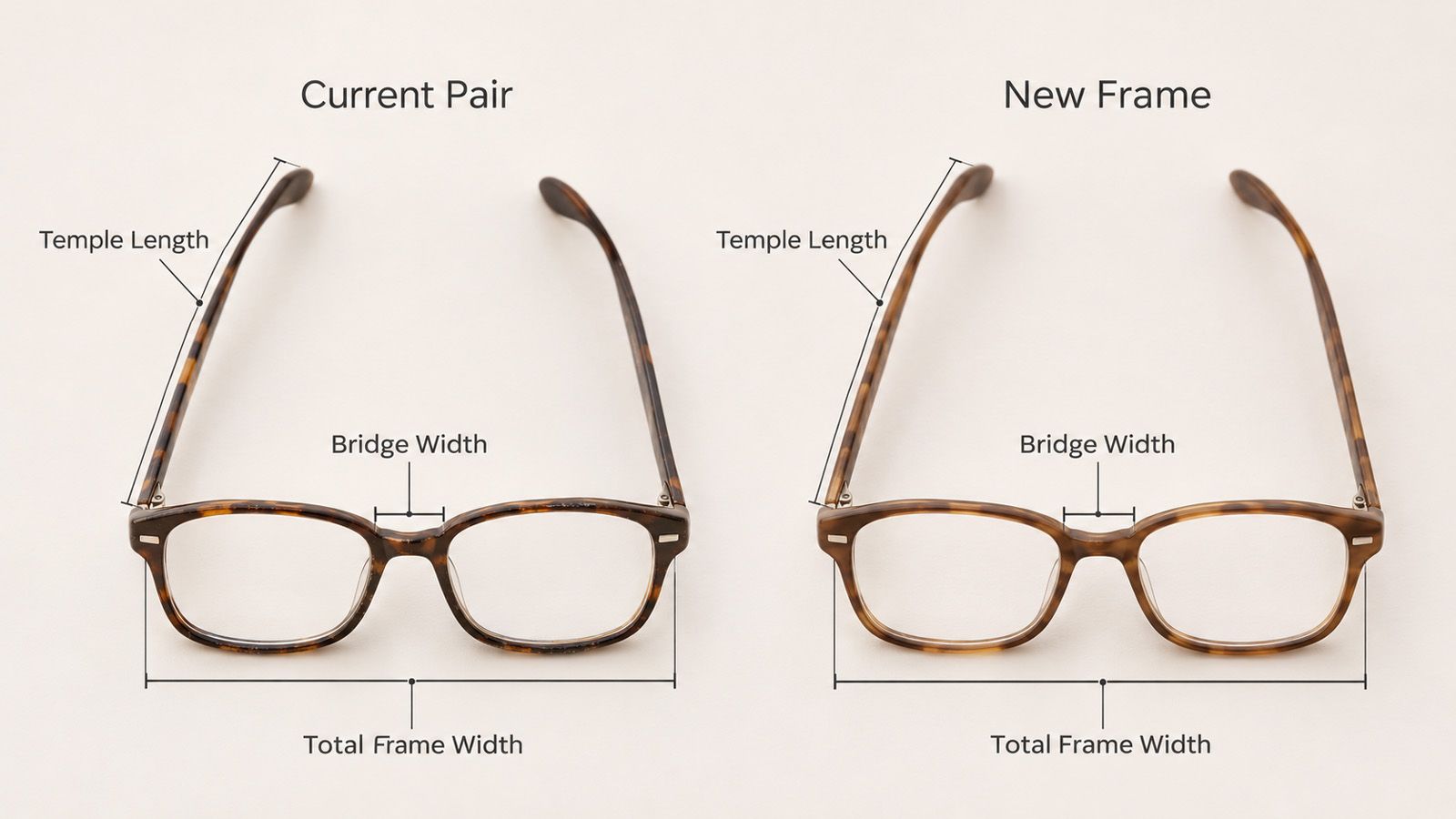
Start with a pair that fits well. Compare its hinge-to-hinge width with the new frame using the ZEELOOL Frame Size Guide. Then perform a short movement and pressure check.
| Check | What to notice | Possible cause | Next step |
|---|---|---|---|
| Look straight ahead | Frame level and centered | Bridge or alignment issue | Recheck bridge and frame level |
| Lower your head | Sliding or staying stable | Width, bridge or nose support | Compare with a well-fitting pair |
| Turn gently side to side | Lateral movement | Excess width or loose contact | Check total width and temples |
| Check temples and ears | Pressure or misplaced bend | Narrow width or wrong temple length | Consider adjustment or another size |
| Smile naturally | Cheek or eyelash contact | Bridge position, lens height or tilt | Compare another frame geometry |
The goal is not to make the frame immovable. It should stay aligned without strong pressure.
Should You Adjust the Glasses or Choose Another Size
Minor nose-pad positioning, temple-tip bends or loose screws can often be adjusted. If the total width is obviously wrong, the bridge is not the right one or there’s constant pressure, usually another size or design is needed.
Review ZEELOOL's How to Adjust Your Eyeglasses before attempting a small change. Avoid strong bending, heating or twisting, especially with rimless, delicate or unfamiliar materials. An optician can assess whether the frame can be adjusted without damage.
How to Compare Sizes Before Ordering Online
Measure a comfortable pair for total width, lens width, bridge width and temple length. Compare those numbers with the product page, then consider bridge shape, material and temple structure. Use the ZEELOOL Fit Guide to organize the comparison.
Virtual Try On can help you compare shape and visual proportions, but it does not measure exact face size or guarantee physical fit. Product measurements and a real pair that already fits remain the stronger reference.
Frequently Asked Questions
Why do my glasses slide even if the width seems right?
This may be due to the bridge, the nose piece, frame tilt, loose screws, or skin oils. Before changing the width, consider these factors.
Should the temples touch my head?
They should provide gentle, even stability without digging in or flaring sharply outward. Strong pressure is not required for a secure fit.
Can an optician widen or narrow my frame?
Some materials and components allow limited adjustment. The safe range depends on the frame, so ask before forcing a change.
Does lens width tell me the total frame width?
No. Lens width measures one lens. Total width also reflects the bridge, rims, hinges and overall construction.
Pick a pair of glasses you wear comfortably and take measurements, compare all the measurements and select a frame that is stable without pressure. Fit is a mix of measures and geometry, not a one size label.