








Summary
Blue light blocking glasses have become a standard part of the screen-heavy workday for many people—but most buying guides focus entirely on the lens technology and ignore the frame. If you have a round face, the frame choice matters as much for blue-light glasses as it does for any other eyewear. This guide covers what blue light blocking lenses actually do, which frame shapes work best for round faces in an office or screen-use context, and where to find options that deliver both eye protection and a flattering fit—with prescription and non-prescription styles starting from $7.
Introduction
Most people buying blue light blocking glasses focus almost entirely on the lenses—the coating, the filter percentage, and whether the lenses have a visible tint. The frame tends to be an afterthought. But if you are going to wear a pair of glasses for six to eight hours a day in front of a screen, the frame matters. It affects how you look in video calls, how comfortable the fit is over a full workday, and whether the glasses become something you actually reach for every morning or something that stays in a drawer. For round faces especially, a poorly chosen frame can undermine an otherwise useful purchase. Here is how to get both right.

What Are Blue Light-Blocking Glasses?
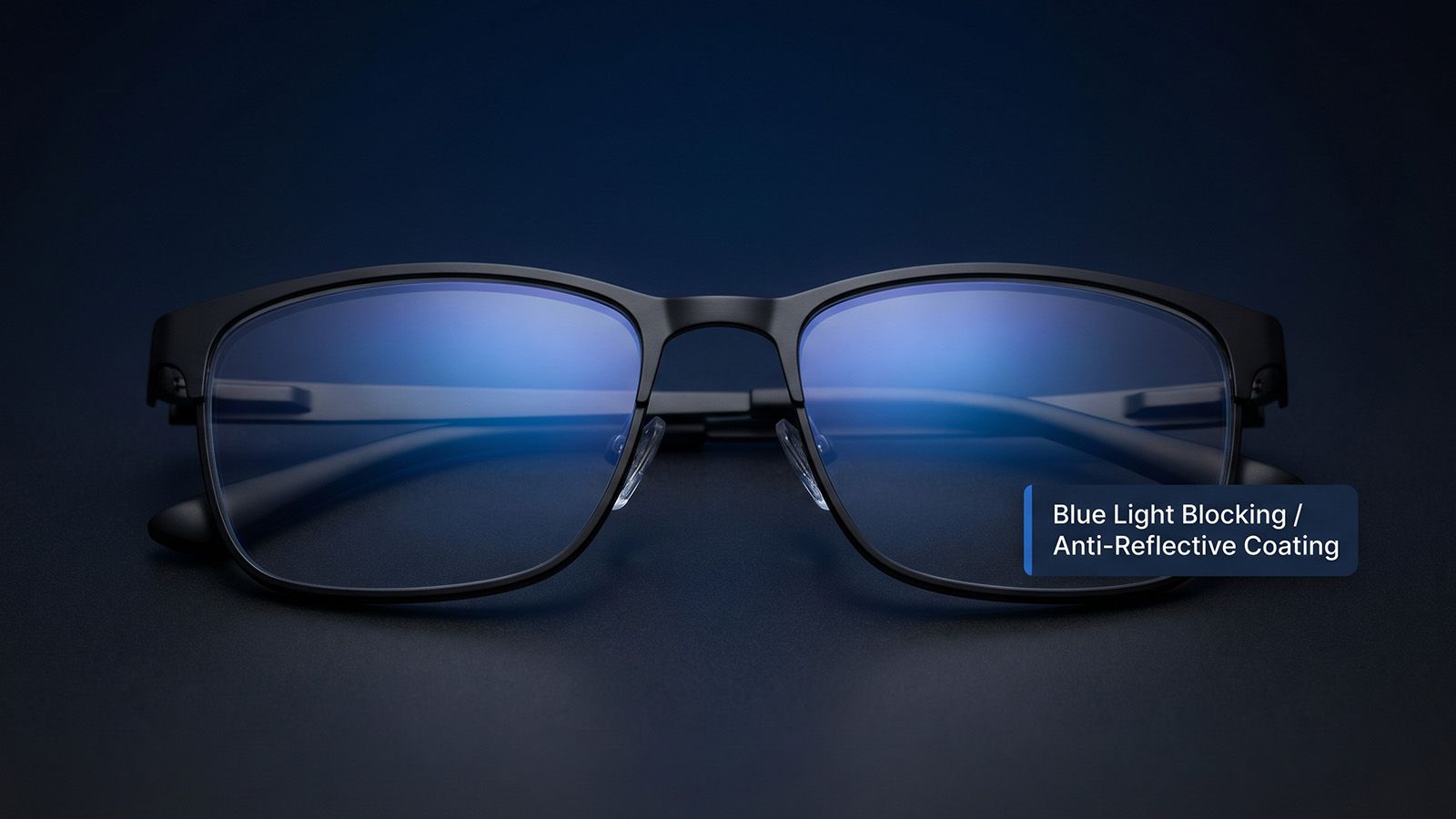
Blue light blocking glasses have a special coating or tint on the lenses that filters out the high-energy visible (HEV) blue light that is emitted from digital screens, LED lighting, and fluorescent bulbs.
- Blue Light Wavelength: 380-500 nanometers—the high-energy end of the visible spectrum.
- Main sources: smartphone screens, computer monitors, tablets, LED lighting, and fluorescent light bulbs.
- Common symptoms of prolonged exposure to blue light: Eye strain, dry eyes, headaches, and disturbed sleep if using screens close to bedtime.
- How blue light lenses work: A coating applied to the lens surface reflects or absorbs some blue light before it reaches the eye. Most consumer blue light lenses filter between 20 and 40% of blue light in the relevant wavelength range.
- Tinted vs. Clear: Clear or lightly tinted blue light lenses cut a moderate amount of blue light without changing color perception much.
Amber-tinted lenses filter more aggressively but alter color perception noticeably. Blue light-blocking lenses are available as an add-on to prescription glasses as well as in non-prescription (plano) versions for people with no vision correction needs.
Do Blue Light Blocking Glasses Actually Work?
The evidence for blue light-blocking glasses reducing eye strain is mixed, but many regular computer users report significant comfort improvements during long periods of computer use.
What the research says:
The American Academy of Ophthalmology does not currently recommend blue light blocking glasses specifically for eye strain, noting that most digital eye strain symptoms are caused by reduced blinking and screen glare rather than blue light wavelength itself. However, several controlled studies have shown that blue light filtering lenses reduce subjective reports of eye fatigue and improve sleep quality when worn during evening screen use. Practically speaking, many people who spend 6–10 hours per day in front of screens find that blue light-blocking glasses reduce the subjective feeling of eye fatigue by the end of the day. Whether this is attributable to the blue light filtering specifically or to the anti-reflective coating typically included with blue light lenses is an open question — but the reported comfort improvement is consistent enough to make them worth considering for heavy screen users. The more established benefit is sleep-related: blue light in the 480nm range suppresses melatonin production, and wearing blue light-blocking glasses in the 2–3 hours before bed has measurable effects on melatonin levels and sleep onset time in several peer-reviewed studies.
Why Frame Choice Still Matters for Blue Light Glasses
Blue light-blocking glasses are worn for extended periods in professional and video call settings—a frame that flatters your face shape is more important here than for occasional-use eyewear. Three reasons frame choice matters specifically for blue light-blocking glasses:
Visibility on video calls
When you work remotely, you will be on camera with your glasses for hours at a time in professional settings. A frame that complements your face shape affects the way you look during meetings, calls with clients, and recorded content.
All-day comfort
A frame that doesn’t fit properly becomes uncomfortable over a full workday. Getting the sizing right—frame width, bridge fit, temple length—matters more for glasses you wear 8+ hours a day than for glasses you wear occasionally.
Wardrobe integration
Blue light-blocking glasses worn at a desk need to complement professional outfits. A frame that flatters your face shape will look intentional and polished, not utilitarian.
Round faces are no exception to the rules of eyewear: angular frames that create contrast and apparent length are more flattering than curved or circular styles.
Best Frame Shapes for Blue Light-Blocking Glasses with Round Faces
Rectangle, square, browline, and geometric blue light-blocking glasses frames are the most flattering on round faces.
Rectangle Frames
The most dependable, most adaptable option in blue light-blocking glasses for round faces. Strong horizontal lines and angular corners introduce contrast against soft facial curves. Works across all professional settings and on video calls. Full-rim rectangle frames in dark acetate or metal offer the most definition.
Square Frames
Square frames are bold and structured and work particularly well for men with round faces. The equal-sided angular geometry creates maximum contrast. They are best for those who want a deliberate, assertive look in professional settings.
Browline Frames
An especially strong choice for blue light-blocking glasses because the bold upper rim draws the eye upward, which is both flattering for round faces and creates a polished, professional impression on video calls. The classic Clubmaster-style browline is one of the most video-call-friendly frames available.
Geometric Frames
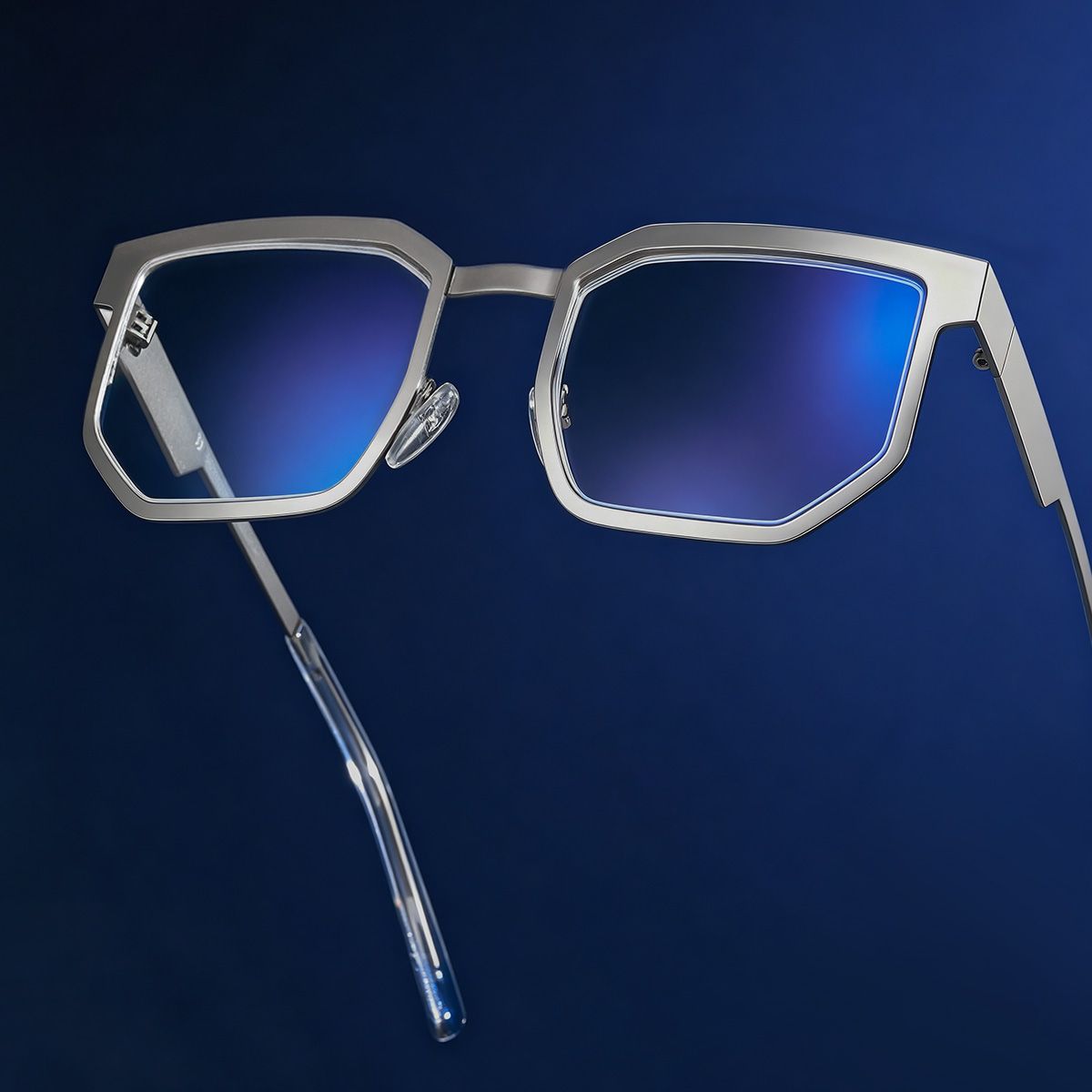
Hexagonal or angular geometric frames add visual interest while maintaining the angular contrast round faces need.Good choice for creative and design professionals looking for something more unique than a standard rectangle.
Wayfarer-Style Frames
The trapezoidal silhouette with angular corners works well for round faces in a blue light context. A wayfarer with blue light lenses is a practical choice for anyone who wants a single versatile pair that works at a desk and in casual settings.
Comparison table:
| Frame Shape | Flattering Effect | Video Call Impression | Best Work Setting |
| Rectangle | Strong — angular contrast | Clean, professional | All office settings |
| Square | Strong — bold definition | Assertive, structured | Professional, formal |
| Browline | Strong — upward eye draw | Classic, polished | Office, video calls |
| Geometric | Good — angular edges | Distinctive, creative | Design, creative fields |
| Wayfarer | Good — angular corners | Versatile, timeless | All-day desk use |
Frame Variations to Avoid
Avoid curved or circular frame shapes for blue light-blocking glasses on round faces—they reduce the contrast and definition that make eyewear flattering for this face shape.
| Frame Shape | Why to Avoid |
| Round frames | Mirrors face shape, amplifies softness |
| Oval frames | No angular contrast, too similar to face shape |
| Very small frames | Sits centrally, provides no visual structure |
| Rimless frames | Insufficient visual definition for all-day wear |
| Soft-corner variations | Rounded edges reduce the flattering angular effect |
An additional consideration for blue light-blocking glasses specifically: very thin, delicate frames can look insubstantial on video calls. A frame with moderate visual weight—even in metal—reads better on camera than an extremely thin wire frame.
How to Choose the Right Size
Frame width should match cheekbone width, with a lens height appropriate for the use case—standard for single-vision blue light lenses, at least 30 mm for progressives.
Sizing guide for blue light-blocking glasses on round faces:
| Measurement | Recommendation |
| Frame width | 130–145mm — match to cheekbone width |
| Lens width | 50–54mm per lens |
| Lens height | 32–42mm for standard; 30mm+ for progressives |
| Bridge width | 16–20mm standard |
| Temple length | 140–145mm for most adults |
One additional fit consideration for blue light-blocking glasses: the frame should sit comfortably without sliding down the nose during extended desk use. Adjustable nose pads — common on metal frames — allow for a more precise fit over a full workday. At ZEELOOL, frame measurements are listed on every product page, and the free virtual try-on tool lets you preview the fit before ordering.
Prescription vs. Non-Prescription Blue Light Glasses
If you already wear prescription glasses, adding a blue light coating to your existing prescription is the most practical approach—non-prescription blue light glasses are best for people with no vision correction needs.
| Factor | Prescription Blue Light | Non-Prescription Blue Light |
| Who it's for | Anyone with a vision correction need | People with 20/20 vision |
| Cost at ZEELOOL | From $25.95 (frame + lenses) | From $7 (frame only) |
| Optical clarity | Corrected for your prescription | Standard plano lens |
| Blue light filtering | Same coating available | Same coating available |
| Lens options | Single-vision, progressive, high-index | Standard index only |
| Best use case | Primary everyday glasses + screen protection | Dedicated desk/screen glasses |
For most people who wear prescription glasses, the most cost-effective approach is to add a blue light coating to your prescription when ordering a new pair rather than buying a separate non-prescription blue light pair. At ZEELOOL, blue light blocking is available as a lens add-on for all frame styles, with complete prescription pairs starting from $25.95.
Blue Light Glasses for Round Faces at Work
The most effective blue light-blocking glasses for workplace use combine flattering frame geometry with a professional appearance that works across office environments and video calls.
Practical recommendations by work setting:
| Work Setting | Recommended Frame | Why It Works |
| Corporate office / finance | Browline or rectangle in dark acetate | Polished, authoritative, professional |
| Tech / startup | Rectangle or geometric in metal | Clean, minimal, modern |
| Creative / design | Geometric or wayfarer | Distinctive, expressive |
| Healthcare / teaching | Rectangle in metal or acetate | Neutral, versatile, comfortable for long wear |
| Remote / video calls | Browline or rectangle | A strong upper rim reads well on camera |
For video calls specifically, frames with a prominent upper rim—a browline or a rectangle with a strong top bar—tend to read most clearly on camera and frame the face well at the typical camera angles used in video conferencing.
ZEELOOL's Top Blue Light Picks for Round Faces
ZEELOOL offers blue light-blocking lenses as an add-on for all frame styles, available for both prescription and non-prescription orders. Frames suited to round faces start from $7; complete prescription pairs with blue light lenses start from $25.95. Standard shipping takes 9–14 days across the US; business express takes 5–9 days. FSA and HSA reimbursement is supported for prescription blue light-blocking glasses.
| Frame Style | Starting Price | Complete Pair With Blue Light Lenses | Best For |
| Rectangle — Acetate | From $7 | From $25.95 | Everyday office, most versatile |
| Rectangle — Metal | From $7 | From $25.95 | Professional, minimal, lightweight |
| Browline | From $7 | From $25.95 | Video calls, classic professional |
| Square | From $7 | From $25.95 | Bold look, formal settings |
| Geometric | From $7 | From $25.95 | Creative fields, distinctive style |
| Wayfarer | From $7 | From $25.95 | All-day desk use, versatile |
Conclusion
Blue light-blocking glasses are worth considering for anyone spending six or more hours daily in front of screens—but the frame choice matters as much as the lens technology, especially if you have a round face. Rectangle and browline frames are the most reliable starting points: they introduce the angular contrast that round faces need, present well in professional settings, and look polished on video calls. Get the frame width right—match it to your cheekbone width—choose a full-rim construction in dark acetate or metal for the strongest definition, and add a blue light coating to your prescription if you already wear glasses. The combination of a flattering frame and functional lens is straightforward to achieve, and at prices starting from $7, it does not require a significant investment to get right.
FAQ
What are the best blue light-blocking glasses frames for round faces?
Rectangle, browline, square, geometric, and wayfarer frames are the most flattering choices for round faces wearing blue-light-blocking glasses. These shapes introduce angular contrast, strong horizontal lines, or upward visual cues that counterbalance the softness of a round face—while also presenting well in professional settings and on video calls. Rectangle frames are the most versatile starting point; browline frames are particularly effective for video call use because the prominent upper rim draws the eye upward and reads clearly on camera.
Can I get blue light blocking lenses in prescription glasses for a round face?
Yes. Blue light blocking is available as a lens coating add-on for prescription glasses at ZEELOOL, compatible with single-vision, progressive, and high-index lenses. All frame styles suited to round faces — rectangle, browline, square, geometric, and wayfarer — are fully prescription-compatible with blue light coating. Complete prescription pairs with blue light lenses start from $25.95, with standard shipping in 9–14 days and business express in 5–9 days across the US.
Do blue light-blocking glasses actually reduce eye strain?
The evidence is mixed but leans toward modest benefit for heavy screen users. The American Academy of Ophthalmology notes that most digital eye strain symptoms are caused by reduced blinking and screen glare rather than blue light specifically. However, many people who wear blue light glasses for 6–10 hours of daily screen use report reduced subjective eye fatigue by the end of the day. The most consistently supported benefit is sleep-related — wearing blue light blocking glasses in the 2–3 hours before bed has measurable effects on melatonin production and sleep onset time in peer-reviewed research. They’re worth trying if you’re a heavy screen user at accessible price points starting from $7.
Are non-prescription blue light-blocking glasses worth buying for a round face?
Yes, if you have no vision correction needs. Non-prescription blue light-blocking glasses—sometimes called "plano blue light-blocking glasses"—use the same filtering coating as prescription versions and are available at lower price points since no lens prescription work is required. At ZEELOOL, non-prescription frames start from $7, making it easy to try a pair without significant financial commitment. If you find the comfort benefit worthwhile, you can always upgrade to a prescription version later. Choose the same angular frame shapes recommended for round faces—rectangle, browline, square, or geometric—regardless of whether the lenses are prescription or not.
How do I choose blue light-blocking glasses that look good on a round face for video calls?
For video calls, look for frames with a bold upper rim or crisp angular definition that will look good on camera. Browline frames are particularly effective — the bold upper rim draws the eye upward and creates a polished, professional impression at typical video call camera angles. Rectangle frames with a strong top bar are a close second. Choose a frame width close to your cheekbone width, opt for darker colors — black, dark tortoise, or navy — for maximum contrast and definition on camera, and confirm the fit using the virtual try-on tool before ordering.